Highlights
• MRI‑guided microbubble‑enhanced focused ultrasound (MB‑FUS) enabled targeted blood–brain barrier opening (BBBO) in all treatments in a multicentre phase 1/2 trial of patients with newly diagnosed high‑grade glioma.
• MB‑FUS combined with adjuvant temozolomide was feasible and showed an acceptable safety profile; most MB‑FUS‑related adverse events were grade 1–2.
• Median overall survival was 31.3 months and median progression‑free survival 13.5 months in this single‑arm cohort; BBBO also permitted enhanced detection of tumour‑derived plasma cell‑free DNA (sono‑liquid biopsy).
Background and Unmet Need
High‑grade gliomas, including glioblastoma (WHO 2016 classification used for this study), remain among the most lethal primary brain tumours. Despite maximal safe resection, radiotherapy and concurrent plus adjuvant temozolomide (the Stupp regimen), near‑universal recurrence occurs. A central biological obstacle is the blood–brain barrier (BBB), which limits drug penetration into infiltrative tumour margins and sanctuaries, contributing to treatment failure.
Different strategies have sought to bypass or transiently disrupt the BBB to enhance delivery of cytotoxics, biologics, and immunotherapies. Microbubble‑assisted focused ultrasound (MB‑FUS) is a technique that uses low‑frequency ultrasound targeted through the skull together with circulating microbubbles to induce controlled, localised, and reversible BBB disruption via mechanical effects (stable cavitation). Preclinical models have shown enhanced drug delivery and anti‑tumour effects with MB‑FUS; early clinical work has explored safety and feasibility in varied CNS disorders.
Study Design and Methods
BT008NA (ReFOCUSED Consortium) is an open‑label, single‑arm, multicentre phase 1/2 trial conducted at five centres in the USA and Canada (ClinicalTrials.gov NCT03551249 and NCT03616860). Key inclusion criteria were adults (18–80 years) with newly diagnosed high‑grade glioma who had undergone maximal safe resection, completed standard 6‑week chemoradiotherapy, had acceptable organ function and Karnofsky Performance Status ≥70, and were starting adjuvant temozolomide at 150 mg/m2.
Intervention: MRI‑guided, 220 kHz transcranial MB‑FUS treatments targeted periresectional, tumour‑infiltrative regions. Treatments were administered on any of the first 3 days of a 28‑day temozolomide cycle, for up to six cycles. Microbubble administration and ultrasound parameters were adjusted to produce controlled BBBO, monitored by real‑time imaging and post‑procedure contrast‑enhanced T1 MRI.
Primary endpoints were safety (adverse events graded and attributed) and feasibility (visualised BBBO: new contrast enhancement on post‑procedure T1 MRI). Secondary prespecified endpoints included overall survival (OS) and progression‑free survival (PFS). Analyses were intention‑to‑treat. The trial was funded by the National Institutes of Health and Insightec and is now closed to enrolment.
Key Findings
Enrollment and population: From Oct 16, 2018 to March 9, 2022, 34 participants were enrolled and evaluable. Mean age was 51.5 years (SD 13.0). Median follow‑up was 44.5 months (95% CI 34.9–57.3). By self‑report, 53% were female and 82% White; all were non‑Hispanic.
Feasibility: BBBO
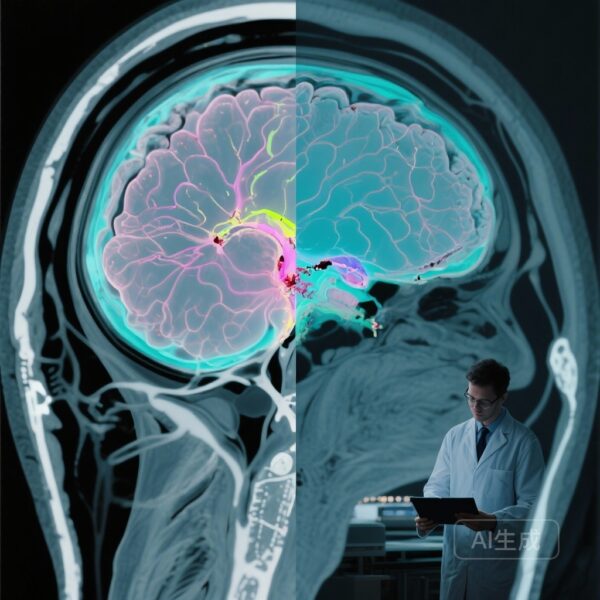
BBBO was visualised on post‑procedure T1‑weighted MRI in all treatments, indicating reproducible, focal enhancement consistent with transient BBB opening in targeted periresectional regions. The universal observation of BBBO across sessions supports procedural reliability when delivered in specialised centres with MRI guidance.
Safety
A total of 176 adverse events were captured during the trial and classified by relatedness: 54 (31%) were attributed to chemotherapy (temozolomide), 10 (6%) to underlying disease, 87 (49%) to undergoing MB‑FUS, and 25 (14%) unrelated. MB‑FUS‑related events were predominantly grade 1–2 (40 grade 1 [46%], 46 grade 2 [53%]) and a single grade 3 event (1%). There were no treatment‑related deaths. Across the entire cohort, seven (21%) participants experienced grade 3–5 events: two grade 5 events were disease‑related deaths; three grade 4 events were temozolomide‑related haematologic toxicities; overall eight grade 3 events occurred (three temozolomide‑related, one MB‑FUS‑related, three disease‑related, one unrelated). These data indicate that MB‑FUS can be delivered with an acceptable acute safety profile when combined with standard temozolomide in experienced centres.
Survival outcomes
Median overall survival was 31.3 months (95% CI 21.1–not reached). Median progression‑free survival was 13.5 months (95% CI 9.9–26.9). These figures compare favourably with historical benchmarks for newly diagnosed glioblastoma treated with standard‑of‑care (median OS ≈14–16 months in older pivotal trials, and longer in some contemporary selected cohorts). However, interpretation requires caution because this was a single‑arm trial with selective eligibility (post‑chemoradiation, KPS ≥70) and potential enrolment of patients with more favourable prognostic features.
Sono‑liquid biopsy: Plasma cfDNA
The study reports that patient‑specific disease courses were concordant with trajectories of MB‑FUS‑enriched plasma cell‑free DNA (cfDNA), suggesting that transient BBBO may increase tumour DNA release into the circulation and enable non‑invasive molecular monitoring (a ‘‘sono‑liquid biopsy’’). This exploratory finding raises the possibility of enhanced surveillance and earlier detection of recurrence using plasma biomarkers following BBBO, though more validation is needed.
Expert Commentary and Interpretation
Rationale and plausibility: MB‑FUS produces transient BBB disruption through controlled cavitation of circulating microbubbles, increasing vascular permeability and facilitating passage of drugs and macromolecules into the brain parenchyma. Although temozolomide crosses the intact BBB to some extent, infiltrative tumour cells at margins may be insufficiently exposed to therapeutic concentrations; MB‑FUS could increase local temozolomide delivery and potentially enhance cytotoxicity against residual disease.
Clinical significance: The trial establishes that MR‑guided MB‑FUS targeting periresectional regions is feasible across multiple centres and can be safely combined with adjuvant temozolomide. The observed median OS (31.3 months) is notable relative to historical controls, but causality cannot be inferred from a non‑randomised design. The safety profile—predominantly low‑grade MB‑FUS events—is reassuring, though longer‑term surveillance for delayed effects (e.g., neurocognitive changes, microhemorrhages, radiation necrosis interactions) is required.
Limitations and sources of bias
Key limitations include the single‑arm design, modest sample size (n=34), potential selection bias toward younger and fitter patients, limited racial/ethnic diversity, and treatment delivery in experienced centres with specialized equipment (220 kHz MR‑guided system). The comparator is historical data; confounding by patient selection and other unmeasured prognostic factors may account for observed survival differences. Device and funding relationships (industry co‑funding by Insightec) underline the need for independent replication and blinded randomized trials.
Safety signals worth monitoring in future studies
Although acute MB‑FUS events were mainly low grade, important safety endpoints for definitive trials should include rates of symptomatic or radiographic haemorrhage, new or progressive edema, radiation necrosis and neurocognitive outcomes. Skull density and sonication parameters influence energy deposition and BBBO efficacy; their roles should be prospectively evaluated.
Implications for Clinical Practice and Future Research
Clinical practice: MB‑FUS plus temozolomide remains investigational. The technique is promising but not yet ready for routine clinical use outside trials. Referral to centres running prospective trials should be considered for eligible patients.
Recommended directions for future trials
• Randomized controlled trials (RCTs): Essential to establish efficacy. An RCT comparing standard adjuvant temozolomide versus temozolomide plus scheduled MB‑FUS (stratified by MGMT methylation, extent of resection, performance status) should be designed with OS as a primary endpoint and prespecified neurocognitive and quality‑of‑life secondary endpoints.
• Dose‑timing and target optimisation: Evaluate which temozolomide timing relative to BBBO maximises tissue drug concentration and tumour cell kill; compare single‑site versus multi‑target sonications; standardise sonication energy and microbubble dosing with cavitation monitoring to optimise efficacy and safety.
• Combination strategies: MB‑FUS could be a platform to deliver agents that otherwise poorly penetrate the BBB (large antibodies, antibody–drug conjugates, oncolytic viruses, cell therapies). Trials combining MB‑FUS with immunotherapies or molecular agents merit exploration.
• Biomarker development: Validate the sono‑liquid biopsy concept in larger cohorts, define sensitivity/specificity for recurrence detection, and integrate plasma cfDNA with imaging and clinical decision‑making algorithms.
Conclusion
This multicentre phase 1/2 study demonstrates that MRI‑guided MB‑FUS can reproducibly open the BBB in periresectional regions, be safely combined with standard adjuvant temozolomide, and enable plasma cfDNA enrichment for potential non‑invasive monitoring. Observed survival outcomes are encouraging but must be interpreted cautiously given non‑randomised design and selected population. The results provide a strong rationale for adequately powered randomized trials to determine whether MB‑FUS improves survival or quality of life for patients with high‑grade glioma and to define its role as a drug‑delivery platform.
Funding and trial registration
The trial was funded by the National Institutes of Health and Insightec. ClinicalTrials.gov identifiers: NCT03551249 (USA) and NCT03616860 (Canada).
References
1. Woodworth GF, Anastasiadis P, Ozair A, et al. Microbubble‑enhanced transcranial focused ultrasound with temozolomide for patients with high‑grade glioma (BT008NA): a multicentre, open‑label, phase 1/2 trial. Lancet Oncol. 2025 Dec;26(12):1651‑1664. doi: 10.1016/S1470‑2045(25)00492‑9. PMID: 41308679.
2. Stupp R, Mason WP, van den Bent MJ, et al. Radiotherapy plus concomitant and adjuvant temozolomide for glioblastoma. N Engl J Med. 2005 Mar 10;352(10):987‑96. doi: 10.1056/NEJMoa043330.
Author note
This article synthesizes and interprets published results from the BT008NA trial. The perspectives offered are intended to guide clinicians and researchers in evaluating the potential and limitations of MB‑FUS in high‑grade glioma and to inform design considerations for future trials.