The Dilemma of Failed Mechanical Thrombectomy
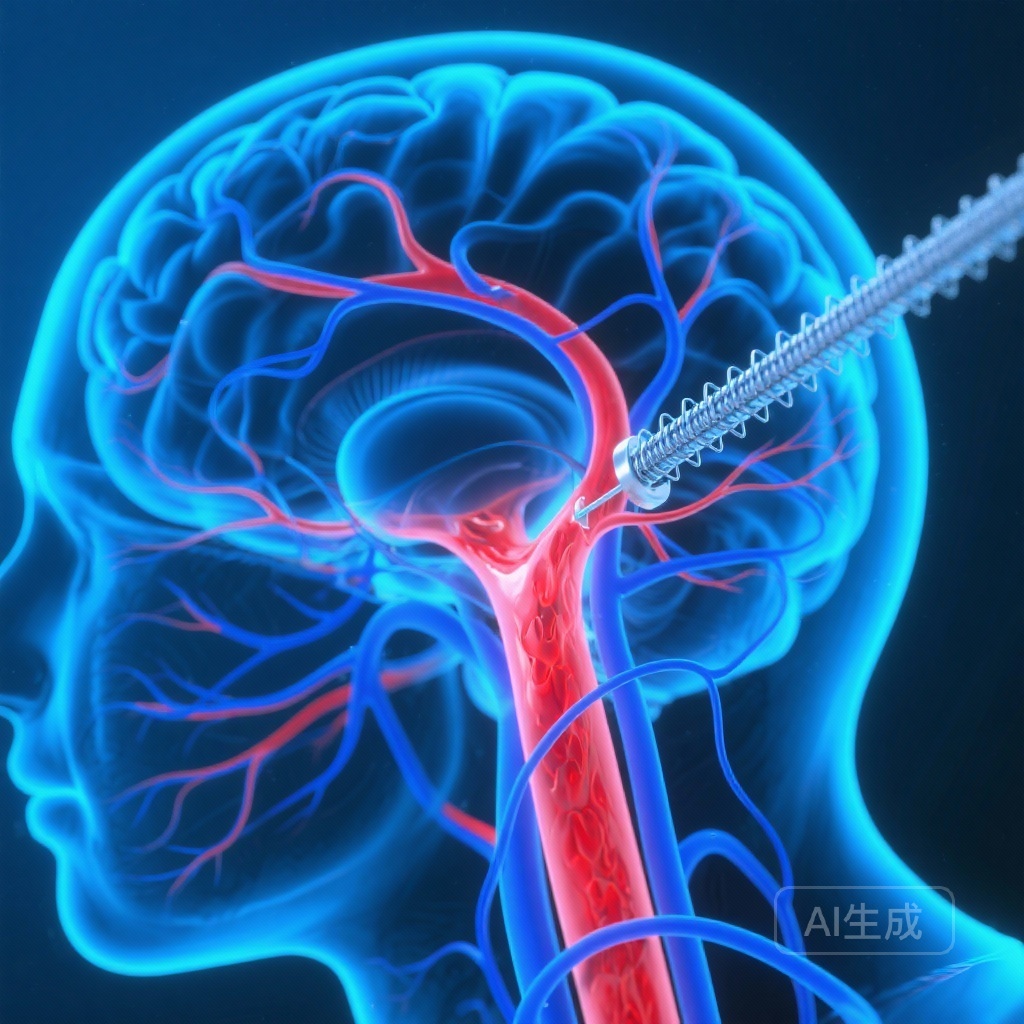
Mechanical thrombectomy (MT) has revolutionized the management of acute ischemic stroke caused by large vessel occlusion (LVO). However, a significant subset of patients—particularly those in Asian populations where intracranial atherosclerotic stenosis (ICAS) is prevalent—faces the challenge of unsuccessful recanalization or early reocclusion. In these cases, the standard of care often reaches a standstill: should the clinician terminate the procedure or attempt a ‘bailout’ maneuver using intracranial angioplasty or stenting (BAOS)?
The ANGEL-REBOOT Trial: A Comprehensive Investigation
The ANGEL-REBOOT (Randomized Study of Bailout Intracranial Angioplasty Following Thrombectomy for Acute Large Vessel Occlusion) trial was designed to address this clinical uncertainty. Conducted across 36 Chinese hospitals, this multicenter, open-label, randomized controlled trial enrolled 348 patients who experienced failed thrombectomy (eTICI 0-2a) or high-grade residual stenosis (>70%) after initial MT efforts. Participants were randomized to either BAOS (intervention) or standard therapy (control), which included terminating or continuing the thrombectomy procedure without BAOS.
Short-Term Outcomes: The Lancet Neurology Findings
The 90-Day Clinical Picture
Initial results from the ANGEL-REBOOT trial, published in Lancet Neurology, presented a complex picture of the safety and efficacy of BAOS at the 90-day mark. The primary endpoint—the shift in the modified Rankin Scale (mRS) score at 90 days—showed no significant difference between the BAOS group and the standard therapy group (common odds ratio 0.86, p=0.41).
Procedural Safety Concerns
While BAOS aimed to achieve better vessel patency, it came at a cost of increased procedural complications. The intervention group exhibited a higher incidence of symptomatic intracranial hemorrhage (5% vs. 1% in the control group) and a significantly higher rate of procedure-related arterial dissection (14% vs. 3%). Furthermore, parenchymal hemorrhage type 2 was observed in 3% of the BAOS group compared to none in the control group. These findings initially suggested that the risks of BAOS might outweigh the clinical benefits in the immediate post-stroke phase.
The Long-Term Perspective: One-Year Outcomes in Circulation
Functional Recovery and Disability Reduction
The narrative surrounding BAOS shifted significantly with the release of the 1-year follow-up data in Circulation. By the 12-month mark, the BAOS group demonstrated a statistically significant improvement in the distribution of mRS scores compared to the standard therapy group (generalized odds ratio 1.34, p=0.02). This suggests that the initial procedural risks of BAOS may be offset by better long-term neurological recovery.
Secondary Stroke Prevention
One of the most compelling findings from the 1-year analysis was the marked reduction in stroke recurrence within the treated artery. Only 4% of patients in the BAOS group suffered a recurrent stroke in the target territory, compared to 13% in the standard therapy group (hazard ratio 0.30, p=0.006). This data highlights the role of BAOS not just as a rescue therapy for acute recanalization, but as a potent secondary prevention strategy for patients with underlying atherosclerotic lesions. Mortality rates at one year remained similar between the two groups (15% vs. 17%).
Insights into Early Reocclusion: The Stroke Sub-Study
Identifying Risk Factors
A secondary analysis of the ANGEL-REBOOT data focused on the factors associated with early (24-hour) reocclusion in patients with ICAS-related occlusions. The reocclusion rate was documented at 9.7%. Patients who experienced reocclusion had significantly worse 90-day outcomes (median mRS 4 vs. 1).
Predictors of Success
The study identified three independent factors associated with early reocclusion:
1. Puncture-to-Recanalization Time
A longer procedure time was positively associated with reocclusion risk (OR 1.80 per hour increase). This reinforces the ‘time is brain’ paradigm, suggesting that prolonged manipulation of the vessel may exacerbate endothelial injury and thrombogenicity.
2. General Anesthesia
Interestingly, the use of general anesthesia was associated with a reduced risk of reocclusion (OR 0.25). This may be due to better patient immobilization, allowing for more precise micro-manipulation and stent placement during the bailout procedure.
3. Postprocedural eTICI Score
Achieving a high-quality recanalization (eTICI 2c-3) was a strong negative predictor of reocclusion (OR 0.35). Ensuring near-complete or complete flow restoration is critical to maintaining vessel patency in the first 24 hours.
Expert Commentary and Clinical Interpretation
The ANGEL-REBOOT trial provides a nuanced evidence base for the management of failed thrombectomy. The discrepancy between 90-day and 1-year outcomes is particularly noteworthy. While the immediate peri-procedural period is fraught with higher risks of hemorrhage and dissection when BAOS is employed, the long-term stability of the vessel appears to confer a functional advantage and protection against recurrent events. Critics note that the high rate of tirofiban use (96%) across both groups might have influenced the safety profile and the generalizability of these findings to settings where aggressive antiplatelet regimens are used differently. However, for the Chinese population—where ICAS is the leading cause of LVO—these results suggest that BAOS should be considered a viable option, provided the clinician balances the immediate hemorrhagic risk against the long-term benefit of stable recanalization.
Conclusion
The ANGEL-REBOOT trial concludes that for patients with unsuccessful recanalization or high-grade residual stenosis after thrombectomy, bailout angioplasty or stenting (BAOS) is associated with reduced disability and a lower risk of stroke recurrence at one year. While clinicians must remain vigilant regarding the higher risk of symptomatic hemorrhage and arterial dissection in the short term, BAOS serves as an important tool in the neuro-interventional armamentarium for complex LVO cases.
Funding and Registration
The trial was funded by the Beijing Natural Science Foundation, the National Natural Science Foundation of China, and several medical technology organizations including Shanghai HeartCare and Sino Medical Sciences. ClinicalTrials.gov Identifier: NCT05122286.
References
1. Gao F, et al. Bailout Intracranial Angioplasty or Stenting After Thrombectomy for Acute Large Vessel Occlusion: 1-Year Outcomes of ANGEL-REBOOT. Circulation. 2025;152(20):1397-1407.
2. Gao F, et al. Bailout intracranial angioplasty or stenting following thrombectomy for acute large vessel occlusion in China (ANGEL-REBOOT): a multicentre, open-label, blinded-endpoint, randomised controlled trial. Lancet Neurol. 2024;23(8):797-806.
3. Li L, et al. Factors Associated With Early Reocclusion in Recanalized Intracranial Atherosclerotic Occlusion: ANGEL-REBOOT Insights. Stroke. 2025;56(9):2431-2439.