Highlights
The EXERTION study reveals critical insights that could reshape cardiovascular risk assessment: (1) Exercise systolic blood pressure measured during stress testing has no predictive value for cardiovascular events when considered in isolation. (2) However, when normalized to aerobic fitness using the SBP/METPeak ratio, a clear and significant association with cardiovascular outcomes emerges across all exercise stages. (3) Individuals in the highest quartile of SBP/METPeak face up to 2.5 times greater cardiovascular risk compared to the lowest quartile. (4) This relationship persists across diverse populations, including those without prior cardiovascular disease, those with normal baseline blood pressure, and individuals on antihypertensive medications.
Background
Hypertensive responses to exercise have long been recognized as potential harbingers of cardiovascular disease (CVD). Traditional clinical practice often flags elevated blood pressure during exercise stress testing as a concerning finding warranting further investigation. However, the interpretation of such responses has remained controversial, with studies producing inconsistent findings regarding their true prognostic significance.
The fundamental challenge lies in a critical confound: aerobic fitness. A highly fit individual reaching Stage 4 of the Bruce treadmill protocol will naturally exhibit higher systolic blood pressure than a sedentary person completing Stage 1—not because of pathological response, but because of greater cardiac output demands. Without accounting for this physiological reality, clinical interpretation becomes problematic.
The EXERTION study, conducted across six Australian hospitals, was designed specifically to address this limitation. The researchers aimed to determine whether exercise blood pressure relative to fitness, quantified as the SBP/METPeak ratio, could provide superior risk stratification compared to exercise blood pressure alone.
Study Design
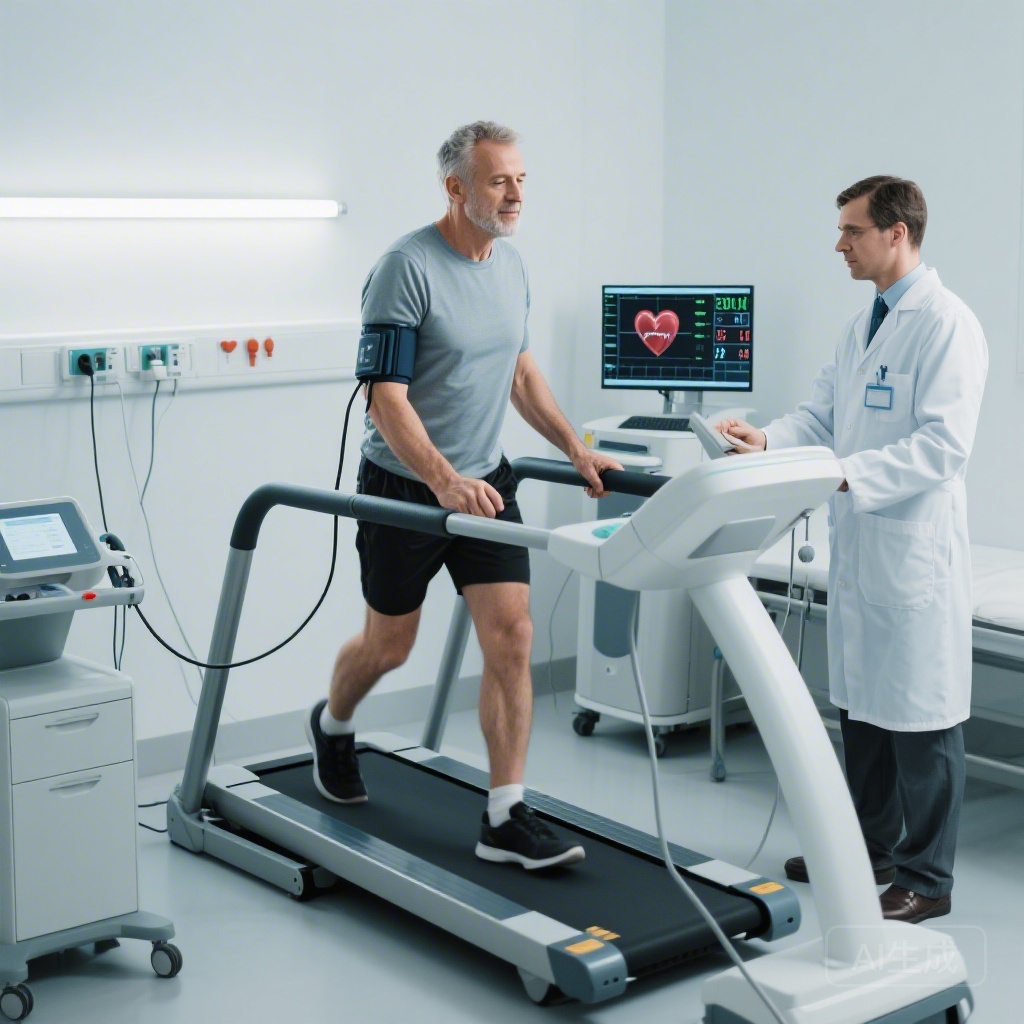
The investigators conducted a retrospective analysis of clinical exercise test records from 12,743 individuals who completed standard Bruce treadmill protocol stress tests (Stages 1-4) at participating hospitals. The study population had a mean age of 53 ± 13 years, with 60% male participants.
Records were linked to administrative datasets encompassing hospital admissions, emergency department visits, and death registers to establish baseline clinical characteristics and identify the primary outcome of fatal or non-fatal cardiovascular events.
The key exposure variable was the SBP/METPeak ratio—calculated as systolic blood pressure at each exercise stage divided by peak metabolic equivalents (METs) achieved. This ratio essentially normalizes blood pressure response for the level of physiological exertion, providing a measure of “excessive” BP elevation relative to what the individual should reasonably achieve.
Competing risks regression analysis was employed to compare cardiovascular events across SBP/METPeak quartiles at the 90th percentile threshold and various clinically relevant cut-points. Models were adjusted for age, sex, and pre-exercise systolic blood pressure.
Key Findings
Over a median follow-up period of 51 months (interquartile range: 32-75 months), 1,349 cardiovascular events occurred. The results dramatically illustrate why fitness adjustment matters.
Exercise Blood Pressure Alone: No Association
Perhaps the most striking finding was that exercise systolic blood pressure without consideration of fitness showed no significant association with cardiovascular events (p > .05). This null finding challenges the traditional clinical approach of flagging elevated exercise blood pressure without contextualizing it against the individual’s functional capacity.
SBP/METPeak: Strong Prognostic Signal
When blood pressure was normalized to fitness using the SBP/METPeak ratio, a fundamentally different picture emerged. In fully adjusted models, there was a stepwise increase in cardiovascular events across SBP/METPeak quartiles, evident at all exercise stages:
At Stage 1, individuals in the highest quartile of SBP/METPeak had a hazard ratio of 2.54 (95% CI: 2.08-3.12) compared to the lowest quartile. Stage 2 showed a hazard ratio of 2.05 (95% CI: 1.64-2.57), Stage 3 demonstrated 1.60 (95% CI: 1.22-2.10), and at peak exercise, the hazard ratio reached 2.43 (95% CI: 1.99-2.98).
These findings indicate that the highest-risk individuals are those showing blood pressure elevations that exceed what their fitness level would predict—suggesting a disproportionate cardiovascular response to exertion that may reflect underlying vascular dysfunction.
Threshold Analysis
Further analysis examined specific SBP/METPeak thresholds and found that values from 15 to 24 mmHg/METPeak were significantly associated with cardiovascular events in both males and females (p < .001, Stages 1-3 and peak). This suggests potential clinical utility for defining "abnormal" responses that warrant intervention.
The 90th percentile threshold for SBP/METPeak was associated with a 55-94% increased risk of cardiovascular events compared to individuals below this cut-point (p < .001 for Stages 1-3 and peak).
Robustness Across Subgroups
Critically, these associations persisted after adjustment for multiple potential confounders and remained significant in several important subgroups: individuals without established cardiovascular disease, those with normal pre-exercise blood pressure, and individuals taking blood pressure-lowering medications. This robustness suggests the SBP/METPeak ratio captures a genuine cardiovascular risk signal rather than a statistical artifact.
Expert Commentary
The EXERTION study represents a significant methodological advancement in cardiovascular risk stratification. By explicitly accounting for aerobic fitness when interpreting exercise blood pressure responses, the investigators have provided a more physiologically coherent approach to risk assessment.
From a clinical perspective, these findings challenge the current paradigm where exercise stress testing laboratories often flag elevated BP responses without systematic consideration of the patient’s fitness level. An individual who achieves 12 METs but develops systolic BP of 200 mmHg is physiologically different—and presumably at different risk—than someone achieving 6 METs with the same BP reading.
The threshold range of 15-24 mmHg/METPeak identified in this study offers potential clinical applicability. A value above approximately 15 mmHg per MET might represent the threshold at which BP response becomes disproportionate to fitness and warrants closer attention.
Several limitations merit consideration. The study population was drawn from individuals referred for clinical exercise testing, which may limit generalizability to asymptomatic screening populations. Additionally, the retrospective design, while mitigated by the use of administrative outcome data, cannot definitively establish causation. The authors appropriately acknowledge that unmeasured confounders may partially explain the observed associations.
Nevertheless, the consistency of findings across multiple subgroups and exercise stages strengthens confidence in the validity of the relationship. The biological plausibility is also compelling: a disproportionate BP rise relative to fitness may reflect underlying arterial stiffness, endothelial dysfunction, or autonomic dysregulation—all mechanisms that could predispose to future cardiovascular events.
Conclusion
The EXERTION study provides compelling evidence that exercise blood pressure relative to fitness, expressed as the SBP/METPeak ratio, represents a superior prognostic marker compared to exercise blood pressure alone. In a large cohort of over 12,000 individuals undergoing clinical stress testing, this ratio demonstrated consistent associations with cardiovascular events across all exercise stages, with hazard ratios reaching 2.5-fold in the highest-risk quartile.
These findings have important implications for clinical practice. Exercise stress testing could be enhanced by incorporating fitness-adjusted BP metrics that more accurately identify individuals at elevated cardiovascular risk. Such an approach would allow for earlier, more targeted intervention to reduce hypertension-related cardiovascular morbidity and mortality.
The concept of a “clinically actionable marker” emerges clearly from this work. Individuals identified with elevated SBP/METPeak ratios—particularly those exceeding the 15-24 mmHg/METPeak thresholds—could be prioritized for intensive blood pressure management, lifestyle intervention, or further cardiovascular investigation.
Future research should explore whether intervention based on elevated SBP/METPeak leads to improved outcomes, and whether this metric could be incorporated into guideline recommendations for cardiovascular risk assessment.
Funding
The EXERTION study was funded by the National Health and Medical Research Council of Australia (NHMRC) and supported by the Royal Hobart Hospital Research Foundation.
References
Schultz MG, Otahal P, Roberts-Thomson P, Stanton T, Hamilton-Craig C, Wahi S, La Gerche A, Hare JL, Selvanayagam J, Maiorana A, Venn AJ, Marwick TH, Sharman JE. Exercise blood pressure relative to fitness and cardiovascular outcomes: the EXERTION study. European Heart Journal. 2026 Apr 7;47(14):1661-1671. PMID: 41528824.