Highlights
- Approximately 84% of hemodialysis patients with chronic pain experience symptoms for over a year, with 75% suffering from daily pain.
- Pain is rarely localized; the median number of painful body regions is eight, with musculoskeletal (89%) and neuropathic (66%) characteristics often overlapping.
- Sociodemographic factors and psychological states, specifically depression and pain catastrophizing, are more strongly associated with pain interference than dialysis-specific clinical parameters.
- Significant disparities exist, with Black race and Hispanic ethnicity associated with higher reported pain interference and severity compared to White and non-Hispanic counterparts.
The Hidden Epidemic: Chronic Pain in the Hemodialysis Population
For patients with end-stage kidney disease (ESKD) receiving maintenance hemodialysis (HD), the clinical focus is often dominated by electrolyte balance, fluid management, and cardiovascular stability. However, a pervasive yet frequently underestimated burden is chronic pain. Despite its prevalence, the specific characteristics, anatomical distribution, and underlying drivers of pain in this population have remained poorly characterized. Chronic pain in HD patients is not merely a symptom of renal failure; it is a complex, multidimensional experience that significantly impairs quality of life, physical functioning, and mental health. Addressing this unmet medical need requires a shift from viewing pain as a secondary complication to recognizing it as a primary clinical challenge requiring targeted intervention.
Methodology: The HOPE Consortium Trial Cross-Sectional Analysis
The Hemodialysis Patients’ Pain Experience (HOPE) Consortium Trial represents a significant multicenter effort to quantify and qualify the pain experience among adults receiving maintenance HD. This specific cross-sectional analysis evaluated 643 participants enrolled between 2021 and 2023 who reported moderate to severe chronic pain. The study utilized the Brief Pain Inventory (BPI) Interference and Severity subscales to assess the impact of pain on daily life. Researchers employed a rigorous analytical approach, including multivariable regression with the least absolute shrinkage and selection operator (LASSO) to identify key associations between participant characteristics (sociodemographic, medical, and psychological) and pain outcomes. Spearman’s correlation was further used to examine the interplay between pain and other patient-reported symptoms such as fatigue and anxiety.
Mapping the Landscape of Pain: Results and Data Analysis
The findings from the HOPE Consortium Trial provide a detailed and somewhat sobering map of the chronic pain experience in HD patients. The median BPI interference score was 6.6, and the median severity score was 6.0, indicating a high baseline burden of suffering among those who report pain.
Pain Characteristics and Chronicity
The study revealed that pain in this population is remarkably persistent. Eighty-four percent of participants reported having pain for more than one year, and 75% experienced pain every single day. The nature of the pain was predominantly mixed; while 89% of participants endorsed musculoskeletal symptoms (such as joint or bone pain), 66% also reported neuropathic characteristics (such as tingling, numbness, or burning). This suggests that clinicians must look beyond simple nociceptive models when managing these patients.
Anatomical Distribution: A Multisite Challenge
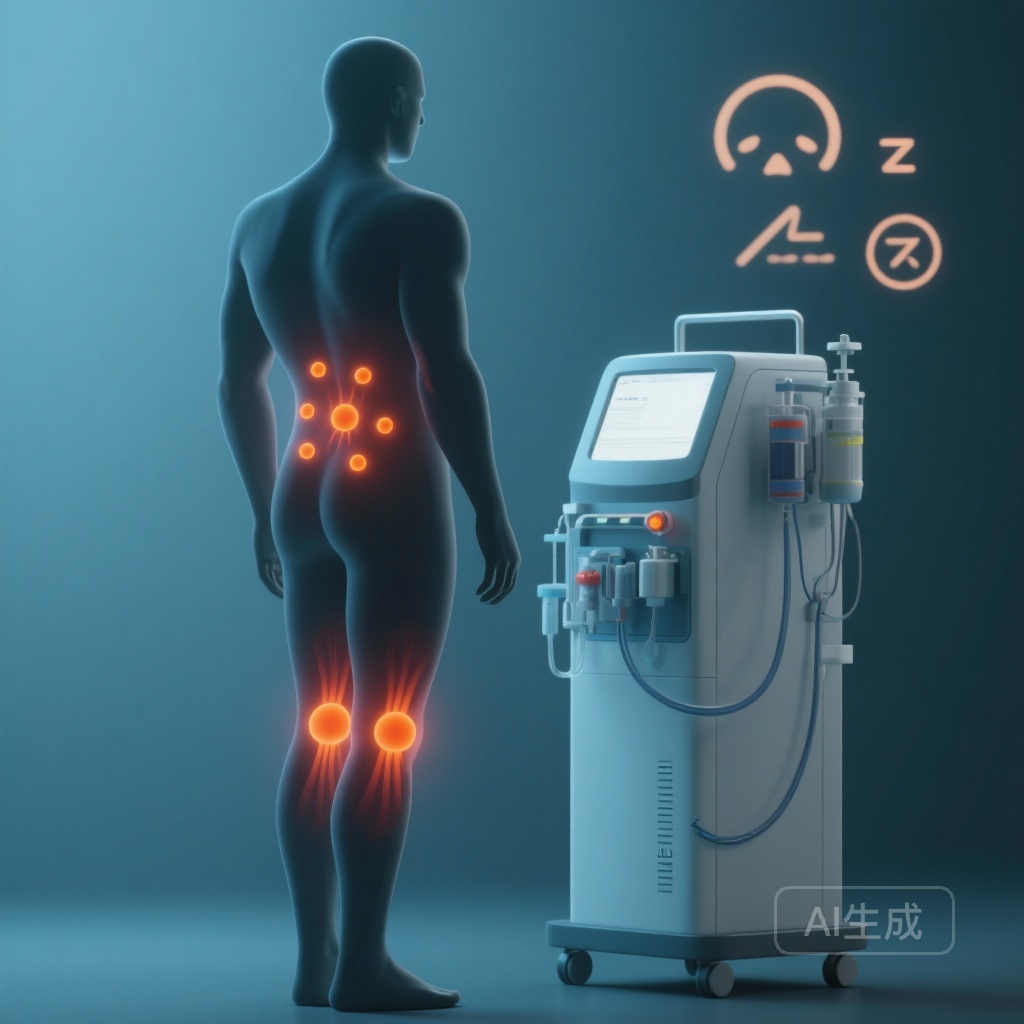
Perhaps the most striking finding was the widespread nature of the pain. Rather than being confined to a single site (such as a vascular access point), the median number of painful body regions was eight, out of 32 possible regions. The most common locations were the lower back (72%), knees (64%), legs (60%), and upper back (59%). While gender-specific patterns showed slight variations, the high prevalence of axial and lower-extremity pain was consistent across the cohort, highlighting a significant burden of mobility-limiting discomfort.
Predictors of Pain Interference and Severity
Using LASSO analysis, the researchers identified factors that most strongly correlate with how much pain interferes with a patient’s life. Interestingly, dialysis-related factors—such as vintage (years on dialysis) or specific laboratory markers—were not the primary drivers. Instead, the strongest associations were found in:
- Psychological Factors: Depression and pain catastrophizing (the tendency to dwell on or exaggerate the threat of pain) were moderately to strongly correlated with higher pain interference (r > 0.4).
- Comorbidities: Cardiovascular disease was a significant predictor of higher pain interference.
- Sociodemographics: Participants identifying as Black or of Hispanic ethnicity reported significantly higher levels of pain interference and severity compared to White and non-Hispanic participants, even after adjusting for other variables. This suggests that structural or social determinants of health may play a critical role in the pain experience of HD patients.
Expert Commentary: Shifting the Paradigm
The results of the HOPE Consortium Trial underscore a vital clinical reality: pain in hemodialysis is a biopsychosocial phenomenon. The high correlation between pain interference and psychological symptoms like fatigue, anxiety, and depression suggests that traditional analgesic approaches—focused solely on pharmacotherapy—may be insufficient. The expert consensus emerging from these findings is that pain management in the dialysis unit must be integrated and multidisciplinary.
Furthermore, the diversity of pain locations and types (musculoskeletal vs. neuropathic) points toward the need for individualized diagnostic workups. The fact that common dialysis metrics did not correlate strongly with pain interference suggests that improving the ‘adequacy’ of dialysis alone is unlikely to alleviate the chronic pain epidemic in this population. Instead, clinicians should consider pain catastrophizing and depression as primary therapeutic targets in the management of chronic pain.
Clinical Implications and Future Directions
The findings advocate for the implementation of routine, comprehensive pain assessments in HD centers. Because the pain is often multisite and chronic, a ‘one-size-fits-all’ approach is destined to fail. Key takeaways for clinical practice include:
- Comprehensive Screening: Moving beyond a simple 1-10 scale to identify specific locations and types (neuropathic vs. musculoskeletal).
- Psychological Support: Integrating cognitive-behavioral therapies or depression management into the renal care plan.
- Addressing Disparities: Recognizing and investigating the roots of racial and ethnic differences in pain reporting and management to ensure equitable care.
As a cross-sectional study, these findings cannot establish causality. However, they provide a robust foundation for future longitudinal studies and clinical trials aimed at evaluating non-pharmacological interventions tailored specifically to the HD population.
Funding and Trial Registration
This study was supported by the National Institutes of Health (NIH) as part of the Helping to End Addiction Long-term (HEAL) Initiative. The HOPE Consortium Trial is registered at ClinicalTrials.gov (NCT number: NCT04571658).
References
Fischer MJ, Hsu JY, Walsh J, et al. Chronic Pain Locations, Characteristics, and Associations With Other Symptoms in Adults Receiving Maintenance Hemodialysis: Findings From the HOPE Consortium Trial. Am J Kidney Dis. 2026 Feb;87(2):182-198.e1. doi: 10.1053/j.ajkd.2025.09.009.