Highlights
– Comprehensive registry linkage covering 628.4 million people in China estimates 43,275 new acute leukaemia cases and 27,049 deaths in 2019 (ASR incidence 2.83/100,000; mortality 1.51/100,000).
– Incidence demonstrates a classic bimodal age distribution: peak at ages 1–4 years and a steep rise after age 60, peaking at 75–79 years (9.33/100,000).
– Five-year overall survival: children with ALL 85.4%, APL 91.1%, and non-APL AML 66.5%; adults with APL 82.5% but poor outcomes for adult ALL (30.1%) and non-APL AML (23.9%).
– Recent modest survival improvement (HR 0.97 for 2019–20 vs 2016–18) concentrated in younger adults and linked to expanded allogeneic haematopoietic stem-cell transplantation (allo-HSCT). Outcomes remain unacceptable for patients aged ≥60 years.
Background — disease burden and clinical context
Acute leukaemias (acute lymphoblastic leukaemia, ALL; and acute myeloid leukaemia, AML, including acute promyelocytic leukaemia, APL) are biologically heterogeneous hematologic malignancies with age-dependent incidence and very different natural histories and treatment paradigms. Population-level incidence, mortality, and survival benchmarks are essential to plan services (diagnostic networks, chemotherapy, targeted agents, and transplant capacity), allocate resources, and prioritise clinical research. Prior national estimates in China have been limited by incomplete registries or small cohorts; the reported Lancet Haematology 2025 study provides a comprehensive, nationwide-linked assessment of incidence, mortality, and survival across age groups and major subtypes.
Study design and methods
This was a population-based cancer registry analysis and cohort survival study using linkage via unique national identification numbers. Incidence and mortality for 2019 were derived from National Cancer Centre (NCC) registries linked to the Hospital Quality Monitoring System (HQMS), covering a population of 628.4 million. Rates were age-standardised to Segi’s world standard population; subgroup analyses included sex, region, and subtype (non-APL AML, APL, ALL).
For survival, investigators created a large cohort by integrating the Chinese Childhood Leukaemia Registry (33,530 children aged 0–14 years) and the National Adult Acute Leukaemia Registry of China (71,477 adults ≥15 years) for 2016–20, linked to the Cause of Death Reporting System and HQMS. Survival analyses used Kaplan–Meier estimates of overall and cause-specific survival at multiple timepoints (1 month, 1–5 years). Multivariable Cox regression identified prognostic factors including age, subtype, molecular markers, treatment modalities (notably allo-HSCT), and diagnosis period (2016–18 vs 2019–20).
Key findings
Incidence and mortality
Across the NCC-covered population, the study estimated 43,275 new acute leukaemia cases and 27,049 deaths in 2019. The overall age-standardised incidence rate (ASR) was 2.83 per 100,000 (95% CI 2.78–2.88), and the ASR for mortality was 1.51 per 100,000 (95% CI 1.48–1.54).
Subtype ASRs (per 100,000): non-APL AML 1.24 (1.21–1.26); ALL 0.92 (0.89–0.95); APL 0.22 (0.21–0.23). The age distribution showed a classic early-childhood peak with incidence 4.54/100,000 in ages 1–4 years, a trough in young adulthood, and a sharp rise after age 60, peaking at 9.33/100,000 in ages 75–79. Mortality was low through age 44 and rose progressively with older age, reaching 8.77/100,000 in ages 80–84.
Survival by age and subtype
Survival varied markedly by subtype and age.
Children (0–14 years): 5-year overall survival (OS) was 66.5% (95% CI 65.3–67.9) for non-APL AML, 91.1% (89.6–92.6) for APL, and 85.4% (84.9–85.8) for ALL. These figures demonstrate substantial success in pediatric management, consistent with international benchmarks for ALL and APL.
Adults (≥15 years): 5-year OS was 23.9% (95% CI 23.4–24.3) for non-APL AML, 82.5% (81.7–83.4) for APL, and 30.1% (29.2–30.9) for ALL. Outcomes for APL were excellent across ages, reflecting effective targeted therapy (all-trans retinoic acid and arsenic trioxide). In contrast, non-APL AML and adult ALL carry substantially worse prognosis.
Temporal trends and treatment effects
Overall survival improved modestly in 2019–20 compared with 2016–18 (multivariable hazard ratio [HR] 0.97, 95% CI 0.95–0.99; p=0.0014). The benefit was concentrated in younger adults: non-APL AML patients aged <60 years and ALL patients aged <40 years experienced the largest gains. Investigators attribute much of the improvement to expanded application of allo-HSCT, which increased access for transplant-eligible patients and appears associated with better outcomes in appropriate subgroups.
Outcomes for older adults
Despite incremental gains in younger cohorts, outcomes in older adults remained poor and unchanged in clinically meaningful ways: 5-year OS was 14.9% (95% CI 14.3–15.5) for ages 60–74 and 4.8% (4.2–5.4) for ages ≥75. Older patients account for a disproportionate share of mortality because of higher incidence and lower survival.
Expert commentary: interpretation, strengths, and limitations
This study provides the most detailed, contemporary national picture of acute leukaemia epidemiology in China. The principal strengths are size and linkage: coverage of >600 million people using unique national IDs, integration of cancer registries with hospital quality and mortality systems, and a large survival cohort permitting subtype- and age-specific analyses. The separation of APL as a distinct category is clinically important because of its unique biology and targeted curability.
Limitations include potential registry coverage bias (the NCC-covered 628.4 million does not equal the entire national population; regional heterogeneity could influence estimates). Case ascertainment and subtype classification depend on registry quality and local diagnostic resources (flow cytometry, cytogenetics, molecular testing) — misclassification is possible, especially in resource-limited areas. The study period (2016–20) captures early impacts of changing therapy access but is insufficient to examine long-term secular trends or late effects. Treatment-detail granularity (e.g., use of novel targeted agents, chemotherapy intensity, supportive-care measures) is limited in registry data, raising potential residual confounding in survival analyses. Finally, causes of the observed age-specific incidence patterns (environmental, genetic, perinatal exposures) remain to be elucidated.
Clinical and policy implications
Several actionable points follow:
1) Service planning: The bimodal incidence means pediatric oncology services and geriatric haemato-oncology capacity must both be strengthened. Regions with high elderly incidence will require increased supportive care and access to less intensive curative and palliative options.
2) Allo-HSCT access: Expanded transplant access correlates with survival gains in younger adults. Continued investment in donor registries, transplant centres, and post-transplant care (including infection control and graft-versus-host disease management) should be a priority.
3) Urgent need for better elderly therapies: Outcomes for patients aged ≥60 are unacceptably poor. This signals a critical need for lower-toxicity, effective regimens for older AML/ALL patients (hypomethylating agents, BCL-2 inhibitors, novel targeted therapies, and optimized supportive care) and inclusion of older patients in clinical trials.
4) Surveillance and research: The national benchmarks facilitate monitoring of environmental and occupational risk factors, identification of geographic clusters, and evaluation of prevention strategies. Enhanced molecular characterization in registries would aid precision-medicine efforts and better link biology to outcomes.
Conclusion
This comprehensive, population-based study defines contemporary incidence, mortality, and survival across acute leukaemia subtypes in China. It confirms excellent outcomes for pediatric ALL and for APL across ages, documents survival advances linked to broader allo-HSCT use in younger adults, and highlights the profound unmet need for effective, tolerable therapies in older adults who bear a growing share of disease burden. These findings should inform national planning for diagnostics, transplant capacity, geriatric oncology, and research prioritisation toward therapies that improve outcomes for older and medically frail patients.
Funding
Study funding: State Key Laboratory of Medical Genomics; Double First-Class Project; Overseas Expertise Introduction Project for Discipline Innovation; National Natural Science Foundation of China; Innovative Research Team of High-level Local Universities in Shanghai; Shanghai Guangci Translational Medical Research Development Foundation; CAMS Innovation Fund for Medical Sciences.
References
1. Yin W, Yan X, Cai J, et al.; China Acute Leukaemia Epidemiology; Clinical and Multi-omics Data Consortium. Incidence, mortality, and survival associated with acute leukaemia subtypes by age group in China: a population-based cancer registry analysis and cohort study. Lancet Haematol. 2025 Oct;12(10):e808-e822. doi:10.1016/S2352-3026(25)00236-4.
2. Sung H, Ferlay J, Siegel RL, et al. Global Cancer Statistics 2020: GLOBOCAN estimates of incidence and mortality worldwide for 36 cancers in 185 countries. CA Cancer J Clin. 2021;71(3):209–249.
3. Platzbecker U, et al. Management of older patients with acute myeloid leukaemia: an unmet clinical need. (Review articles discussing elderly AML outcomes and therapies are widely available in Blood Reviews and Leukemia journals.)
AI thumbnail prompt
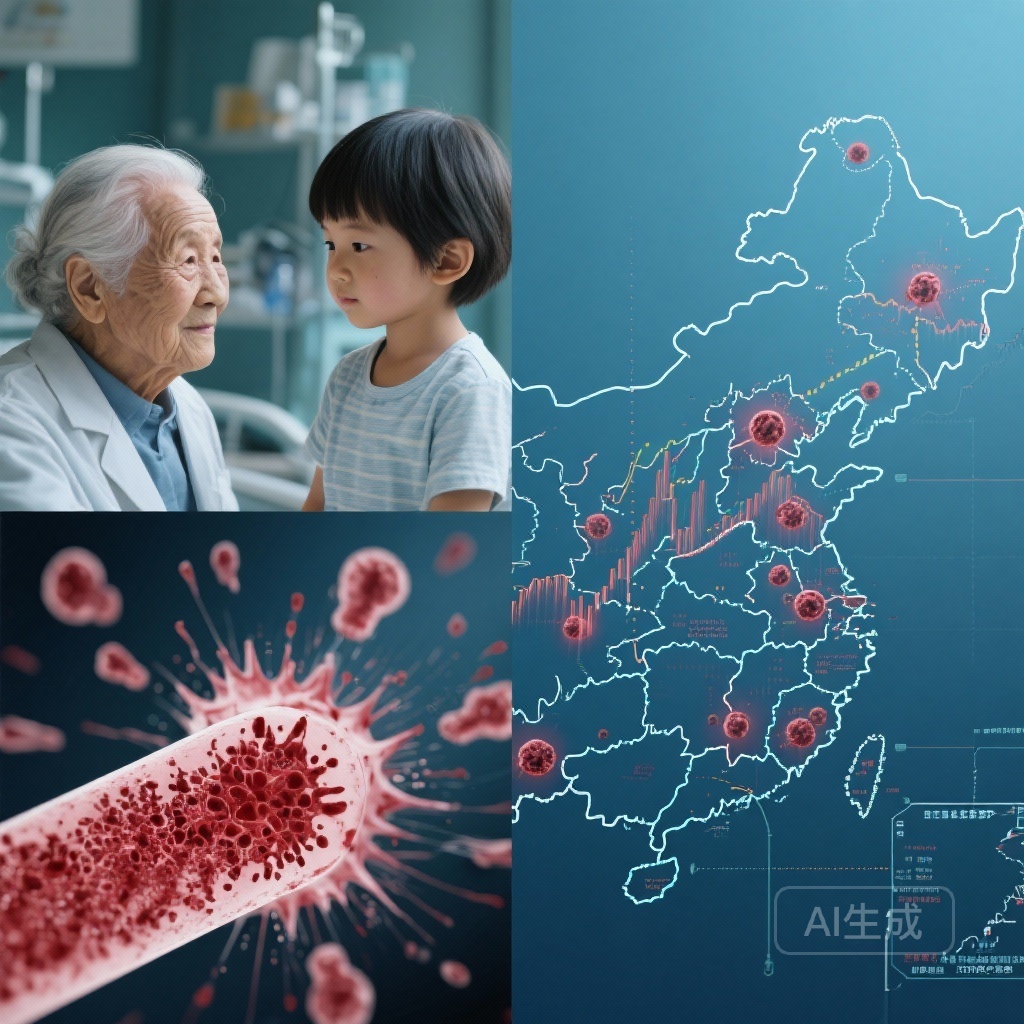
High-resolution thumbnail: a split-scene medical montage — left side: a smiling pediatric oncologist holding a child patient (mock clinical setting), right side: an older patient sitting in a clinic, middle foreground a stylized blood smear showing leukemic blasts and APL promyelocytes; faint map of China in background with small colored incidence curves overlay. Clinical, informative, compassionate tone, photorealistic, cool-blue palette, soft lighting, wide aspect ratio.