Highlights
- Identification of 23 plasma proteins significantly associated with incident noncancer venous thromboembolism (VTE), 15 of which were previously unknown to the disease’s pathophysiology.
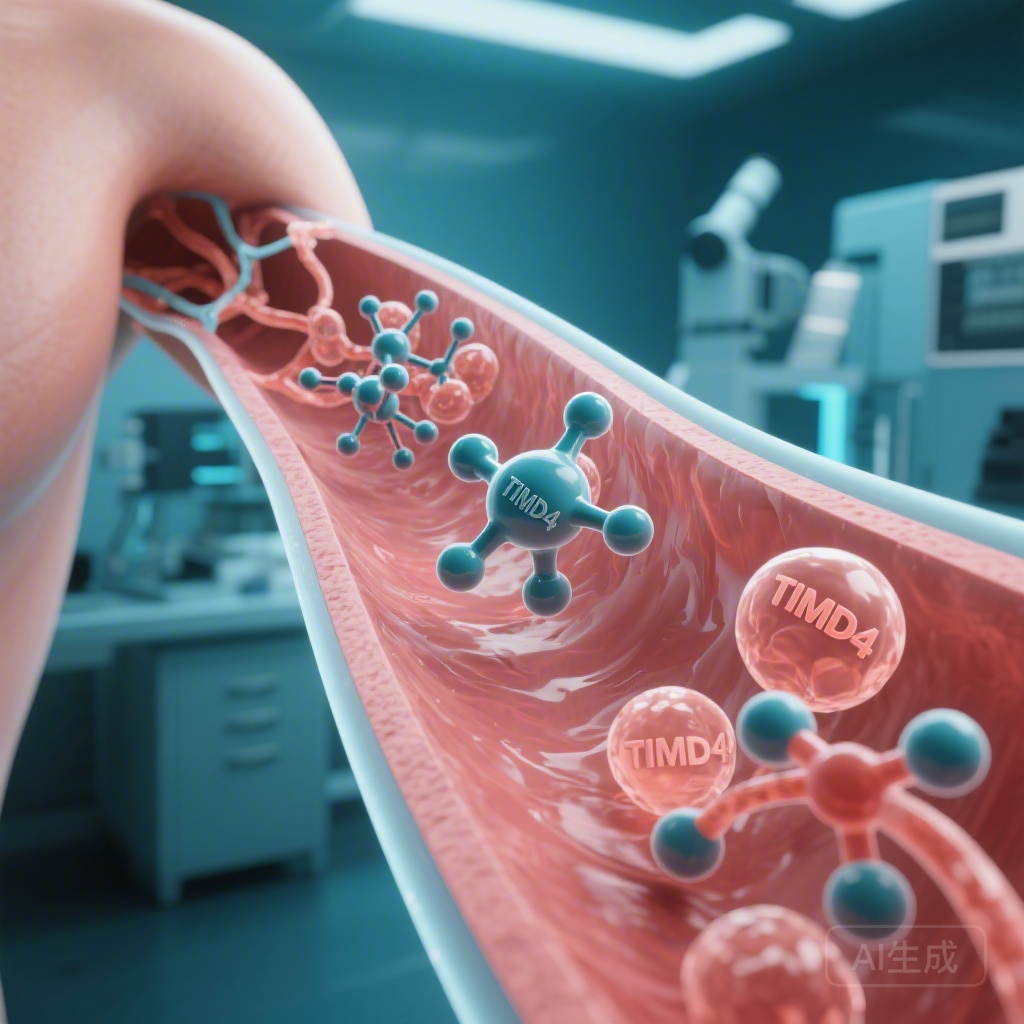
- Mendelian randomization (MR) provided evidence for a potential causal role of TIMD4 (T-cell immunoglobulin and mucin domain-containing protein 4) and suggestive causal roles for TIMP4 and Cystatin-C (CST3).
- The study highlights biological pathways including extracellular matrix (ECM) regulation, vascular senescence, and immune-vascular interactions as critical components of VTE risk.
Background: The Unmet Need in VTE Risk Stratification
Venous thromboembolism (VTE), encompassing deep vein thrombosis and pulmonary embolism, remains a major contributor to global cardiovascular morbidity and mortality. Despite decades of research into the Virchow’s triad—stasis, endothelial injury, and hypercoagulability—the underlying etiology of many incident VTE cases remains poorly understood. Current risk prediction models often rely on clinical factors and a limited set of established coagulation markers, which may fail to capture the complex molecular landscape preceding a thrombotic event.
Emerging high-throughput proteomic technologies offer a transformative opportunity to look beyond traditional clotting factors. By measuring thousands of proteins simultaneously, researchers can identify novel pathways that contribute to venous thrombosis, potentially uncovering new targets for prevention and therapeutic intervention. This study, published in Circulation, represents one of the most comprehensive efforts to date to map the proteomic architecture of VTE risk.
Study Design: A Multi-Cohort Proteomic Approach
To identify and validate novel biomarkers, the investigators utilized a multi-stage, longitudinal study design involving several prominent cohorts. The discovery and initial meta-analysis phase included data from the ARIC (Atherosclerosis Risk in Communities) study, the Cardiovascular Health Study (CHS), and the Multi-Ethnic Study of Atherosclerosis (MESA). The findings were subsequently replicated in the HUNT study (Trøndelag Health) and the UK Biobank (UKB).
The total study population comprised 20,737 participants in the discovery and HUNT cohorts, with a maximum follow-up ranging from 10 to 29 years. During this period, 1,371 incident noncancer VTE events occurred. Plasma protein levels were measured at baseline using the SomaScan platform (measuring approximately 5,000 to 7,000 proteins). External replication in the UK Biobank (n=39,097; 783 VTE events) utilized the Olink proteomics platform, providing a cross-platform validation of the findings.
Statistical analysis involved Cox proportional hazards regression to estimate associations between baseline protein levels and future VTE risk, adjusted for age, sex, race, and other clinical covariates. Furthermore, Mendelian randomization (MR) was employed to assess whether the identified proteins were likely to be causally linked to VTE rather than being mere bystanders or markers of subclinical disease.
Key Findings: Novel Markers and Biological Pathways
The meta-analysis of the ARIC, CHS, and MESA cohorts, followed by replication in the HUNT study, identified 23 proteins significantly associated with VTE risk. Of these, 15 proteins were identified as novel markers for VTE. Three of these novel markers—transgelin, sushi, von Willebrand factor type A, EGF and pentraxin domain-containing protein 1 (SVEP1), and metalloproteinase inhibitor 4 (TIMP4)—exceeded the rigorous Bonferroni-corrected significance threshold in the HUNT cohort.
Validation in the UK Biobank further strengthened these findings. Of the 16 proteins from the top list that were available on the Olink panel, 11 were successfully replicated. The consistency across different proteomic platforms (SomaScan and Olink) and diverse populations underscores the robustness of these biomarkers.
Biological Significance of Identified Proteins
The identified proteins point toward several biological processes that have traditionally been considered peripheral to VTE pathophysiology:
-
Extracellular Matrix (ECM) Regulation:
Proteins like TIMP4 and SVEP1 are involved in the maintenance and remodeling of the vessel wall. Alterations in ECM homeostasis may predispose veins to structural weaknesses or inflammatory changes that facilitate thrombus formation.
-
Immunity and Efferocytosis:
TIMD4 is a key receptor involved in the clearance of apoptotic cells (efferocytosis). Impaired clearance of dead cells can promote a pro-inflammatory environment within the vasculature, a known trigger for thrombosis.
-
Vascular Senescence:
Cystatin-C (CST3), a marker often associated with renal function, also serves as a marker of vascular aging and systemic inflammation, both of which are risk factors for venous events.
Mendelian Randomization: Exploring Causality
The MR analysis provided critical insights into the potential causal nature of these associations. TIMD4 showed significant evidence of a causal link with VTE risk after Bonferroni correction. Suggestive evidence was also found for TIMP4 and CST3. Interestingly, for TIMP4 and TIMD4, the direction of association in the MR analysis (genetic predisposition) was opposite to that observed in the observational proteomics analysis.
This discrepancy is a common finding in proteomic studies and often suggests a compensatory biological mechanism or reverse causation in observational data. For instance, higher circulating levels of a protein measured at baseline might represent the body’s attempt to counteract an underlying pro-thrombotic state, whereas the genetic markers reflect the lifelong exposure to lower or higher baseline activity of that protein. In contrast, the association for CST3 was consistent across both observational and MR analyses, strengthening the case for its direct involvement in VTE risk.
Expert Commentary and Clinical Implications
The identification of these 15 novel proteins significantly expands our understanding of VTE beyond the coagulation cascade. From a clinical perspective, these markers could eventually be integrated into polygenic or poly-proteomic risk scores to identify high-risk individuals who do not fit the traditional clinical profile for VTE.
Moreover, the link to immunity and ECM regulation suggests that anti-inflammatory or vascular-stabilizing therapies might have a role in VTE prevention, particularly in patients with specific proteomic signatures. However, the researchers caution that while these markers are promising, further validation is required to determine their utility in acute clinical settings versus long-term risk stratification.
One notable strength of this study is the use of noncancer VTE cases. By excluding cancer-related thrombosis, the investigators were able to isolate pathways more specific to the general population’s risk profile, avoiding the confounding influence of malignancy-induced hypercoagulability.
Conclusion: A New Map for VTE Research
This landmark study provides a comprehensive map of the plasma proteome as it relates to venous thromboembolism. By identifying markers like TIMD4, TIMP4, and transgelin, the research moves the field toward a more holistic view of thrombosis—one that encompasses the immune system, the structural integrity of the vasculature, and cellular senescence. As proteomic technology becomes more accessible, these markers may pave the way for precision medicine approaches in the prevention and treatment of one of the world’s most common cardiovascular killers.
Funding and Acknowledgments
This research was supported by grants from the National Institutes of Health (NIH), specifically the National Heart, Lung, and Blood Institute (NHLBI). The ARIC, CHS, MESA, and HUNT studies are supported by various national health organizations and research councils in the United States and Norway.
References
- Tang W, Li A, Austin TR, et al. Novel Plasma Proteomic Markers and Risk of Venous Thromboembolism. Circulation. 2026;153(11):810-825. doi:10.1161/CIRCULATIONAHA.125.070000.
- Cushman M. Epidemiology and risk factors for venous thrombosis. Semin Hematol. 2007;44(2):62-69.
- Ganz P, Heidecker B, Hveem K, et al. Development and validation of a protein-based risk score for cardiovascular outcomes among patients with stable coronary heart disease. JAMA. 2016;315(23):2532-2541.