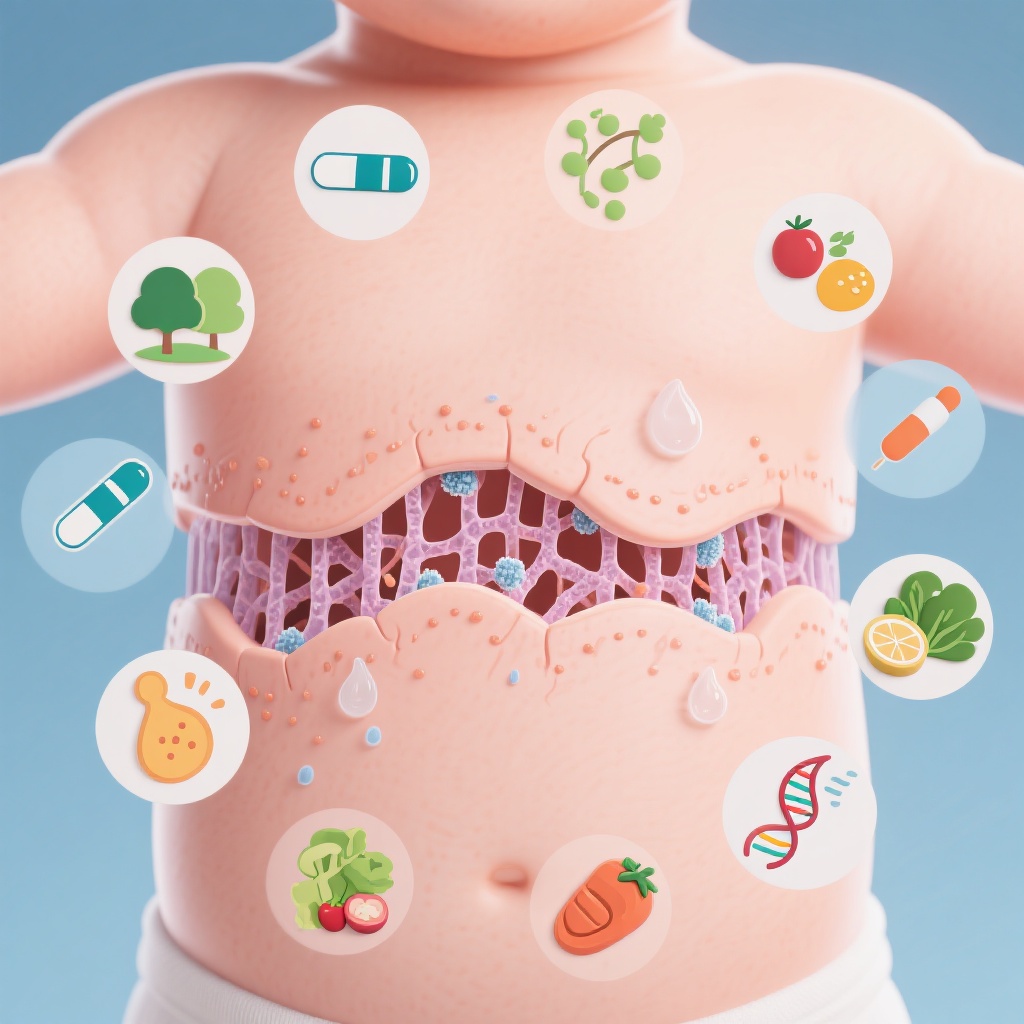
Introduction
The global prevalence of food allergy (FA) has risen significantly over the last several decades, yet the precise incidence and the complex interplay of predictive risk factors remain subjects of intense clinical debate. For clinicians and researchers, understanding the transition from health to sensitization and clinical allergy is paramount for developing effective primary prevention strategies. A landmark systematic review and meta-analysis published in JAMA Pediatrics by Islam et al. provides a robust, evidence-based estimation of these parameters, analyzing data from 190 studies and 2.8 million participants across 40 countries.
Highlights
The study provides several high-certainty insights into the development of food allergy in the first six years of life:
- The confirmed incidence of food allergy in early childhood is approximately 4.7%, as determined by gold-standard oral food challenges.
- Atopic dermatitis in the first year of life remains the strongest clinical predictor of food allergy, with an odds ratio of 3.88.
- Early-life microbiome disruptions, particularly antibiotic exposure in the first month of life, are associated with a four-fold increase in food allergy risk.
- Delayed introduction of allergenic solids, such as peanuts after 12 months, significantly increases the risk of developing a food allergy.
Establishing the Baseline: Food Allergy Incidence
One of the primary challenges in allergy epidemiology is the discrepancy between self-reported allergy and clinically confirmed cases. This meta-analysis prioritized studies using oral food challenges (OFC) to provide a more accurate incidence estimate. With moderate certainty, the researchers determined that 4.7% of children will develop a food allergy by age six. This figure underscores the substantial burden of the disease on pediatric populations and healthcare systems globally.
The Atopic March and Skin Barrier Dysfunction
The findings strongly support the “dual-allergen exposure hypothesis,” which suggests that sensitization occurs through the skin while tolerance is established through the gut. The study identified atopic dermatitis (AD) within the first year of life as a major risk factor (OR, 3.88; 95% CI, 8.8%-15.7%). Furthermore, the severity of AD and increased transepidermal water loss (TEWL)—a marker of skin barrier impairment—were both strongly associated with FA development (TEWL OR, 3.36). Other components of the atopic march, including allergic rhinitis (OR, 3.39) and wheeze (OR, 2.11), also showed significant predictive value, suggesting that food allergy is often a manifestation of a broader systemic allergic diathesis.
Microbiome Disruptors and Early Antibiotic Use
The study highlights the critical role of the early-life environment in shaping immune development. Antibiotic exposure in the first month of life was associated with a dramatic increase in food allergy risk (OR, 4.11). This risk remained elevated, though less pronounced, for antibiotic use throughout the first year (OR, 1.39) and during pregnancy (OR, 1.32). These data suggest that the perturbation of the developing infant microbiome during “critical windows” may hinder the development of oral tolerance.
Timing of Allergen Introduction: The Modifiable Risk
A significant shift in clinical guidelines occurred over the last decade, moving from allergen avoidance to early introduction. This meta-analysis reinforces this shift, finding that delaying the introduction of peanut beyond 12 months was associated with an OR of 2.55 for peanut allergy. This evidence supports the proactive introduction of common allergens to high-risk infants to foster immune tolerance rather than sensitization.
Genetics, Demographics, and Social Determinants
The meta-analysis also quantified non-modifiable risk factors. Genetics play a clear role, with a family history of food allergy in a mother (OR, 1.98), father (OR, 1.69), or sibling (OR, 2.36) notably increasing risk. Filaggrin gene (FLG) sequence variations, which affect skin barrier integrity, were also significant (OR, 1.93).
Interestingly, the study noted significant demographic disparities. Children identifying as Black had a higher risk compared to White children (OR, 3.93), and parental migration was another strong predictor (OR, 3.28). These findings point toward the influence of social determinants of health and potential interactions between ancestry and environmental changes.
Nonsignificant Factors and Clinical Nuance
Importantly, several factors traditionally scrutinized in clinical practice did not show significant associations with food allergy development. These include maternal diet during pregnancy, maternal stress, low birth weight, and post-term birth. While these factors may influence other health outcomes, their direct role in the pathogenesis of food allergy appears minimal based on this large-scale synthesis of evidence.
Expert Commentary and Clinical Implications
The Islam et al. study represents one of the most comprehensive efforts to synthesize the risk landscape of pediatric food allergy. The use of the QUIPS tool for risk of bias and the GRADE framework for certainty of evidence adds substantial weight to the conclusions. For clinicians, the takeaway is clear: primary prevention should focus on skin barrier protection in infants with eczema and the timely introduction of allergenic foods.
However, limitations exist. The heterogeneity of studies across 40 countries means that environmental exposures vary widely. Additionally, while the association with antibiotics is strong, the possibility of “reverse causality” or confounding by indication (where infants with early allergic symptoms are more likely to receive antibiotics) must be considered, although the multivariable analyses used in the included studies sought to mitigate this.
Conclusion
This systematic review confirms that early childhood food allergy is a common condition driven by a complex interplay of skin barrier integrity, microbiome health, and the timing of dietary exposures. By identifying 4.7% as a likely incidence and highlighting modifiable risks like antibiotic use and allergen introduction timing, this research provides a roadmap for clinicians to identify high-risk infants and implement evidence-based interventions to stem the rising tide of allergic disease.
References
Islam N, Chu AWL, Sheriff F, et al. Risk Factors for the Development of Food Allergy in Infants and Children: A Systematic Review and Meta-Analysis. JAMA Pediatr. 2026 Feb 9. doi: 10.1001/jamapediatrics.2025.6105.