Highlights
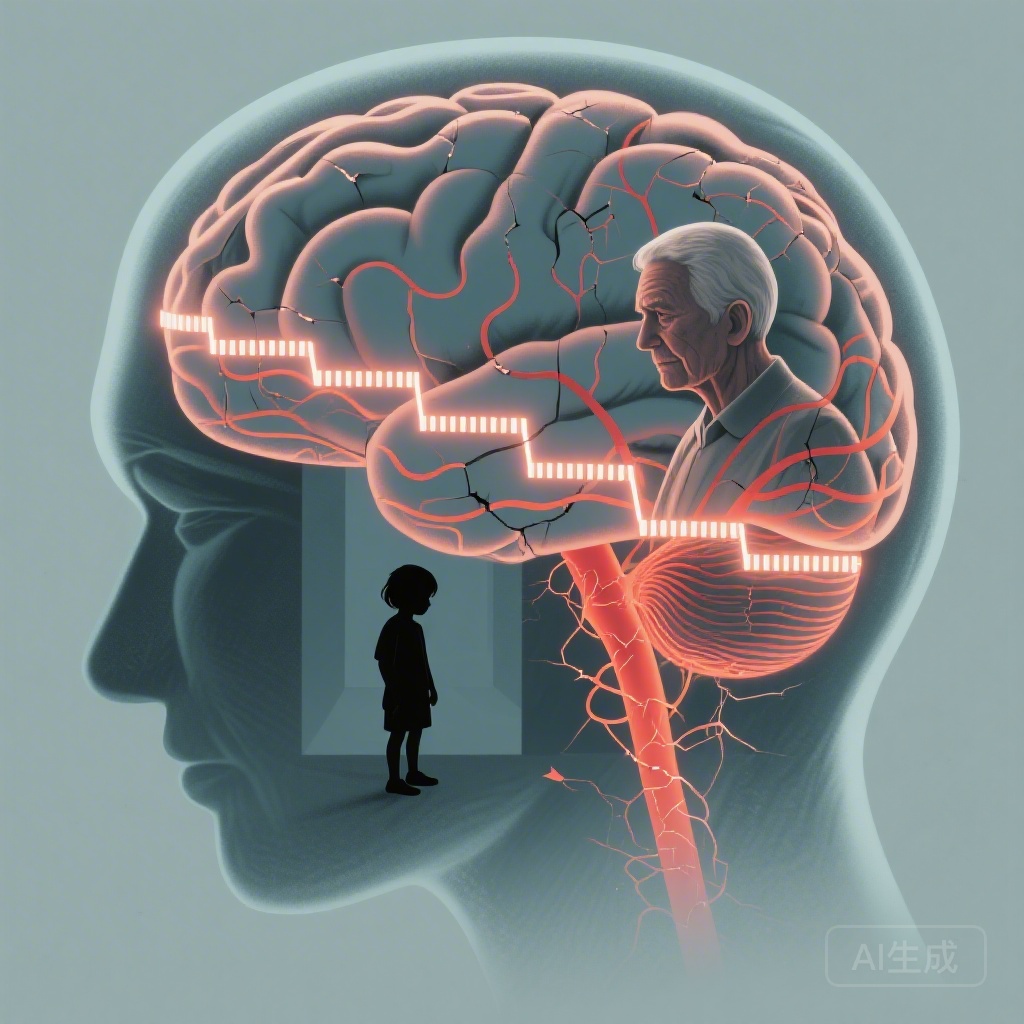
Exposure to adverse childhood experiences (ACEs) and adverse adulthood experiences (AAEs) is significantly associated with an increased risk of incident dementia and stroke in middle-aged and older adults.
Participants in high-risk groups for both ACEs and AAEs exhibited a more than three-fold increase in dementia risk and a 2.5-fold increase in stroke risk compared to those with low exposure.
Depression serves as a major mediator, accounting for up to 34.3% of the association between childhood adversity and subsequent dementia.
While AAEs showed a direct association with stroke, ACEs primarily influenced stroke risk within specific high-risk latent subgroups, suggesting complex developmental pathways to neurovascular disease.
The Growing Burden of Life-Course Stress
The global prevalence of dementia and stroke continues to rise, placing an immense burden on healthcare systems and families. While traditional risk factors such as hypertension, diabetes, and smoking are well-documented, there is increasing recognition that psychosocial factors—particularly those occurring early in life—may set the stage for neurodegenerative and neurovascular pathology decades later. The ‘life-course perspective’ suggests that biological systems are programmed by early environments, and subsequent adult stressors further erode physiological resilience.
In the context of the Chinese population, which is undergoing rapid demographic aging, understanding the long-term impact of adverse experiences is critical. Previous research has linked adverse childhood experiences (ACEs) to mental health disorders, but the specific longitudinal links to clinical endpoints like dementia and stroke, and the role of adulthood stressors (AAEs) in compounding these risks, have remained insufficiently explored until now.
Study Design and Methodology
The study, published in JAMA Network Open, utilized data from the China Health and Retirement Longitudinal Study (CHARLS), a high-quality, population-based cohort. The researchers analyzed 11,601 participants aged 45 years and older, with a baseline established in 2015 and follow-up extending through December 2020. The mean follow-up duration was approximately 4.8 years.
Exposure Assessment
Adversity was categorized into two phases:
1. Adverse Childhood Experiences (ACEs): Included indicators such as physical abuse, parental separation, childhood poverty, and household dysfunction before the age of 17.
2. Adverse Adulthood Experiences (AAEs): Included stressors such as bereavement, serious illness, or financial hardship occurring later in life.
Outcome Measures
Dementia was identified through a comprehensive cognitive battery (measuring episodic memory, visuospatial skills, and mathematical ability) combined with assessments of activities of daily living (ADL). Stroke was determined through self-reported physician diagnoses. Depression, the hypothesized mediator, was evaluated using the 10-item Centre for Epidemiologic Studies Depression Scale (CES-D-10).
Key Findings: Quantifying the Risk
The prevalence of adversity was strikingly high in the cohort. Nearly 79% of participants reported at least one ACE, and 30.4% were exposed to both ACEs and AAEs. The statistical analysis revealed a clear dose-response relationship between cumulative stress and adverse health outcomes.
Dementia Risk
Both childhood and adulthood adversity were independent predictors of dementia. ACEs were associated with an 11% increase in hazard (HR, 1.11; 95% CI, 1.05-1.18), while AAEs were associated with a 23% increase (HR, 1.23; 95% CI, 1.14-1.33). Most notably, for those in the ‘high-risk’ latent classes for both life stages, the hazard ratio for dementia surged to 3.28 (95% CI, 1.54-7.02).
Stroke Risk
The relationship with stroke was slightly more nuanced. In the primary analysis, only AAEs showed a significant overall association with higher stroke hazards (HR, 1.19; 95% CI, 1.12-1.26). However, latent class analysis—which identifies subgroups based on patterns of exposure—revealed that a specific high-risk ACE subgroup was indeed at a 33% higher risk of stroke (HR, 1.33; 95% CI, 1.08-1.65). The joint effect of high childhood and high adult adversity resulted in a 2.50-fold increase in stroke risk.
The Role of Depression as a Mediator
One of the most clinically significant aspects of this study is the identification of depression as a pathway through which trauma leads to organic brain disease. The researchers found that depressive symptoms mediated a substantial portion of the risk:
34.3% of the association between ACEs and dementia.
20.9% of the association between AAEs and dementia.
17.5% of the association between AAEs and stroke.
This suggests that while the biological damage of stress is direct, the psychological manifestation of that stress—depression—acts as a catalyst or a secondary driver of neurovascular decline.
Expert Commentary and Mechanistic Insights
From a clinical perspective, these findings align with the ‘Allostatic Load’ theory. Chronic exposure to psychosocial stress triggers the hypothalamic-pituitary-adrenal (HPA) axis and the sympathetic nervous system, leading to prolonged elevations in cortisol and pro-inflammatory cytokines such as IL-6 and C-reactive protein. Over time, this chronic inflammation contributes to atherosclerosis (increasing stroke risk) and neuroinflammation or amyloid accumulation (increasing dementia risk).
The stronger mediation effect of depression for childhood adversity suggests that early trauma may ‘wire’ the brain for emotional dysregulation, making individuals more susceptible to cognitive decline later in life. In contrast, adulthood adversity may have a more direct impact on vascular health through acute physiological spikes in blood pressure and heart rate associated with major life stressors.
Study Limitations
Clinicians should interpret these results within the context of the study’s limitations. ACEs were recalled retrospectively, which may introduce recall bias. Additionally, stroke was self-reported rather than confirmed via neuroimaging, potentially leading to underdiagnosis or misclassification of stroke types (e.g., ischemic vs. hemorrhagic). The follow-up period of under five years is also relatively short for observing the full trajectory of dementia development.
Clinical Implications and Summary
The findings from the CHARLS cohort underscore the necessity of a holistic, life-course approach to brain health. It is no longer sufficient to manage mid-life hypertension alone; clinicians must recognize that a patient’s history of trauma is a relevant clinical metric.
Key takeaways for practice include:
1. Screening and Early Intervention: Identifying individuals with high ACE scores early in life may allow for psychological interventions that mitigate the long-term risk of depression and subsequent neurovascular disease.
2. Mental Health as Neuroprotection: Treating depression in middle-aged and older adults is not just about improving quality of life; it is a critical strategy for reducing the incidence of dementia and stroke.
3. Policy Shift: Public health initiatives should focus on reducing childhood poverty and household dysfunction as primary prevention strategies for the chronic diseases of aging.
In conclusion, the ‘weathering’ of the brain begins long before the first signs of memory loss or vascular events appear. By addressing the psychological scars of the past and the stressors of the present, we may find a powerful lever to alter the future of neurovascular health.
References
Chen B, Xue E, Li Y, Tang E, Wang Y, Wu Y, Liu S, Zhao J. Life-Course Psychosocial Stress and Risk of Dementia and Stroke in Middle-Aged and Older Adults. JAMA Netw Open. 2026 Jan 2;9(1):e2556012. doi: 10.1001/jamanetworkopen.2025.56012. PMID: 41604149.