Highlights
Anxiety and depression diagnosed following the identification of an unruptured intracranial aneurysm (UIA) are associated with a 33% increased risk of aneurysm rupture and a 28% increase in all-cause mortality.
Patients with post-diagnostic psychological distress showed a trend toward lower rates of preventive surgical or endovascular treatment, potentially contributing to higher rupture rates.
High adherence to psychiatric medication was associated with a mitigation of mortality risk, suggesting that effective mental health management may improve clinical outcomes in this population.
The study utilizes a robust landmark analysis of over 120,000 patients, addressing immortal time bias and providing strong evidence for the integration of psychiatric care into neurovascular protocols.
Background: The Hidden Toll of Neurovascular Diagnosis
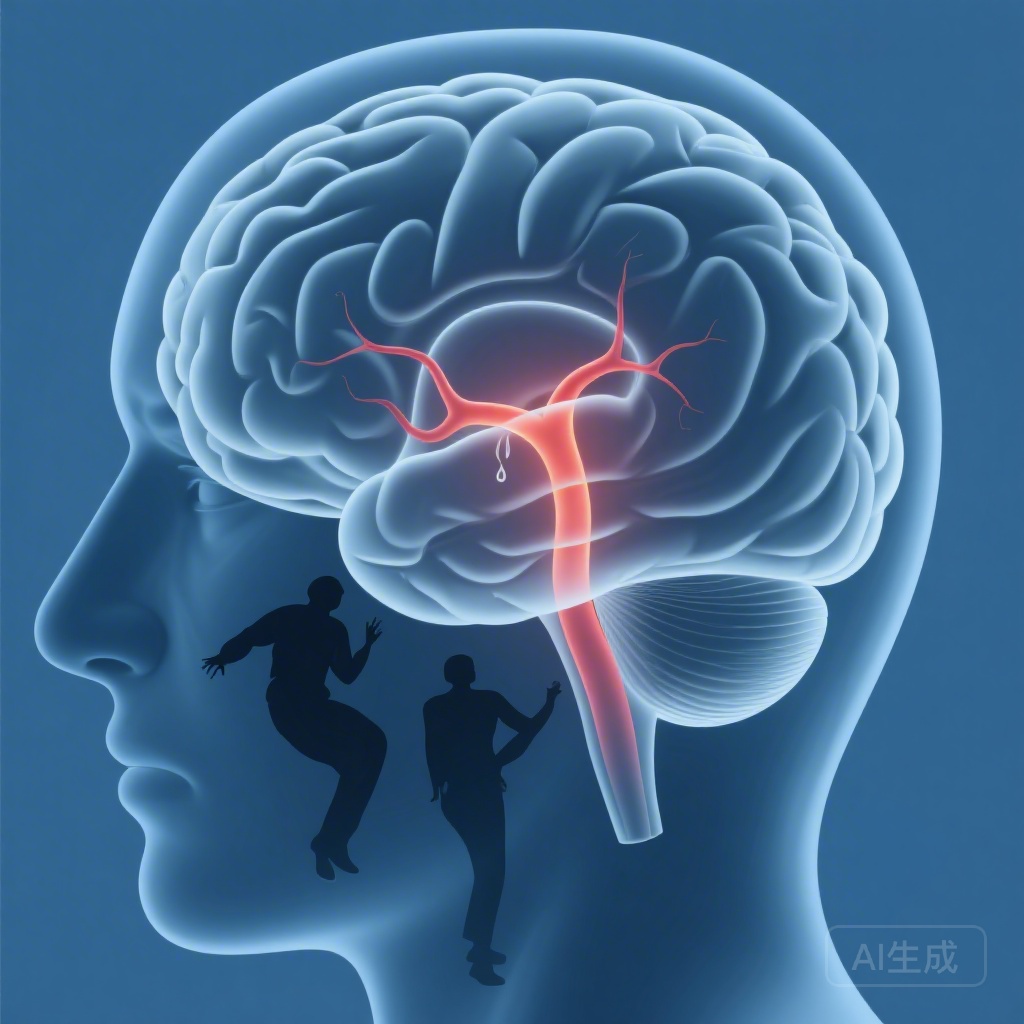
Unruptured intracranial aneurysms (UIAs) are relatively common, with a prevalence of approximately 3% in the general population. While many UIAs remain stable throughout a patient’s life, the psychological impact of being diagnosed with a potential intracranial hemorrhage is profound. Clinicians often refer to this as the ticking time bomb phenomenon, where the knowledge of the aneurysm leads to chronic stress, anxiety, and depression.
While the physical risk factors for UIA rupture—such as size, location, hypertension, and smoking—are well-documented, the impact of the patient’s psychological state on their clinical trajectory has remained under-explored. Chronic stress is known to influence systemic inflammation and hemodynamic stability, both of which are critical in the pathogenesis of vascular rupture. This study, recently published in Stroke, aims to quantify how post-diagnostic mental health disorders affect the management and survival of patients living with UIAs.
Study Design and Methodology: A Large-Scale Collaborative Analysis
To investigate this association, researchers utilized the TriNetX Global Collaborative Network, a massive multi-institutional database containing records for over 130 million patients across approximately 250 healthcare organizations. The initial cohort included 127,361 adults diagnosed with UIAs between 2015 and 2025.
Addressing Immortal Time Bias
A critical challenge in retrospective studies of post-diagnostic conditions is immortal time bias—the period during which the event of interest (e.g., death or rupture) cannot occur because the patient must survive long enough to receive a psychiatric diagnosis. To account for this, the researchers employed a 127-day landmark analysis. This period represented the median time to a psychiatric diagnosis after the UIA was identified. Only patients who survived and remained event-free for the first 127 days were included in the final analysis.
Propensity Score Matching
Of the 119,211 patients surviving to the landmark, 7,250 were diagnosed with anxiety or depression within the first 127 days. These patients were 1:1 propensity score-matched to controls based on a wide array of baseline characteristics, including age, sex, race, comorbidities (hypertension, diabetes, etc.), and smoking status. This resulted in two balanced cohorts of 6,800 patients each, with a median follow-up of approximately 4.3 years.
Key Findings: Quantifying the Impact of Psychological Distress
The results of the Cox proportional hazards models revealed a significant correlation between mental health status and adverse neurovascular outcomes. Patients in the anxiety/depression cohort faced a significantly higher risk of both all-cause mortality and aneurysm rupture compared to their matched counterparts.
Mortality and Rupture Rates
The all-cause mortality rate was 6.3% in the psychiatric cohort compared to 4.5% in the control group (Hazard Ratio [HR], 1.28; 95% CI, 1.11-1.48; P < 0.001). More strikingly, the rate of aneurysm rupture was 3.1% in the anxiety/depression group versus 2.2% in the control group (HR, 1.33; 95% CI, 1.08-1.64; P = 0.007). The five-year survival rate was notably lower for those with psychological distress (93.7% vs 95.5%).
Treatment Patterns
Interestingly, the study observed a trend regarding preventive treatment (surgical clipping or endovascular coiling). Patients with anxiety or depression were less likely to receive preventive interventions (Odds Ratio, 0.80; 95% CI, 0.62-1.03; P = 0.082). While this did not reach the threshold for statistical significance, it suggests a potential behavioral component where psychological distress might lead to treatment avoidance or differences in clinical decision-making by providers.
Dose-Response and Sensitivity: Strengthening the Evidence
To ensure the robustness of these findings, the researchers conducted several sensitivity and subgroup analyses. A 365-day landmark analysis confirmed the primary results, showing similar hazard ratios for mortality (1.22) and rupture (1.28). Furthermore, Fine-Gray competing risk models, which account for the fact that death can prevent the observation of a rupture, yielded consistent subdistribution hazard ratios.
The Protective Role of Psychiatric Medication
One of the most clinically relevant findings was the dose-response relationship between psychiatric medication adherence and mortality. Patients with low adherence to prescribed psychiatric medications had a significantly higher mortality risk (HR, 1.50). Conversely, those with high adherence showed a much lower, non-significant risk (HR, 1.16). This suggests that effectively treating the underlying anxiety or depression may mitigate some of the excess risk associated with the UIA diagnosis.
Expert Commentary: Mechanistic Insights and Clinical Implications
The association between mental health and aneurysm rupture likely involves complex biological and behavioral pathways. From a physiological standpoint, chronic anxiety and depression are associated with dysregulation of the hypothalamic-pituitary-adrenal (HPA) axis, leading to elevated levels of cortisol and catecholamines. These changes can cause transient spikes in blood pressure and promote systemic inflammation, both of which weaken the aneurysm wall and increase the risk of transmural pressure shifts.
Behavioral and Management Factors
Behaviorally, patients with significant psychological distress may struggle with self-care, including blood pressure management and smoking cessation, which are the cornerstones of conservative UIA management. Furthermore, the trend toward lower preventive treatment rates suggests that psychological distress may complicate the shared decision-making process, perhaps leading to decisional paralysis or a lack of engagement with neurosurgical follow-up.
Study Limitations
While the study is large and methodologically rigorous, it is retrospective and relies on ICD-10 coding, which may under-capture the true prevalence of mental health disorders. Residual confounding remains possible, as factors like aneurysm size and morphology were not fully available in the TriNetX database. Additionally, the E-values (1.88 for mortality and 1.99 for rupture) suggest that while the findings are robust, they could potentially be influenced by unmeasured confounders of moderate strength.
Conclusion: Moving Toward Integrated Neurovascular Care
This study underscores that the management of unruptured intracranial aneurysms must extend beyond the anatomical and hemodynamic characteristics of the lesion. The psychological state of the patient is not just a quality-of-life issue but a critical determinant of survival and rupture risk. These findings suggest that an integrated approach—incorporating routine psychiatric screening and mental health support—should be considered a standard component of UIA management. By addressing the anxiety and depression that often follow a neurovascular diagnosis, clinicians may not only improve the patient’s well-being but also directly reduce the risk of catastrophic outcomes.
References
1. Essibayi MA, Azzam AY, Salim HA, et al. Postdiagnostic Anxiety and Depression Increase Rupture Risk and Mortality in Unruptured Intracranial Aneurysms. Stroke. 2026. PMID: 41778321.
2. Thompson BG, Brown RD Jr, Amin-Hanjani S, et al. Guidelines for the Management of Patients With Unruptured Intracranial Aneurysms: A Guideline for Healthcare Professionals From the American Heart Association/American Stroke Association. Stroke. 2015;46(8):2368-2400.
3. Greving JP, Wermer MJ, Brown RD Jr, et al. Development of the PHASES score for prediction of risk of rupture of intracranial aneurysms: a pooled analysis of individual patient data. Lancet Neurol. 2014;13(1):59-66.