Highlights
- Durable Functional Independence: Patients treated with endovascular thrombectomy (EVT) were twice as likely to achieve an mRS score of 0 to 3 at three years compared to those receiving best medical management alone (38.4% vs. 18.3%).
- Significant Mortality Reduction: Cumulative 3-year mortality was substantially lower in the EVT group (55.7%) compared to the control group (73.1%), with an adjusted risk ratio of 0.76.
- Age-Dependent Benefits: Subgroup analysis revealed robust long-term benefits in patients younger than 70 years, whereas a significant treatment effect was not demonstrated in patients aged 70 and older.
- Standard of Care Confirmed: These longitudinal data reinforce EVT as the definitive intervention for acute basilar artery occlusion, supporting global efforts for rapid access to thrombectomy services.
Introduction: The Critical Nature of Basilar Artery Occlusion
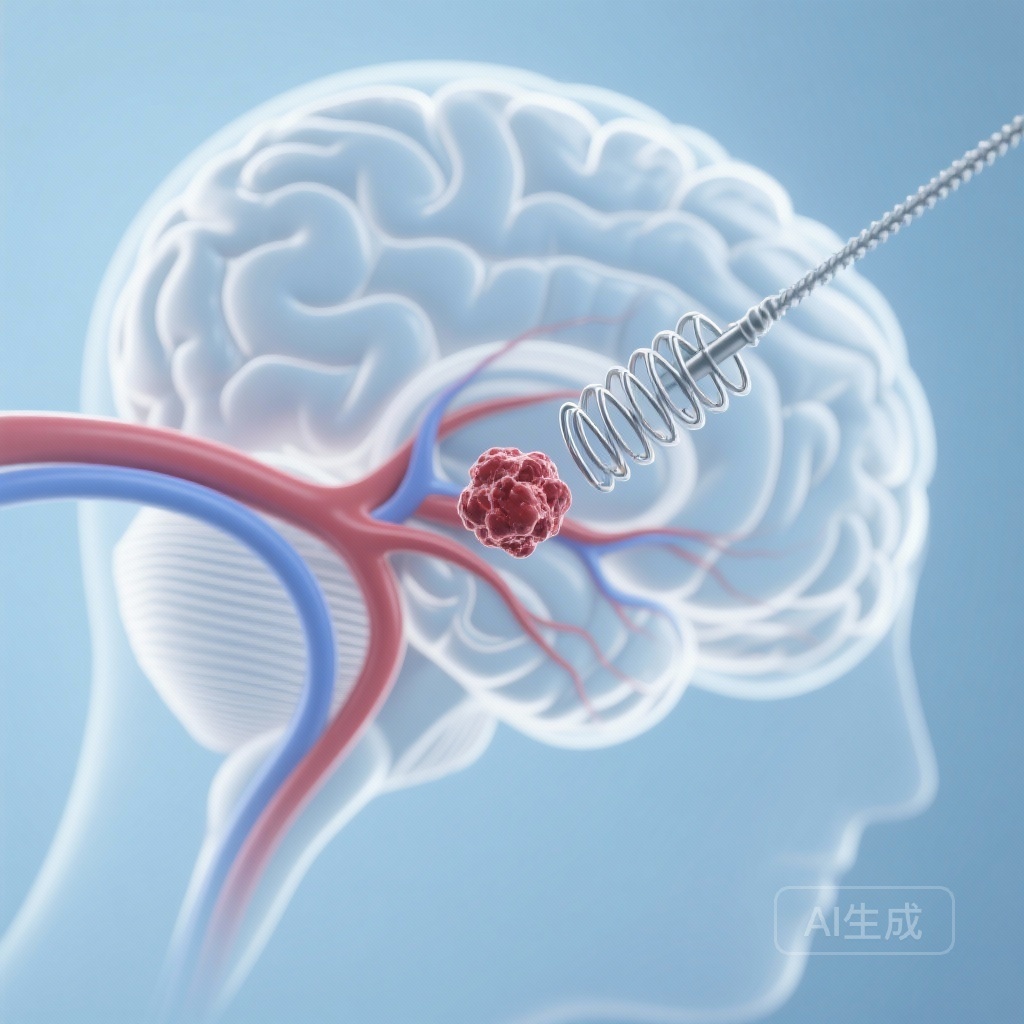
Acute basilar artery occlusion (BAO) represents one of the most devastating forms of ischemic stroke, historically associated with mortality and severe disability rates exceeding 80% when managed with conventional medical therapy. Unlike anterior circulation strokes, which involve the carotid territory, BAO impacts the brainstem, cerebellum, and posterior cerebral hemispheres—areas responsible for vital life functions, consciousness, and motor control.
While endovascular thrombectomy (EVT) has revolutionized the treatment of large vessel occlusions in the anterior circulation, its role in BAO was initially clouded by neutral results from early randomized controlled trials (RCTs) such as BEST and BASICS. However, these trials were hampered by high crossover rates and recruitment challenges. The landscape shifted dramatically with the publication of the ATTENTION and BAOCHE trials, which provided high-quality evidence for the 90-day efficacy of EVT in BAO. Despite these short-term successes, clinicians have long questioned whether the benefits of mechanical reperfusion are sustained over time or if the underlying severity of the condition leads to a late-stage convergence of outcomes between treatment groups.
The ATTENTION Trial: Bridging the Long-Term Evidence Gap
The 3-year follow-up of the ATTENTION (Endovascular Treatment of Acute Basilar Artery Occlusion) trial sought to address this critical evidence gap. By extending the observation period beyond the standard 90-day window, researchers aimed to determine if the functional gains observed in the acute phase translate into long-term survival and quality of life. This longitudinal perspective is essential for health policy makers and clinicians to justify the resource-intensive infrastructure required for comprehensive stroke centers.
Study Design and Methodological Framework
Population and Randomization
The ATTENTION trial was a multicenter, open-label, assessor-blinded randomized clinical trial conducted across 36 comprehensive stroke centers in China. Between February 2021 and January 2022, 340 adult patients with imaging-confirmed acute BAO within 12 hours of symptom onset were enrolled. Patients were randomized in a 2:1 ratio to receive either EVT plus best medical management (BMM) or BMM alone.
Interventions
In the thrombectomy arm, the choice of device—including stent retrievers, aspiration catheters, or balloon angioplasty—was left to the discretion of the treating neurointerventionalist. BMM followed current clinical guidelines, including intravenous thrombolysis when eligible. The 3-year extension collected data through January 2025, with a high retention rate; 90.3% of the original cohort (307 patients) completed the follow-up.
Endpoints
The primary outcome for the 3-year analysis was functional independence, defined as a modified Rankin Scale (mRS) score of 0 to 3. This threshold signifies the ability to walk and attend to bodily needs without assistance. Secondary endpoints included mRS 0-2 (functional independence in daily activities), the overall distribution of mRS scores (ordinal shift analysis), and cumulative mortality.
Detailed Results: Sustained Efficacy and Survival Gains
The 3-year results provide a compelling case for the durability of EVT. Of the 307 patients analyzed (median age 68; 69% male), those in the EVT group demonstrated significantly better functional outcomes across all key metrics.
Functional Outcomes
At the 3-year mark, 38.4% (78 of 203) of patients in the EVT group achieved an mRS score of 0 to 3, compared to only 18.3% (19 of 104) in the medical management group. This resulted in an adjusted risk ratio (aRR) of 2.05 (95% CI, 1.35-3.11; P = .001). The ordinal shift analysis—which evaluates the improvement across the entire spectrum of disability—also heavily favored EVT, with an adjusted common odds ratio of 2.60 (95% CI, 1.53-4.43).
Mortality and Survival
Perhaps most striking was the impact on long-term survival. While mortality in both groups increased over time—reflecting the high-risk nature of this patient population—the gap between the groups remained significant. In the EVT arm, mortality rose from 36.7% at 90 days to 55.7% at three years. In contrast, the control group’s mortality rose from 55.3% at 90 days to a staggering 73.1% at three years (aRR 0.76; 95% CI, 0.65-0.89). This indicates that the lives saved by EVT in the acute phase are not merely “delayed deaths,” but represent patients who maintain a level of survival benefit for years.
Subgroup Analysis: The Age Threshold
A prespecified subgroup analysis revealed a notable interaction between treatment effect and age. The benefits of EVT were robust and statistically significant in patients younger than 70 years. However, in patients aged 70 and older, the trial did not demonstrate a significant difference in functional outcomes between EVT and BMM. This finding suggests that frailty, pre-existing comorbidities, and reduced neuroplasticity in the elderly may limit the long-term recovery potential following posterior circulation reperfusion, though this requires further investigation in larger cohorts.
Expert Commentary and Clinical Implications
The ATTENTION 3-year outcomes reinforce the paradigm shift in posterior circulation stroke management. The durability of the treatment effect is a critical finding, as it dispels concerns that the early functional gains might be eroded by recurrent events or the progressive nature of the underlying vascular disease.
Mechanistic Insights
The sustained benefit of EVT likely stems from the successful salvage of brainstem tissue. The brainstem contains densely packed nuclei and white matter tracts; even minor preservation of tissue in this area can mean the difference between persistent vegetative state and functional recovery. By achieving rapid and complete recanalization (TICI 2b/3), EVT prevents the secondary cascade of brainstem edema and ischemia-induced autonomic failure.
Study Limitations and Generalizability
A primary limitation of the study is its geographic focus. The trial was conducted entirely in China, where the prevalence of intracranial atherosclerotic disease (ICAD) as an underlying cause of BAO is higher than in Western populations. While the results are likely applicable globally, the specific technical challenges of treating ICAD-related occlusions—such as the need for rescue stenting—may vary by region. Additionally, the open-label design, while mitigated by blinded outcome assessment, remains a potential source of bias in long-term care and rehabilitation efforts.
The 70-Year-Old Threshold
The lack of significant benefit in patients over 70 should be interpreted with caution. It does not necessarily imply that EVT should be withheld from all elderly patients, but rather that patient selection should be more rigorous in this demographic. Factors such as the baseline mRS, the extent of the ischemic core (PC-ASPECTS score), and the time from symptom onset should be weighed carefully against the risks of the procedure.
Conclusion: Reaffirming the Standard of Care
The 3-year results of the ATTENTION trial provide definitive evidence that the clinical benefits of endovascular thrombectomy for acute basilar artery occlusion are durable. The intervention not only doubles the chances of functional independence but also provides a significant and lasting survival advantage. These findings underscore the urgency of establishing streamlined “drip and ship” or “mothership” protocols to ensure that patients with suspected BAO have immediate access to neurointerventional expertise.
Future research should focus on optimizing outcomes for the elderly and refining the use of adjunctive therapies, such as neuroprotective agents or specialized antithrombotic regimens, to further reduce the high mortality still observed in this population. For now, the message is clear: when the basilar artery is blocked, time is brainstem, and thrombectomy is the definitive solution.
Funding and Registration
The ATTENTION trial was supported by various regional health and science technology grants in China. Clinical Trial Registration: ChiCTR2400082236 (ChiCTR.org.cn).
References
- Hu W, Tao C, Li R, et al. Endovascular vs Medical Treatment of Basilar Artery Occlusion: 3-Year Outcomes of the ATTENTION Randomized Clinical Trial. JAMA Neurol. 2025; Published online December 29, 2024. doi:10.1001/jamaneurol.2025.5077
- Tao C, Nogueira RG, Zhu Y, et al. Trial of Endovascular Treatment of Acute Basilar-Artery Occlusion. N Engl J Med. 2022;387(15):1361-1372.
- Jovin TG, Li C, Wu L, et al. Trial of Thrombectomy 6 to 24 Hours after Stroke Due to Basilar-Artery Occlusion. N Engl J Med. 2022;387(15):1373-1384.
- Langezaal LC, van der Hoeven EJ, Mont’Alverne FJ, et al. Endovascular Treatment for Acute Basilar-Artery Occlusion. N Engl J Med. 2021;384(20):1910-1920.