Highlights
Precise Progression Timelines
The study identifies specific windows for deterioration: approximately 7 days from elevated pulsatility index to intermittent absent end-diastolic flow (iAEDF), and only 4 days from intermittent to persistent reversed end-diastolic flow (REDF).
Risk Stratification
The risk of fetal death increases exponentially with Doppler severity, reaching 11.5% in cases with REDF, whereas the risk remains low in the absence of REDF or abnormal ductus venosus flow.
Clinical Decision Support
These findings provide a ‘worst-case’ timeline that assists clinicians in the optimal timing of antenatal corticosteroids and determining the frequency of outpatient versus inpatient surveillance.
Background: The Challenge of Early-Onset Fetal Growth Restriction
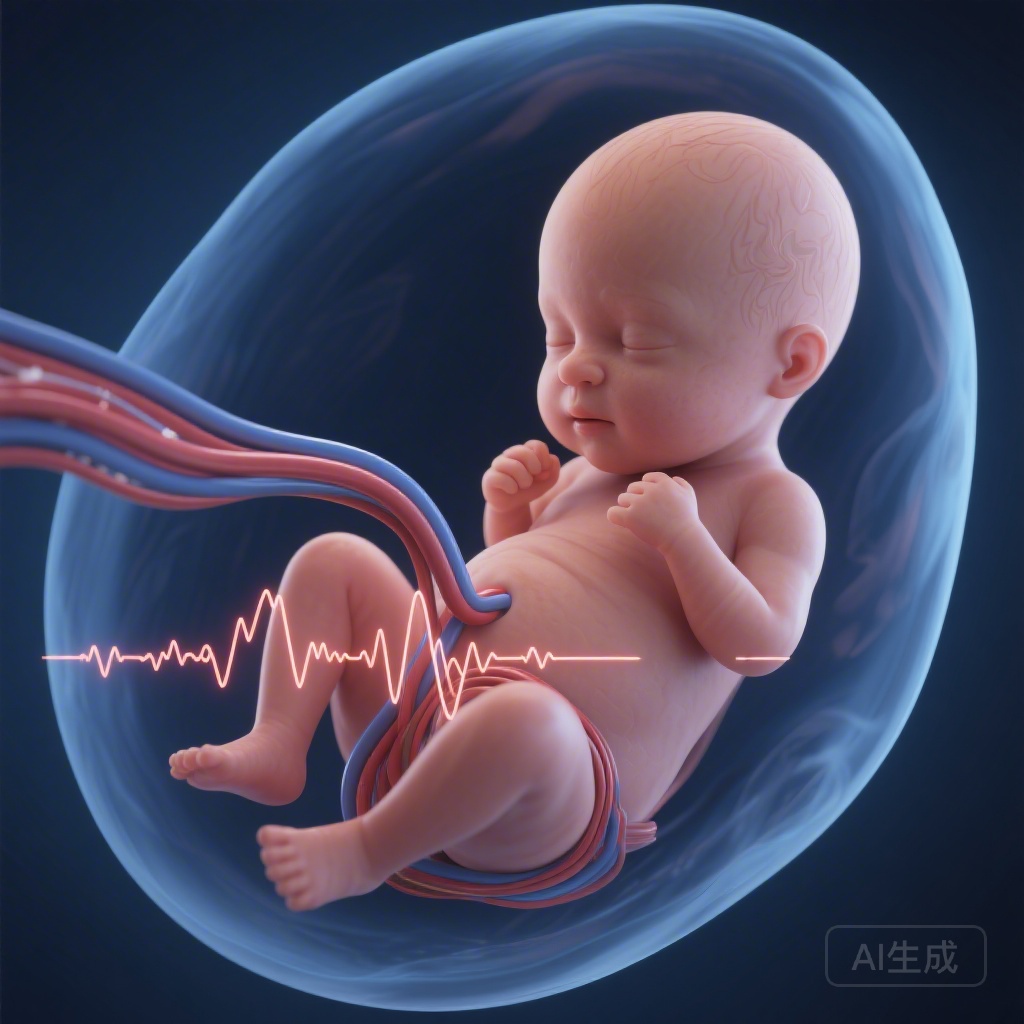
Early-onset fetal growth restriction (FGR), typically occurring before 32 weeks of gestation, remains one of the most challenging conditions in obstetric medicine. It is primarily driven by placental insufficiency, leading to a progressive increase in placental vascular resistance. This resistance is traditionally monitored via Umbilical Artery (UA) Doppler, which serves as a proxy for fetal well-being and placental health.
Historically, clinicians have struggled with the ‘tempo’ of FGR. While we understand the sequence of Doppler deterioration—from an elevated pulsatility index (PI) to absent end-diastolic flow (AEDF) and finally reversed end-diastolic flow (REDF)—the speed at which these changes occur has been difficult to quantify. Prior studies often aggregated patients with varying degrees of severity, leading to broad and sometimes conflicting estimates. For the clinician managing a previable or periviable fetus, knowing whether they have days or weeks before a catastrophic event is paramount for planning corticosteroid administration and delivery.
Study Design and Methodology
In a comprehensive retrospective study published in the American Journal of Obstetrics and Gynecology (2026), Pardo et al. sought to provide more robust data by focusing on a homogeneous cohort of 241 singleton pregnancies. All included cases exhibited severe placenta-mediated early-onset FGR that eventually progressed to late-stage UA Doppler abnormalities (AEDF or REDF).
The study was conducted at a single tertiary center between 2014 and 2024. Researchers analyzed 1,835 individual Doppler assessments, categorizing findings into a hierarchical order of progression:
1. Normal (UA-PI 95th percentile)
3. Intermittent Absent End-Diastolic Flow (iAEDF)
4. Persistent Absent End-Diastolic Flow (AEDF)
5. Intermittent Reversed End-Diastolic Flow (iREDF)
6. Persistent Reversed End-Diastolic Flow (REDF)
The primary endpoints were the time intervals between these successive stages and the interval from each abnormality to either delivery or fetal death.
Key Findings: The Rate of Deterioration
The results offer a granular look at the natural history of severe FGR under close surveillance. The mean gestational age at which late Doppler abnormalities were first detected was 27.5 weeks, with birth occurring at a mean of 28.6 weeks.
Progression Intervals
The study found that the transition between Doppler stages follows a relatively predictable, albeit rapid, timeline:
– Elevated UA-PI to iAEDF: 7 ± 8 days
– iAEDF to AEDF: 6 ± 6 days
– AEDF to iREDF: 6 ± 6 days
– iREDF to REDF: 4 ± 5 days
These data suggest that once the placenta begins to fail significantly (manifesting as elevated PI), the window to late-stage abnormalities is often less than two weeks. This is critical for the timing of betamethasone or dexamethasone, which have peak efficacy within 2-7 days of administration.
Time to Delivery
The interval to delivery was inversely proportional to the severity of the Doppler findings. The median time to delivery from an elevated UA-PI was 6 days (IQR 3-12). However, once REDF was established, the median time to delivery dropped to 0 days (IQR 0-1), reflecting the clinical urgency and the high rate of acute fetal compromise in this group.
Risk Stratification and Perinatal Mortality
Fetal death occurred in 4.6% of the cohort (11 cases). A critical finding for patient counseling is that 10 of these 11 deaths were either previable or occurred in cases where parents elected for palliative care due to a poor prognosis. This suggests that in a modern tertiary setting with intensive monitoring, ‘preventable’ fetal death is rare if intervention is accepted.
However, the biological risk is clear: the risk of observed fetal death was only 0.6% in cases of iAEDF but climbed to 11.5% in cases of persistent REDF. Notably, every case of fetal death was preceded by either REDF in the umbilical artery or abnormal flow in the ductus venosus (DV). This reinforces the role of the DV Doppler as a final ‘safety valve’ in decision-making for delivery.
Expert Commentary: Clinical Implications
The Pardo et al. study provides a vital framework for managing ‘high-risk’ FGR. By defining the ‘worst-case’ timeline, clinicians can better justify the frequency of surveillance. If a patient presents with elevated UA-PI, twice-weekly or even daily monitoring may be warranted given the 7-day average progression to AEDF.
One limitation of the study is its retrospective nature and the fact that it was conducted at a single high-volume tertiary center. The management protocols (such as the threshold for delivery) inherently influence the ‘time to delivery’ data. However, the ‘time to progression’ between Doppler stages likely reflects the underlying pathophysiology of placental failure more accurately than the delivery timing itself.
For physician-scientists, these results underscore the need for better placental therapeutics. While we are now excellent at monitoring the decline, our ability to halt the progression of placental vascular resistance remains limited. The study also highlights the importance of the ‘intermittent’ stages (iAEDF and iREDF), which are often overlooked in simpler classification systems but clearly represent distinct steps on the path to fetal compromise.
Summary and Conclusion
The management of early-onset severe FGR requires a delicate balance between the risks of prematurity and the risks of stillbirth. The study by Pardo et al. provides the most homogeneous data to date on the speed of Doppler deterioration in these cases. Key takeaways include:
1. Deterioration from elevated PI to reversed flow can occur within 10-14 days.
2. REDF carries a significantly higher mortality risk (11.5%) compared to AEDF.
3. In the absence of REDF or abnormal Ductus Venosus Doppler, the immediate risk of fetal death between closely spaced visits is low.
Clinicians should use these intervals to guide the administration of corticosteroids and to plan for delivery in a manner that maximizes neonatal survival while minimizing the risk of intrauterine demise.
References
1. Pardo N, Kingdom J, Nevo O, Pardo A, Melamed N. Umbilical Artery Doppler Deterioration, Time to Delivery, and Risk of Fetal Death in Early-Onset Severe Fetal Growth Restriction Progressing to Absent or Reversed End-Diastolic Flow. American Journal of Obstetrics and Gynecology. 2026. PMID: 41833703.
2. Baschat AA. Neurodevelopment after fetal growth restriction. Fetal Diagnosis and Therapy. 2014;36(3):173-180.
3. Hecher K, Bilardo CM, Stigter RH, et al. Monitoring of fetuses with intrauterine growth restriction: a longitudinal study. Ultrasound in Obstetrics & Gynecology. 2001;18(6):564-570.