Highlights
Ultrasound viscoelastic imaging demonstrates exceptional diagnostic accuracy for Henoch-Schönlein purpura nephritis (HSPN) in pediatric patients, with a combined area under the curve (AUC) of 0.95 for elasticity, viscosity, and dispersion parameters.
The viscosity coefficient (Vmean) serves as a sensitive noninvasive marker for inflammatory activity, showing significant correlations with urinary white blood cell counts and serum albumin levels.
Multivariate logistic regression identified renal cortical elasticity (Emean) and viscosity (Vmean) as independent predictors of renal involvement in children with Henoch-Schönlein purpura.
Background: The Challenge of Pediatric HSPN
Henoch-Schönlein purpura (HSP), also known as Immunoglobulin A vasculitis, is the most common systemic vasculitis in the pediatric population. While its primary presentations—palpable purpura, arthralgia, and abdominal pain—are often self-limiting, the long-term prognosis is almost entirely dictated by renal involvement, termed Henoch-Schönlein purpura nephritis (HSPN). Approximately 30% to 50% of children with HSP will develop renal manifestations ranging from isolated hematuria to rapidly progressive glomerulonephritis.
Currently, the gold standard for diagnosing and staging HSPN remains the ultrasound-guided renal biopsy. However, the invasive nature of biopsies carries inherent risks, including hemorrhage and pain, and is often difficult to perform repeatedly for monitoring disease progression or treatment response. Conventional B-mode ultrasound, while noninvasive, lacks the sensitivity to detect early parenchymal changes. This clinical gap has necessitated the development of advanced imaging modalities like ultrasound viscoelastic imaging, which can quantify the mechanical properties of tissue—stiffness and viscosity—that are altered by inflammation, edema, and fibrosis.
Study Design and Methodology
In a rigorous retrospective study published in the Journal of Ultrasound in Medicine, researchers evaluated the clinical utility of ultrasound viscoelastic imaging in a cohort of 169 children. The participants were divided into two primary groups: those with HSP without renal involvement (n=80) and those with biopsy-confirmed HSPN (n=89).
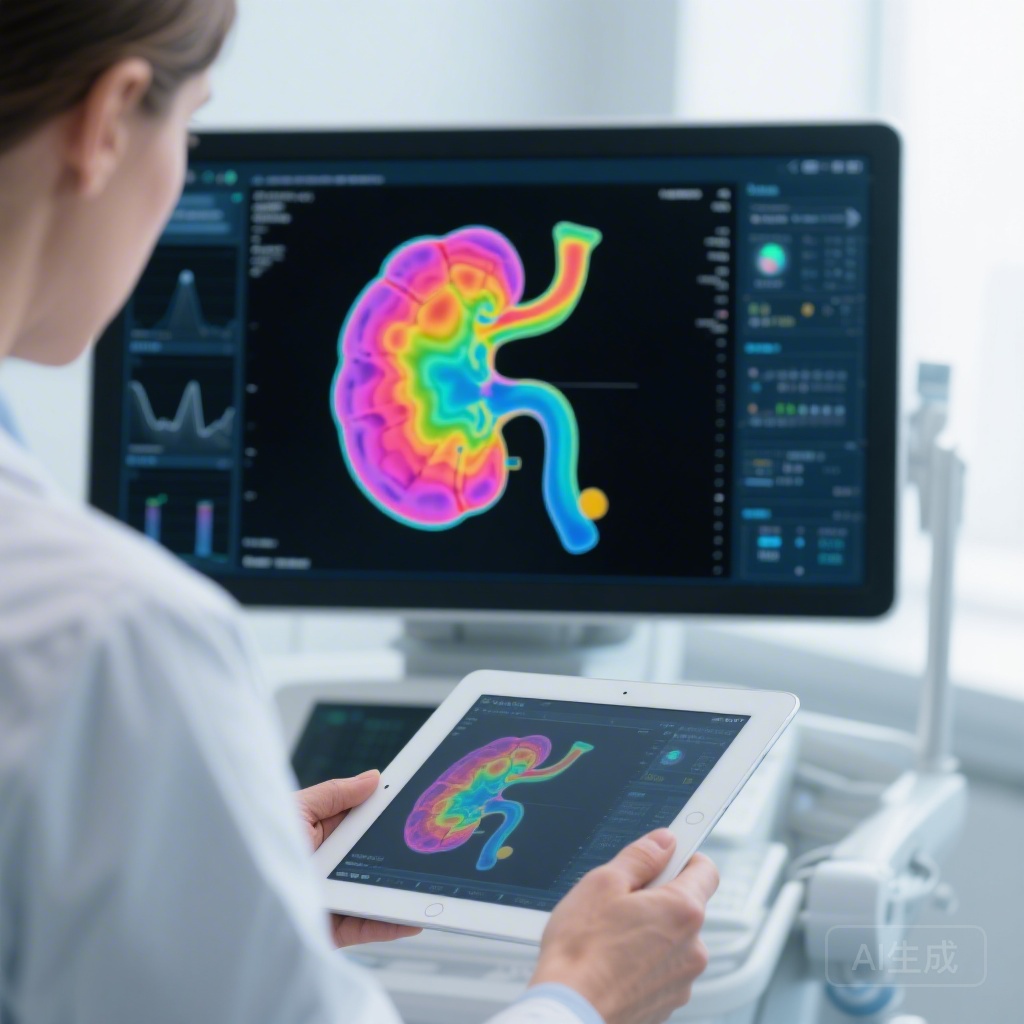
The study utilized advanced ultrasound platforms capable of measuring three specific viscoelastic parameters: renal cortical elasticity (Emean), viscosity coefficient (Vmean), and dispersion coefficient (Dmean). These measurements were correlated with standard clinical markers, including serum albumin, urinary white blood cell (WBC) counts, and pathological findings from renal biopsies. Statistical analysis focused on the diagnostic efficacy of these parameters individually and in combination, using receiver operating characteristic (ROC) curves to determine AUC values.
Key Findings: Diagnostic Precision and Inflammatory Insight
The results of the study underscore the transformative potential of viscoelastic imaging in pediatric nephrology. The individual diagnostic performance of the measured parameters was robust, with renal cortical elasticity (Emean) leading with an AUC of 0.91. The viscosity coefficient (Vmean) and dispersion coefficient (Dmean) followed with AUCs of 0.84 and 0.83, respectively.
Synergistic Diagnostic Power
Perhaps the most significant finding was the diagnostic synergy achieved by combining these parameters. When Emean, Vmean, and Dmean were analyzed together, the AUC rose to 0.95, indicating a near-perfect ability to distinguish between HSP and HSPN. This suggests that the combination of stiffness and viscosity data provides a more comprehensive “mechanical fingerprint” of the diseased kidney than any single metric alone.
Viscosity as a Marker of Inflammation
A critical observation in this study was the role of the viscosity coefficient (Vmean) in reflecting the inflammatory state of the renal parenchyma. Vmean demonstrated a positive correlation with urinary WBC counts (r = 0.238, p = .002) and a negative correlation with serum albumin levels (r = -0.274, p < .001). These correlations suggest that as inflammation and capillary permeability increase—leading to proteinuria and hypoalbuminemia—the viscosity of the renal tissue changes predictably. This makes Vmean a potentially invaluable tool for the noninvasive longitudinal monitoring of inflammatory activity in children who may not yet require a repeat biopsy.
Independent Predictors of HSPN
Multivariate logistic regression analysis confirmed that Emean and Vmean are independent predictors of HSPN. Interestingly, the study also noted that children in the HSPN group tended to be older and have a higher body mass index (BMI) than those in the HSP group, which may reflect age-related differences in the immune response or the cumulative risk of renal involvement over time.
Expert Commentary and Clinical Implications
The integration of viscoelastic imaging into the diagnostic workflow for HSPN represents a significant step toward personalized, noninvasive pediatric care. While conventional elastography focuses primarily on tissue stiffness (elasticity), viscoelastic imaging accounts for the time-dependent response of tissue to deformation (viscosity). In the context of the kidney, viscosity is heavily influenced by interstitial fluid, blood flow, and cellular infiltration—all of which are hallmark features of acute nephritis.
Biological Plausibility
From a mechanistic standpoint, the increase in Emean in HSPN patients is likely driven by the deposition of IgA immune complexes, mesangial proliferation, and early fibrotic changes. Conversely, the changes in Vmean are more likely associated with the acute inflammatory milieu, including edema and hypercellularity. By quantifying both, clinicians can theoretically distinguish between chronic structural damage and active inflammatory processes.
Study Limitations
Despite the promising results, the researchers noted certain limitations. While viscoelastic imaging was highly effective at identifying the presence of HSPN, its ability to differentiate between specific pathological subtypes (e.g., International Study of Kidney Disease in Children [ISKDC] grades) remains limited. The overlap in mechanical properties between different grades of glomerular damage suggests that while the tool is excellent for screening and monitoring, it cannot yet fully replace the detailed histological information provided by a biopsy in complex cases. Furthermore, as a retrospective study, prospective validation in larger, multi-center cohorts is required to standardize these parameters across different ultrasound platforms.
Conclusion
Ultrasound viscoelastic imaging is a powerful, noninvasive modality that significantly enhances our ability to diagnose Henoch-Schönlein purpura nephritis in children. With a combined AUC of 0.95, it offers a reliable alternative to more invasive procedures for initial assessment and provides a unique window into the inflammatory status of the kidney through viscosity measurements. As the technology matures, it is poised to become a standard component of pediatric nephrology diagnostics, enabling safer and more frequent monitoring of disease activity.
References
Liu Y, Chen J, Pian L, et al. Ultrasound Viscoelastic Imaging for Pediatric Henoch-Schönlein Purpura Nephritis: A Noninvasive Approach for Diagnosis and Inflammation Assessment. J Ultrasound Med. 2026;45(3):531-546. doi:10.1002/jum.70086