Highlights
Efficacy Signal
Taladegib (ENV-101) demonstrated a statistically significant improvement in percent predicted forced vital capacity (FVC) compared to placebo (+1.9% vs -1.3%) over 12 weeks.
Imaging Corroboration
Quantitative high-resolution CT (HRCT) analysis showed significant reductions in interstitial lung disease (ILD) volume and improvements in total lung capacity (TLC) in the taladegib group.
Safety Profile
Adverse events were consistent with Hedgehog pathway inhibition, primarily including dysgeusia, muscle spasms, and alopecia, all of which were mild to moderate (Grade 1-2).
Background: The Unmet Need in IPF
Idiopathic pulmonary fibrosis (IPF) remains one of the most challenging respiratory conditions, characterized by progressive, irreversible scarring of the lung parenchyma. The prognosis is often poor, with a median survival of three to five years post-diagnosis. Currently, the standard of care—principally nintedanib and pirfenidone—focuses on slowing the rate of lung function decline. However, these therapies do not stop the disease progression, nor do they offer the potential for functional recovery or reversal of existing fibrosis.
The pathophysiology of IPF involves the aberrant activation of developmental signaling pathways. Among these, the Hedgehog (Hh) signaling pathway has emerged as a critical driver of myofibroblast activation and extracellular matrix deposition. In healthy adults, the Hh pathway is largely quiescent, but in IPF, it is reactivated, promoting the survival and proliferation of the fibrotic cells that destroy lung architecture.
The Hedgehog Pathway: A Novel Therapeutic Target
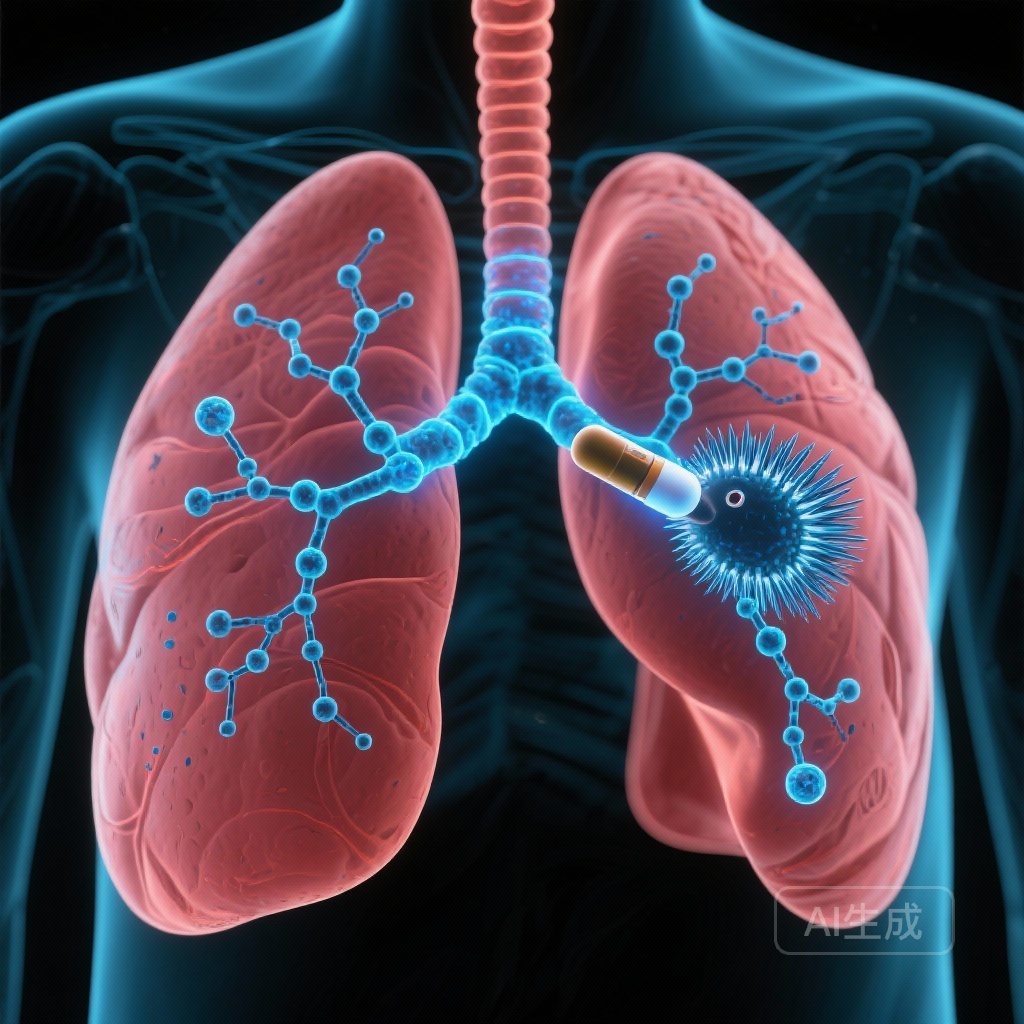
Taladegib (ENV-101) is a potent, selective oral inhibitor of Smoothened (SMO), a key transmembrane protein in the Hedgehog signaling pathway. By inhibiting SMO, taladegib aims to deactivate the myofibroblasts responsible for fibrosis. While SMO inhibitors have been utilized in oncology (e.g., for basal cell carcinoma), their application in fibrotic lung disease represents a significant shift toward regenerative medicine and disease modification.
Study Design: The ENV-IPF-101 Trial
ENV-IPF-101 was a multicentre, randomised, double-blind, placebo-controlled, phase 2a proof-of-concept trial. The study was conducted across 16 sites internationally, including Australia, Canada, Malaysia, Mexico, and South Korea.
Study Population
Eligible participants were aged 40 years or older with a confirmed diagnosis of IPF. Crucially, this trial focused on patients who were not receiving concurrent anti-fibrotic therapy (nintedanib or pirfenidone), allowing for a clear assessment of taladegib’s monotherapeutic potential.
Intervention and Endpoints
Participants were randomized to receive either 200 mg of oral taladegib once daily or a matching placebo for 12 weeks, followed by a 6-week washout period. The primary endpoints were safety (in the intention-to-treat population) and change from baseline in FVC (in the efficacy-evaluable population). Exploratory endpoints included quantitative interstitial lung disease (QILD) measurements via high-resolution CT (HRCT).
Key Findings: Functional Improvement and Fibrosis Reduction
Between August 2021 and July 2023, 41 patients were enrolled (21 in the taladegib group, 20 in the placebo group). The results presented in Lancet Respiratory Medicine suggest a potential breakthrough in the treatment of IPF.
Pulmonary Function (FVC)
At week 12, the taladegib group showed a mean increase in percent predicted FVC of 1.9%, while the placebo group experienced a decline of 1.3%. The between-group difference was 3.95% (95% CI 0.31–7.60; p=0.035). This improvement is particularly notable because current therapies typically only reduce the rate of decline rather than increasing lung volume.
Radiographic Evidence
HRCT findings supported the physiological data. Total lung capacity measured by HRCT increased by 206.67 mL in the taladegib group, compared to a decrease of 55.58 mL in the placebo group (p=0.0040). Furthermore, the percentage of quantitative interstitial lung disease (QILD) decreased by 9.4% in those treated with taladegib, while it increased by 1.1% in the placebo group (p=0.047).
Safety and Tolerability
While the efficacy data are promising, the safety profile of taladegib reflects the systemic effects of Hedgehog pathway inhibition.
Common Adverse Events
The most frequently reported treatment-emergent adverse events (TEAEs) in the taladegib group were:
– Dysgeusia (57%)
– Muscle spasms (57%)
– Alopecia (52%)
These events were entirely absent in the placebo group. Importantly, all related TEAEs were classified as Grade 1 or 2. There were no serious adverse events (SAEs) related to the study drug, and no deaths occurred during the trial. The 6-week follow-up period indicated that many of these side effects began to resolve after treatment cessation.
Expert Commentary
Scientific observers note that the ENV-IPF-101 trial provides the first clinical evidence that inhibiting the Hedgehog pathway can lead to a reduction in fibrotic burden and an improvement in lung function in IPF. The correlation between physiological FVC gains and HRCT-based structural improvements adds significant weight to the findings.
However, limitations must be acknowledged. The study size (n=41) is small, and the 12-week duration is relatively short for a chronic progressive disease. The side effect profile, while not severe, involves quality-of-life issues (taste changes and hair loss) that may impact long-term adherence in a real-world setting. The upcoming Phase 2b WHISTLE-PF trial will be essential to determine if these results are durable over longer periods and in larger, more diverse patient populations.
Conclusion
Taladegib represents a novel mechanistic approach to treating idiopathic pulmonary fibrosis. By targeting the Hedgehog pathway, it moves beyond mere stabilization of the disease to potentially reversing existing damage. While the side effect profile requires careful management, the Phase 2a results offer a compelling rationale for the continued clinical development of this Smoothened inhibitor. If these findings are replicated in larger trials, taladegib could redefine the therapeutic goals for patients living with IPF.
Funding and ClinicalTrials.gov
This study was funded by Endeavor BioMedicines. ClinicalTrials.gov Identifier: NCT04968574.