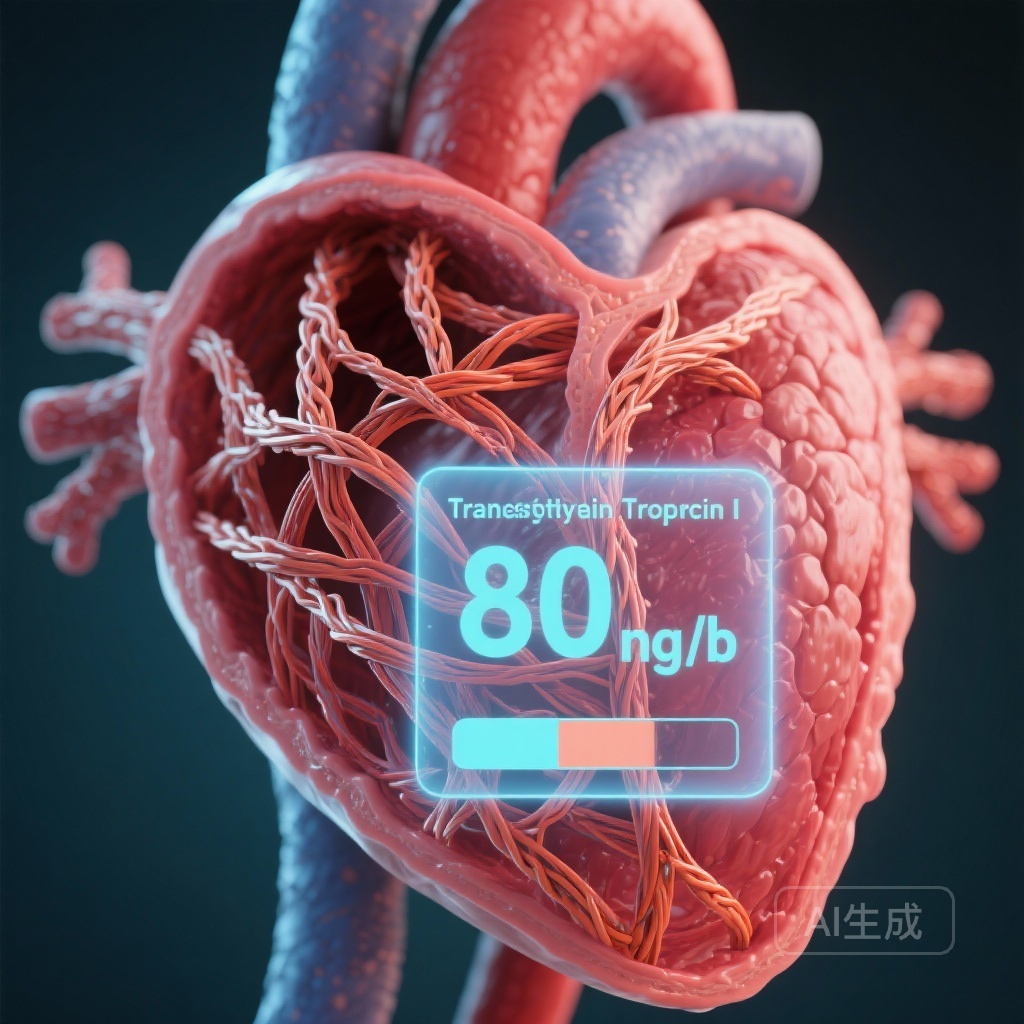
A Unified High-Sensitivity Cardiac Troponin I Threshold of 80 ng/L for Risk Stratification in Wild-Type Transthyretin Amyloid Cardiomyopathy

A Unified High-Sensitivity Cardiac Troponin I Threshold of 80 ng/L for Risk Stratification in Wild-Type Transthyretin Amyloid Cardiomyopathy

This multicenter study identifies high-sensitivity cardiac troponin I (hs-cTnI) as a potent, independent predictor of mortality in wild-type transthyretin amyloid cardiomyopathy. A universal threshold of 80 ng/L, integrated with natriuretic peptides, provides a robust staging system across multiple assay platforms.
Dual Pathology No Longer a Dead End: Tafamidis and AVR Improve Survival in Aortic Stenosis with Cardiac Transthyretin Amyloidosis

Dual Pathology No Longer a Dead End: Tafamidis and AVR Improve Survival in Aortic Stenosis with Cardiac Transthyretin Amyloidosis

In a multinational registry of patients with concomitant aortic stenosis (AS) and transthyretin cardiac amyloidosis (ATTR‑CA), both ATTR‑specific therapy (predominantly tafamidis) and aortic valve replacement (AVR) were independently associated with lower mortality. Combined therapy produced outcomes comparable to lone AS treated with AVR.
Transthyretin Cardiac Amyloidosis in Older Black and Hispanic Patients with Heart Failure: Prevalence, Genetics, and Clinical Implications

Transthyretin Cardiac Amyloidosis in Older Black and Hispanic Patients with Heart Failure: Prevalence, Genetics, and Clinical Implications

A prospective study reveals transthyretin cardiac amyloidosis (ATTR-CA) affects a significant proportion of older Black patients with heart failure, especially men over 75, with nearly half linked to the V142I genetic variant. Hispanic prevalence is lower but still notable.