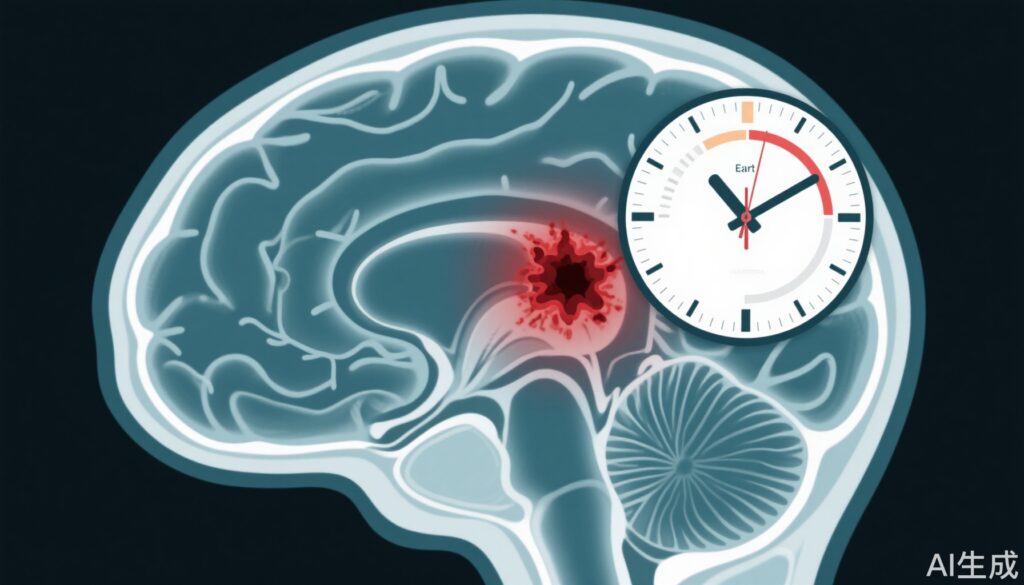
Recombinant Factor VIIa Fails to Improve Functional Outcomes in Hyperacute Intracerebral Haemorrhage Despite Reduced Bleeding: Results from the FASTEST Trial

Recombinant Factor VIIa Fails to Improve Functional Outcomes in Hyperacute Intracerebral Haemorrhage Despite Reduced Bleeding: Results from the FASTEST Trial

The FASTEST trial demonstrated that while recombinant factor VIIa administered within two hours of intracerebral haemorrhage onset significantly reduced hematoma growth, it failed to improve functional outcomes at 180 days and increased the risk of life-threatening thromboembolic events.

Widespread Anticoagulation Has Lowered Stroke but Not Intracranial Bleeding in the Very Elderly: Insights from a Danish Nationwide AF Cohort (1999–2022)

Widespread Anticoagulation Has Lowered Stroke but Not Intracranial Bleeding in the Very Elderly: Insights from a Danish Nationwide AF Cohort (1999–2022)

Danish registry data (1999–2022) show large reductions in stroke across age groups with widespread oral anticoagulant (OAC) uptake, but only modest stroke gains and rising intracerebral hemorrhage in patients ≥85 years, highlighting the need for individualized strategies in the very elderly.