Rare but Severe: Characterizing Immune Checkpoint Inhibitor-Induced Diabetes in 13,966 Trial Participants

Rare but Severe: Characterizing Immune Checkpoint Inhibitor-Induced Diabetes in 13,966 Trial Participants

A large-scale NCI study reveals that while immune checkpoint inhibitor-induced diabetes is rare (0.52%), it is highly morbid, often requiring hospitalization or ICU care. Risk varies significantly by treatment regimen, with combination immunotherapy increasing risk and concurrent chemotherapy appearing protective.
Standardizing the Digital Signal: How an Ontology of Early Warning Signs Can Predict Cytokine Release Syndrome

Standardizing the Digital Signal: How an Ontology of Early Warning Signs Can Predict Cytokine Release Syndrome

This article explores a landmark mixed-methods study establishing a digital biomarker ontology for the early detection of Cytokine Release Syndrome (CRS). By identifying core physiological markers, researchers aim to transform immunotherapy safety through continuous monitoring and predictive modeling.
Teclistamab plus Daratumumab Redefines Outcomes in Relapsed or Refractory Multiple Myeloma: A Paradigm Shift in Early-Line Intervention

Teclistamab plus Daratumumab Redefines Outcomes in Relapsed or Refractory Multiple Myeloma: A Paradigm Shift in Early-Line Intervention

The phase 3 MajesTEC-3 trial demonstrates that combining teclistamab with daratumumab significantly extends progression-free survival compared to standard therapies in patients with relapsed or refractory multiple myeloma, achieving high rates of complete response and minimal residual disease negativity.
Precision Immunotherapy for Sepsis: ImmunoSep Trial Shows Early Organ‑Function Benefit with Targeted Anakinra or IFN‑γ

Precision Immunotherapy for Sepsis: ImmunoSep Trial Shows Early Organ‑Function Benefit with Targeted Anakinra or IFN‑γ

The ImmunoSep randomized trial found that biomarker-guided immunotherapy (anakinra for macrophage activation‑like syndrome; interferon‑γ for sepsis‑induced immunoparalysis) improved organ dysfunction by day 9 versus placebo, though 28‑day mortality was unchanged. Safety signals require follow‑up.
Camrelizumab plus Rivoceranib Delivers Substantial Survival Gain over Sorafenib in First‑line Unresectable HCC: Final CARES‑310 Results

Camrelizumab plus Rivoceranib Delivers Substantial Survival Gain over Sorafenib in First‑line Unresectable HCC: Final CARES‑310 Results

Final CARES-310 analysis shows camrelizumab plus rivoceranib significantly improves overall survival versus sorafenib in first-line unresectable hepatocellular carcinoma, with increased but manageable toxicity. Results support the combination as an additional frontline option, especially where other immunotherapy regimens are unavailable.
IL‑10–Armored anti‑CD19 CAR T Cells for R/R B‑ALL: Promising Phase 1 Safety Signals and a New Strategy to Tame Inflammatory Toxicity

IL‑10–Armored anti‑CD19 CAR T Cells for R/R B‑ALL: Promising Phase 1 Safety Signals and a New Strategy to Tame Inflammatory Toxicity

A phase 1, single‑arm study evaluated IL‑10–expressing anti‑CD19 CAR T cells in relapsed/refractory B‑ALL, reporting feasibility and encouraging safety signals suggesting attenuated inflammatory toxicity while preserving anti‑leukemic activity. Larger controlled studies are needed to confirm benefit and infectious risk.
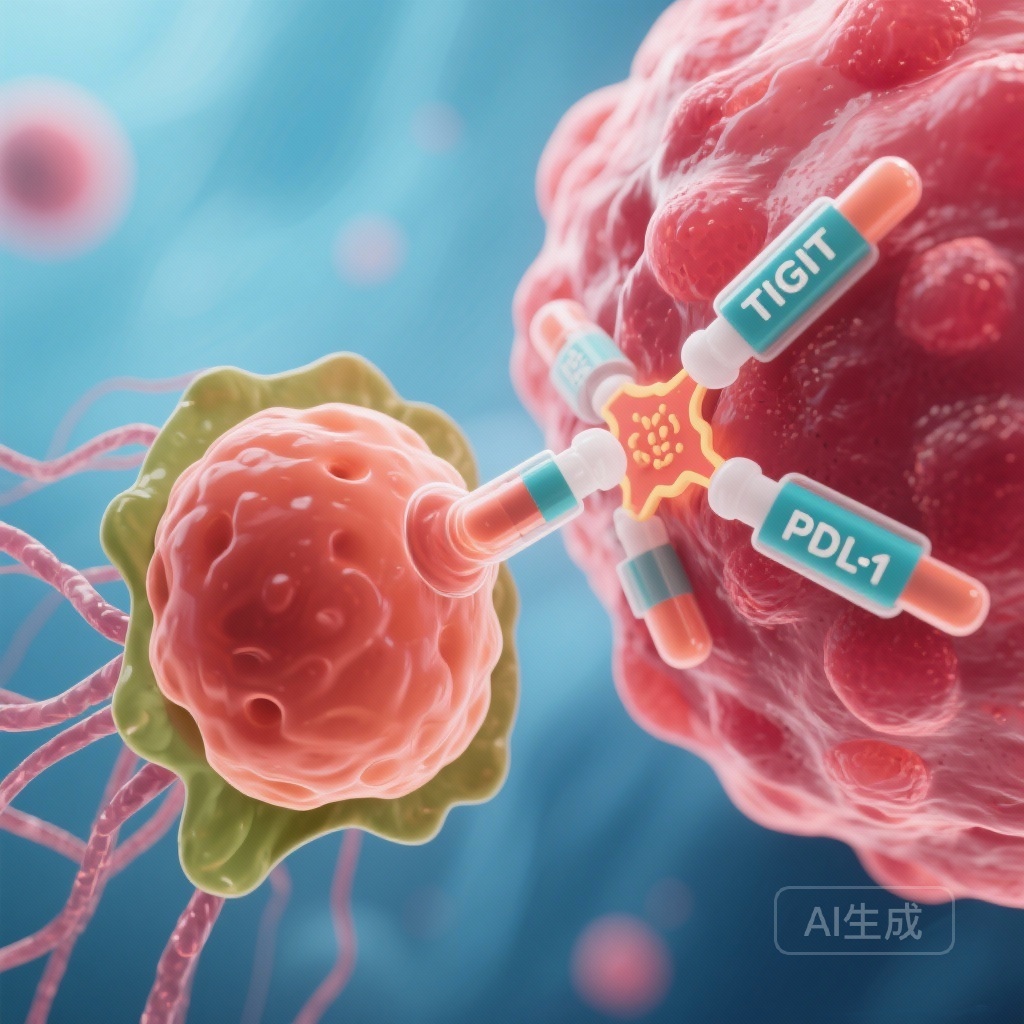
Dual TIGIT/PD‑1 Blockade with Domvanalimab + Zimberelimab Plus FOLFOX Shows Promising Activity in First‑Line Advanced Gastric and GEJ Adenocarcinoma

Dual TIGIT/PD‑1 Blockade with Domvanalimab + Zimberelimab Plus FOLFOX Shows Promising Activity in First‑Line Advanced Gastric and GEJ Adenocarcinoma

A phase 2 arm of the EDGE‑Gastric trial reports a 59% confirmed objective response rate and median PFS 12.9 months with domvanalimab (anti‑TIGIT) plus zimberelimab (anti‑PD‑1) combined with FOLFOX in untreated HER2‑negative advanced gastric/GEJ/esophageal adenocarcinoma, with a manageable safety profile.
Dual TIGIT and PD‑1 Blockade with Domvanalimab + Zimberelimab plus FOLFOX Shows Promising Activity in First‑Line Advanced HER2‑Negative Gastroesophageal Adenocarcinoma

Dual TIGIT and PD‑1 Blockade with Domvanalimab + Zimberelimab plus FOLFOX Shows Promising Activity in First‑Line Advanced HER2‑Negative Gastroesophageal Adenocarcinoma

In a phase 2 cohort (EDGE‑Gastric A1), domvanalimab (anti‑TIGIT) plus zimberelimab (anti‑PD‑1) combined with FOLFOX produced a 59% ORR, median PFS 12.9 months and median OS 26.7 months in 41 previously untreated HER2‑negative gastroesophageal adenocarcinoma patients, with immune‑related AEs in 27%.