Highlights
Clinical Complete Response
The study reported a clinical complete response (cCR) rate of 39% (95% CI 25-54) in patients with muscle-invasive bladder cancer (MIBC) who were ineligible for or declined cisplatin-based chemotherapy.
Safety Profile
No grade 4 or higher treatment-related adverse events occurred, with grade 3 events limited to 16% of the cohort, primarily diarrhea.
Bladder Preservation Potential
In patients achieving cCR, a bladder-sparing approach involving redo-transurethral resection (re-TURBT) followed by adjuvant pembrolizumab resulted in sustained remission and metastasis-free survival at a median follow-up of 14 months.
Background: The Unmet Need in Muscle-Invasive Bladder Cancer
Muscle-invasive bladder cancer (MIBC) remains a significant therapeutic challenge. The established standard of care for decades has been neoadjuvant cisplatin-based chemotherapy followed by radical cystectomy with pelvic lymph node dissection. While this approach improves overall survival compared to surgery alone, its clinical application is limited. Approximately 50% of patients diagnosed with MIBC are considered ineligible for cisplatin due to renal impairment, poor performance status, or significant comorbidities. Furthermore, many patients who are technically eligible choose to decline radical cystectomy due to the profound impact the procedure has on quality of life, including urinary and sexual dysfunction.
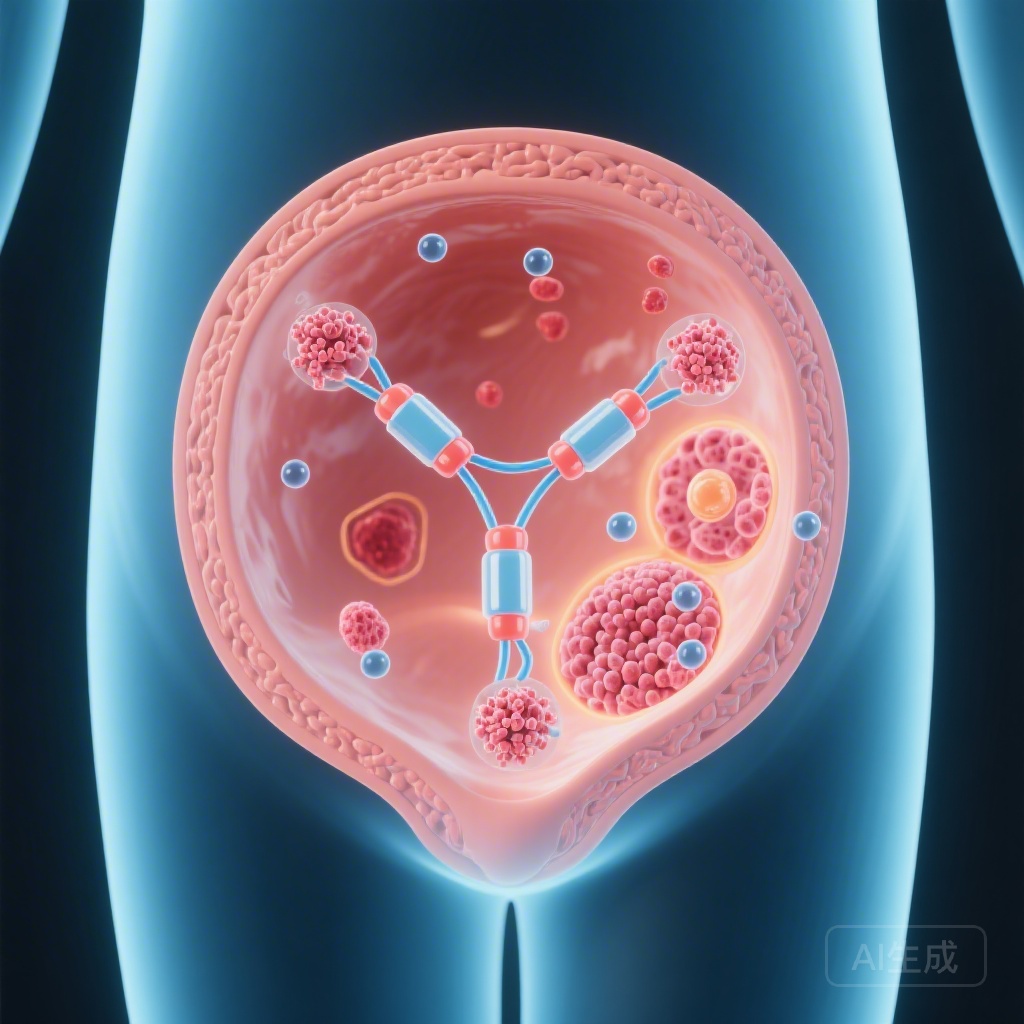
There is a critical need for effective, less toxic neoadjuvant regimens that can either improve surgical outcomes or facilitate organ preservation. Recent advances in immunotherapy and antibody-drug conjugates (ADCs) have revolutionized the treatment of metastatic urothelial carcinoma. Sacituzumab govitecan, an ADC targeting TROP-2—a protein highly expressed in urothelial cancers—delivers the potent topoisomerase I inhibitor SN-38 directly to malignant cells. Pembrolizumab, an anti-PD-1 immune checkpoint inhibitor, has already shown monotherapy activity in the neoadjuvant setting. The SURE-02 study sought to evaluate whether the synergistic combination of these two agents could provide a viable path toward bladder preservation in a high-risk population.
Study Design and Methodology
SURE-02 was a single-arm, phase 2 study conducted at the IRCCS San Raffaele Hospital in Milan, Italy. The trial enrolled 49 patients (median age 66 years) with newly diagnosed MIBC (cT2-T3bN0M0). A notable feature of this cohort was the inclusion of variant histologies in 43% of participants, a group often associated with poorer outcomes and resistance to standard chemotherapy.
Intervention Protocol
Patients received four cycles of neoadjuvant therapy consisting of:
1. Pembrolizumab: 200 mg intravenously on day 1 of a 21-day cycle.
2. Sacituzumab Govitecan: 7.5 mg/kg intravenously on days 1 and 8 of a 21-day cycle.
Following the neoadjuvant phase, patients underwent clinical restaging. According to the study protocol, patients were then offered radical cystectomy. However, for those who achieved a clinical complete response and wished to avoid surgery, a bladder-sparing approach was permitted after a multidisciplinary tumor board discussion. This involved a redo-transurethral resection of the bladder tumor (re-TURBT). All patients, regardless of surgical choice, were scheduled for 13 cycles of adjuvant pembrolizumab (200 mg every 3 weeks).
Primary Endpoint
The primary endpoint was the clinical complete response rate, defined as negative imaging (CT/MRI) and no viable tumor detected at the time of re-TURBT for those opting for bladder preservation.
Key Findings: Efficacy and Survival Data
Between October 2023 and February 2025, the study evaluated 49 patients. The results suggest that the combination of sacituzumab govitecan and pembrolizumab is highly active in the neoadjuvant setting.
Clinical Response Rates
Nineteen patients (39%) achieved a clinical complete response. All 19 of these patients underwent re-TURBT and opted for a bladder-sparing approach. Notably, among the patients with variant histology—which included squamous and sarcomatoid features—responses were also observed, suggesting the regimen’s broad utility across different tumor phenotypes.
Survival and Recurrence
At a median follow-up of 14 months, all patients who achieved cCR remained metastasis-free. While two patients experienced intravesical relapse (cancer returning within the bladder), these were managed without immediate progression to metastatic disease. This suggests that the depth of response achieved by the ADC-immunotherapy combination may provide a durable window for organ preservation.
Safety and Tolerability
Safety is a paramount concern when combining potent cytotoxic agents with immunotherapy. In SURE-02, the safety profile was manageable:
1. Grade 3 Adverse Events: Occurred in 16% (8 patients). The most frequent was diarrhea (8%).
2. Serious Adverse Events: Reported in 6% (3 patients), including two cases of bullous pemphigoid and one case of colitis.
3. Discontinuations: There were no treatment-related deaths, and no grade 4 or 5 adverse events were reported. This compares favorably to the toxicities often associated with cisplatin-based regimens or other ADC combinations like Enfortumab Vedotin, which can carry higher risks of peripheral neuropathy and severe skin reactions.
Mechanistic Insights and Clinical Implications
The success of the SURE-02 regimen likely stems from the synergistic interplay between sacituzumab govitecan and pembrolizumab. Sacituzumab govitecan induces immunogenic cell death by releasing its cytotoxic payload (SN-38) into the tumor microenvironment. This process releases tumor-associated antigens and promotes the maturation of dendritic cells, essentially ‘priming’ the immune system to respond more effectively to the checkpoint inhibition provided by pembrolizumab.
Furthermore, TROP-2 is expressed in nearly all urothelial carcinomas, making sacituzumab govitecan a more ‘universal’ ADC compared to those requiring specific biomarker expression. The ability to achieve a 39% cCR rate in a population that included cT3b disease and variant histology is a significant clinical milestone.
Expert Commentary
The SURE-02 findings contribute to a growing body of evidence supporting the ‘de-escalation’ of surgery in bladder cancer for select responders. Traditionally, the oncology community has been hesitant to recommend bladder preservation due to the risk of occult micrometastases. However, the use of adjuvant pembrolizumab in this study provides a safety net, potentially treating systemic micrometastases while the primary site is monitored.
Despite these promising results, several questions remain. The trial was a single-arm, phase 2 study at a single center, which may limit the generalizability of the findings. Longer follow-up is essential to determine if bladder preservation translates to long-term overall survival comparable to radical cystectomy. Additionally, identifying molecular biomarkers that can predict which patients are most likely to achieve a cCR will be critical for personalizing this approach.
Conclusion
The SURE-02 study demonstrates that perioperative sacituzumab govitecan plus pembrolizumab is a potent and safe regimen for patients with muscle-invasive bladder cancer who cannot receive cisplatin. With a clinical complete response rate of approximately 40% and a favorable safety profile, this combination offers a tangible opportunity for bladder preservation. These results warrant further investigation in larger, randomized phase 3 trials and represent a significant step forward in the movement toward organ-sparing oncology.
Funding and Clinical Registration
This study was funded by Merck Sharp & Dohme LLC (a subsidiary of Merck & Co, Inc) and Gilead Sciences. The trial is registered with ClinicalTrials.gov under the identifier NCT05535218.
References
1. Necchi A, et al. Neoadjuvant sacituzumab govitecan plus pembrolizumab, followed by adjuvant pembrolizumab, in patients with muscle-invasive bladder cancer (SURE-02): a single-arm, phase 2 study. Lancet Oncol. 2026. doi: 10.1016/S1470-2045(26)00050-1.
2. Powles T, et al. Avelumab Maintenance Therapy for Advanced or Metastatic Urothelial Carcinoma. N Engl J Med. 2020;383(13):1218-1230.
3. Tagawa ST, et al. TROPHY-U-01 Cohort 1: Final Results from a Phase 2 Study of Sacituzumab Govitecan in Metastatic Urothelial Carcinoma. J Clin Oncol. 2021;39(22):2474-2485.