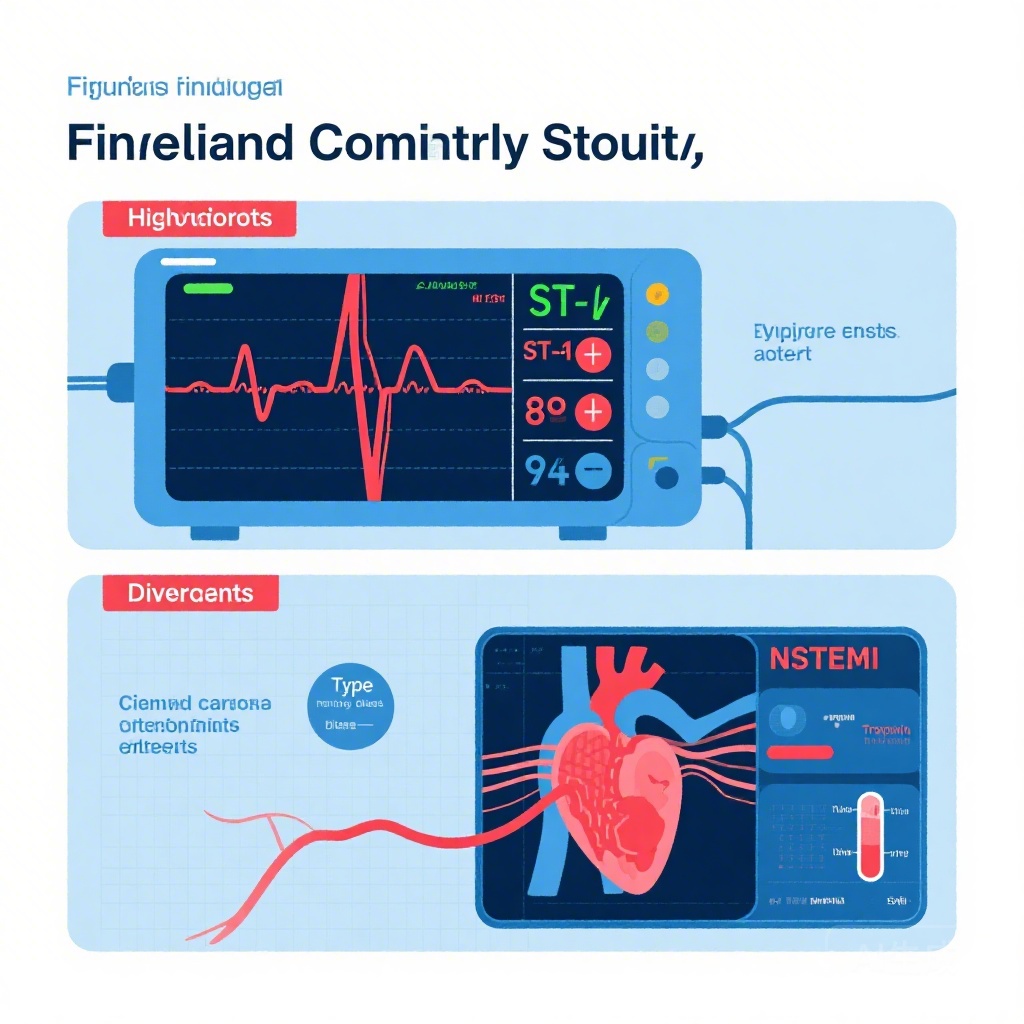
Type 1 Diabetes and Heart Attack Subtypes: Why STEMI and NSTEMI Deserve Separate Attention
In adults with type 1 diabetes, myocardial infarction is not a single clinical entity. The Finnish FinnDiane cohort study shows that ST-elevation myocardial infarction (STEMI) and non-ST-elevation myocardial infarction (NSTEMI) differ not only in how often they occur, but also in when they occur and which clinical factors predict them. That distinction matters because risk assessment, prevention, and acute care may need to be more nuanced than a single “coronary risk” label suggests.
Highlights
In a nationwide Finnish cohort of 4,215 adults with type 1 diabetes and no prior myocardial infarction or coronary revascularisation, 449 first-ever myocardial infarctions were verified over follow-up, including 84 STEMIs and 297 NSTEMIs.
The 20-year cumulative incidence was 15.4% for all myocardial infarction, 2.4% for STEMI, and 10.9% for NSTEMI, with no meaningful sex difference but a clear age-related increase, especially for NSTEMI.
Risk profiles diverged: dyslipidemia, severe retinopathy, severe albuminuria, older age at diabetes onset, and kidney replacement therapy were associated more strongly with NSTEMI, while reduced eGFR was more strongly linked to STEMI. Poor glycaemic control, longer diabetes duration, and current smoking increased the risk of both subtypes.
Background: Cardiovascular Risk in Type 1 Diabetes Is High, but the Subtypes Matter
Cardiovascular disease remains a major cause of morbidity and mortality in type 1 diabetes. Although clinicians often focus on overall atherosclerotic risk, STEMI and NSTEMI are clinically and biologically distinct presentations. STEMI usually reflects abrupt, near-complete coronary occlusion and requires urgent reperfusion. NSTEMI often arises from partial occlusion, plaque instability, or supply-demand mismatch, and it is frequently accompanied by a heavier burden of chronic comorbidity.
In the general population, NSTEMI has become increasingly common relative to STEMI, partly because of changing risk-factor patterns, improved diagnostics, and older age at presentation. However, whether the same pattern applies to people with type 1 diabetes has been less clear. The FinnDiane study directly addresses this gap by examining incidence patterns and risk profiles of both MI subtypes in a well-characterised national cohort.
Study Design: Prospective, Multicentre Cohort With Verified Clinical Endpoints
The FinnDiane Study is a prospective, multicentre cohort of adults with type 1 diabetes in Finland. For this analysis, investigators included 4,215 participants enrolled between November 21, 1997, and December 31, 2012. Individuals with a prior myocardial infarction or coronary revascularisation were excluded, allowing assessment of first-ever events.
Follow-up extended through 2017. The investigators verified 449 first-ever clinically recorded myocardial infarctions by reviewing medical records and death certificates, and classified events as STEMI or NSTEMI. Incidence was estimated using Fine and Gray competing risk methods, and risk factors were examined with both Cox regression and competing-risk models. This approach is important because death from other causes can preclude observation of myocardial infarction, particularly in a cohort with substantial comorbidity burden.
Key Findings: NSTEMI Was More Common, and Its Risk Profile Looked Different From STEMI
Overall incidence and subtype distribution
During follow-up, 449 first-ever myocardial infarctions were confirmed. Of these, 84 events were STEMI, representing 19% of infarctions, and 297 were NSTEMI, representing 66%. The remaining events were not included in these two subtype categories, reflecting the complexity of real-world clinical classification over long follow-up periods.
At 20 years, the cumulative incidence was 15.4% for any myocardial infarction, 2.4% for STEMI, and 10.9% for NSTEMI. This means that, in this population with type 1 diabetes, NSTEMI was substantially more common than STEMI over time.
No clear sex difference, but age mattered more for NSTEMI
The study found no differences in cumulative incidence by sex. In contrast, incidence increased with older age, and this age effect was particularly pronounced for NSTEMI. This pattern suggests that NSTEMI in type 1 diabetes may be more closely linked to the accumulation of chronic vascular and metabolic injury over time, whereas STEMI may be driven by a somewhat different pathophysiologic balance.
Calendar-time trends pointed in opposite directions for STEMI and NSTEMI
Compared with the reference period between 1997 and 2002, STEMI incidence decreased over time. NSTEMI, however, showed an initial decline followed by an increase during later follow-up. This divergence is clinically meaningful. It suggests that prevention strategies, diagnostic practices, competing mortality, and evolving treatment patterns may not affect the two MI subtypes in the same way.
One plausible interpretation is that improved cardiovascular prevention may have reduced the incidence of large, transmural infarctions typical of STEMI, while increasing recognition of NSTEMI and/or preserving the population long enough for chronic vascular disease to manifest as NSTEMI later in life. The study was not designed to prove mechanism, but the trend itself is consistent with contemporary cardiovascular epidemiology.
Risk factors for NSTEMI emphasized dyslipidemia and microvascular disease
Several factors were associated with increased NSTEMI risk but not STEMI: older age at diabetes onset, higher LDL cholesterol, lower HDL cholesterol, severe diabetic retinopathy, severe albuminuria, and kidney replacement therapy. These associations point toward a strong link between NSTEMI and the broader burden of chronic vascular injury, including microvascular complications and advanced kidney disease.
From a clinical perspective, this is particularly important because retinopathy, albuminuria, and kidney replacement therapy are not merely “complications of diabetes” in isolation. They are markers of diffuse vascular damage and may identify people in whom coronary risk is especially high even if classic angina symptoms are absent or atypical.
Reduced eGFR was more strongly associated with STEMI
In contrast, moderately and severely decreased estimated glomerular filtration rate (eGFR) were associated with increased risk of STEMI, but not NSTEMI. This is a notable finding because reduced kidney function is usually considered a marker of overall cardiovascular risk rather than a predictor of a specific MI subtype.
Why might kidney dysfunction align more strongly with STEMI in this cohort? One possibility is that advanced kidney disease promotes plaque instability, thrombosis, and vascular calcification in ways that predispose to abrupt coronary occlusion. Another is that eGFR identifies a subgroup with distinct competing risks or clinical ascertainment patterns. The study supports association, not causation, but the signal is intriguing and clinically relevant.
Shared predictors across both subtypes: duration, glycaemia, and smoking
Longer duration of diabetes, higher HbA1c, and current smoking were associated with increased risk of both STEMI and NSTEMI. These findings are consistent with established cardiovascular biology and reinforce the importance of conventional risk-factor control in type 1 diabetes. In practical terms, the message is not that different MI subtypes require different risk-factor management so much as that the same poor-risk exposures may “express themselves” through different coronary phenotypes.
Clinical Interpretation: A More Granular View of Coronary Risk in Type 1 Diabetes
This study adds an important layer to cardiovascular risk stratification in type 1 diabetes. It suggests that NSTEMI is the dominant MI subtype over long-term follow-up and that it clusters with older age, dyslipidemia, and advanced microvascular/kidney complications. STEMI appears less frequent and more closely associated with reduced eGFR and with the traditional metabolic risk factors that affect both subtypes.
For clinicians, the implication is that coronary prevention in type 1 diabetes should not rely on a one-size-fits-all conception of myocardial infarction. Patients with albuminuria, retinopathy, or kidney replacement therapy may deserve especially vigilant assessment for NSTEMI risk. Those with impaired eGFR may also merit heightened concern for STEMI and abrupt coronary events. In both cases, poor glycaemic control and smoking remain actionable targets.
Strengths and Limitations
A major strength of this study is its prospective, multicentre design within a national setting, which enhances longitudinal follow-up and event ascertainment. The investigators also used verified medical records and death certificates rather than relying solely on administrative coding. Methodologically, the use of competing-risk analysis is appropriate for a cohort in which non-coronary death can materially affect observed incidence.
Important limitations should be acknowledged. First, this is an observational cohort, so the associations cannot establish causality. Second, the study population comes from Finland, and generalisability to other ethnic, healthcare, and treatment settings may be limited. Third, although event verification was rigorous, classification of MI subtype over a long time horizon can still be influenced by changes in diagnostic criteria, troponin assays, and imaging availability. Fourth, residual confounding is always possible in an observational risk-factor analysis.
Finally, the findings should not be interpreted as suggesting that all traditional risk factors behave differently by subtype in every patient. Rather, the study indicates that, at the population level, the coronary phenotype in type 1 diabetes is heterogeneous and may reflect distinct combinations of vascular injury, renal dysfunction, and metabolic exposure.
Conclusion: Two Heart Attack Subtypes, Two Risk Patterns
The Finnish FinnDiane cohort shows that in type 1 diabetes, STEMI and NSTEMI are not interchangeable outcomes. NSTEMI was more common, rose with age more clearly, and was linked to dyslipidemia and advanced microvascular/kidney disease. STEMI was less frequent but more strongly associated with impaired eGFR. Shared predictors such as longer diabetes duration, higher HbA1c, and smoking remained important for both.
For clinical practice, the study supports a more granular approach to cardiovascular risk assessment in type 1 diabetes. Prevention should still prioritize glycaemic control, smoking cessation, and lipid management, but clinicians may also need to think more specifically about the coronary phenotype suggested by a patient’s renal and microvascular status. Future studies should test whether subtype-specific risk prediction improves prevention strategies and whether contemporary treatment patterns modify these distinct trajectories.
Funding and Trial Registration
Funding was provided by the Folkhälsan Research Foundation, Wilhelm and Else Stockmann Foundation, Liv och Hälsa Society, Sigrid Jusélius Foundation, State funding for university-level health research by Helsinki University Hospital, Medical Society of Finland, Diabetes Research Foundation, and Finnish Foundation for Cardiovascular Research.
No clinicaltrials.gov registration was reported for this observational cohort study.
AI Image Prompt
Professional medical journal thumbnail showing a split-screen cardiology infographic: on the left, a type 1 diabetes patient with an ECG monitor displaying ST-elevation and a blocked coronary artery; on the right, a subtler NSTEMI scene with elevated troponin results, kidney and retina symbols representing microvascular disease, clean Finnish research aesthetic, modern blue-red clinical palette, high-resolution, realistic, editorial style.