Comparative Effectiveness of High-Dose versus Standard-Dose Influenza Vaccines in Chronic Kidney Disease and Cardiovascular Disease: Integrated Insights from the DANFLU-2 Trial

Comparative Effectiveness of High-Dose versus Standard-Dose Influenza Vaccines in Chronic Kidney Disease and Cardiovascular Disease: Integrated Insights from the DANFLU-2 Trial

The DANFLU-2 trial demonstrates that high-dose influenza vaccine provides superior protection against influenza-related hospitalizations in chronic kidney disease and reduces cardiorespiratory hospitalizations in older adults irrespective of cardiovascular disease status.

High-Dose Influenza Vaccination Reduces Hospitalizations and Cardiovascular Events in Older Adults: Insights from the FLUNITY-HD Pooled Analysis

High-Dose Influenza Vaccination Reduces Hospitalizations and Cardiovascular Events in Older Adults: Insights from the FLUNITY-HD Pooled Analysis

The FLUNITY-HD pooled analysis of over 466,000 older adults demonstrates that high-dose inactivated influenza vaccine (HD-IIV) significantly reduces hospitalizations for influenza, pneumonia, and cardiovascular causes, including a 21.3% reduction in heart failure admissions, compared to standard-dose vaccines.
ICSI vs. Conventional IVF: New Evidence Suggests No Kinetic Advantage and Lower High-Quality Blastocyst Yield in Non-Male Factor Infertility

ICSI vs. Conventional IVF: New Evidence Suggests No Kinetic Advantage and Lower High-Quality Blastocyst Yield in Non-Male Factor Infertility

A secondary analysis of the multicentre INVICSI RCT reveals that ICSI results in fewer high-quality Day 5 blastocysts compared to conventional IVF in patients without severe male factor infertility, with no significant differences observed in embryo morphokinetics or cleavage patterns.
Frozen Embryo Transfer and Offspring Development: Higher Birthweight Drives Increased Bone Mineralization While BMI Remains Stable

Frozen Embryo Transfer and Offspring Development: Higher Birthweight Drives Increased Bone Mineralization While BMI Remains Stable

Recent evidence indicates that children conceived via frozen embryo transfer (FET) exhibit higher bone mineral content at age 7-10 compared to fresh transfer and natural conception, a difference primarily driven by higher birthweight. Conversely, a large-scale meta-analysis shows no significant difference in long-term BMI.
Antiviral Therapy Fails to Slow Alzheimer’s: The VALAD Trial Reveals Unexpected Cognitive Worsening with Valacyclovir

Antiviral Therapy Fails to Slow Alzheimer’s: The VALAD Trial Reveals Unexpected Cognitive Worsening with Valacyclovir

The VALAD randomized clinical trial found that valacyclovir did not improve outcomes in patients with early symptomatic Alzheimer’s and HSV seropositivity. Instead, patients receiving the antiviral showed significantly greater cognitive decline compared to placebo over 78 weeks, cautioning against off-label use.
N-Palmitoyl Glutamine: A Novel Molecular Link Between Exercise, Mitochondrial Efficiency, and Human Longevity

N-Palmitoyl Glutamine: A Novel Molecular Link Between Exercise, Mitochondrial Efficiency, and Human Longevity

A groundbreaking study identifies N-palmitoyl glutamine (NPG) as a key molecular transducer of cardiorespiratory fitness. NPG correlates with VO2max, increases with exercise training, predicts lower mortality, and directly enhances mitochondrial function, offering a potential therapeutic target for cardiometabolic health.
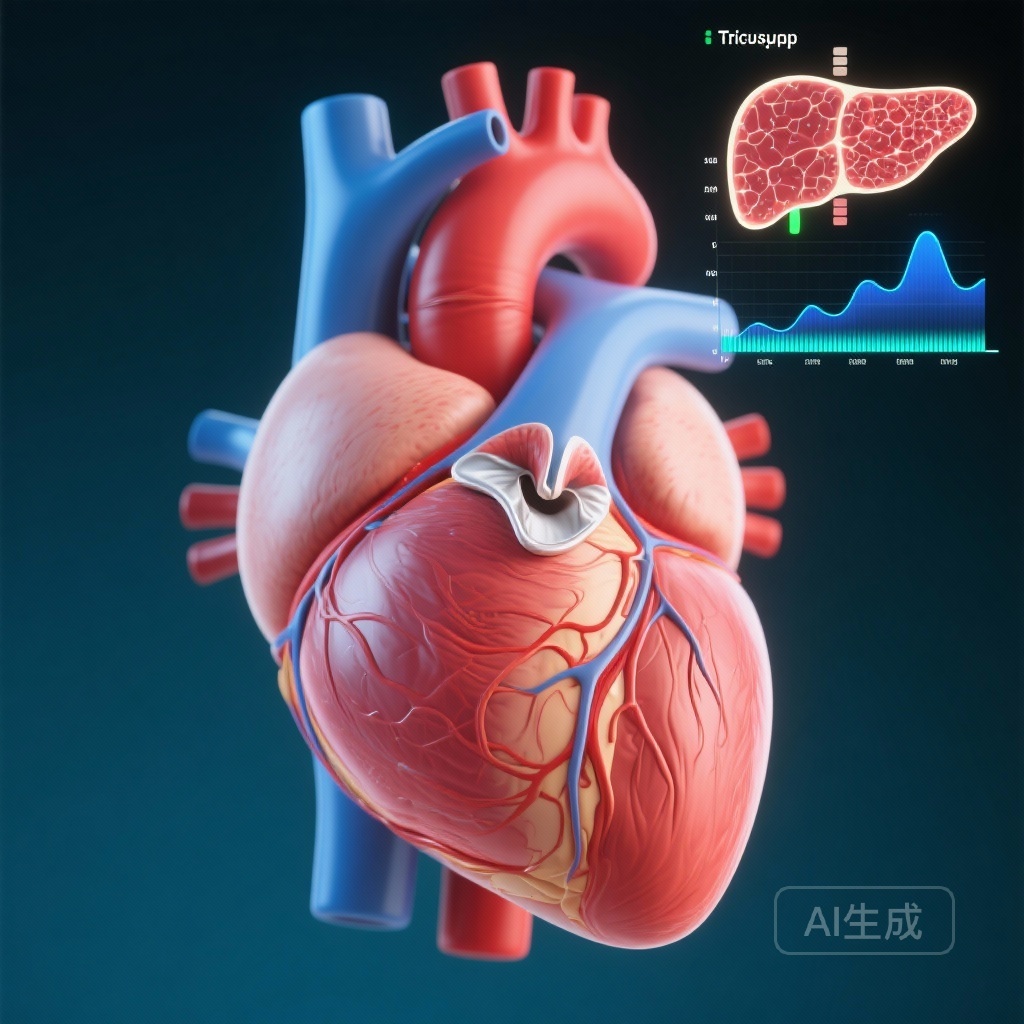
Redefining Severity in Tricuspid Regurgitation: Why CMR-Derived Regurgitant Fraction and Liver Mapping Are the New Prognostic Gold Standards

Redefining Severity in Tricuspid Regurgitation: Why CMR-Derived Regurgitant Fraction and Liver Mapping Are the New Prognostic Gold Standards

A landmark study in Circulation reveals that CMR-quantified tricuspid regurgitant fraction (TRF) ≥20% significantly increases mortality risk, while liver extracellular volume (L-ECV) mapping provides a novel, potent biomarker for systemic congestion and right heart failure outcomes.
Alirocumab Neutralizes the Pro-inflammatory Risk of Oxidized Phospholipids After Acute Coronary Syndrome

Alirocumab Neutralizes the Pro-inflammatory Risk of Oxidized Phospholipids After Acute Coronary Syndrome

A secondary analysis of the ODYSSEY OUTCOMES trial reveals that oxidized phospholipids on apolipoprotein B-100 (OxPL-apoB) independently predict cardiovascular risk in ACS patients, particularly when Lp(a) levels are low. Treatment with alirocumab effectively mitigates this risk while significantly reducing biomarker levels.