Finerenone Lowers Albuminuria in Type 1 Diabetes with CKD: FINE‑ONE Phase III Shows 25% Average UACR Reduction and Acceptable Safety

Finerenone Lowers Albuminuria in Type 1 Diabetes with CKD: FINE‑ONE Phase III Shows 25% Average UACR Reduction and Acceptable Safety

The FINE‑ONE Phase III trial found finerenone reduced urinary albumin-to-creatinine ratio (UACR) by 25% versus placebo in adults with type 1 diabetes and chronic kidney disease over six months, with safety broadly consistent with prior type 2 diabetes trials and a manageable hyperkalemia signal.
Conservative Dialysis Strategy Accelerates Kidney Recovery in Dialysis-Requiring AKI — Early Randomized Evidence from LIBERATE-D

Conservative Dialysis Strategy Accelerates Kidney Recovery in Dialysis-Requiring AKI — Early Randomized Evidence from LIBERATE-D

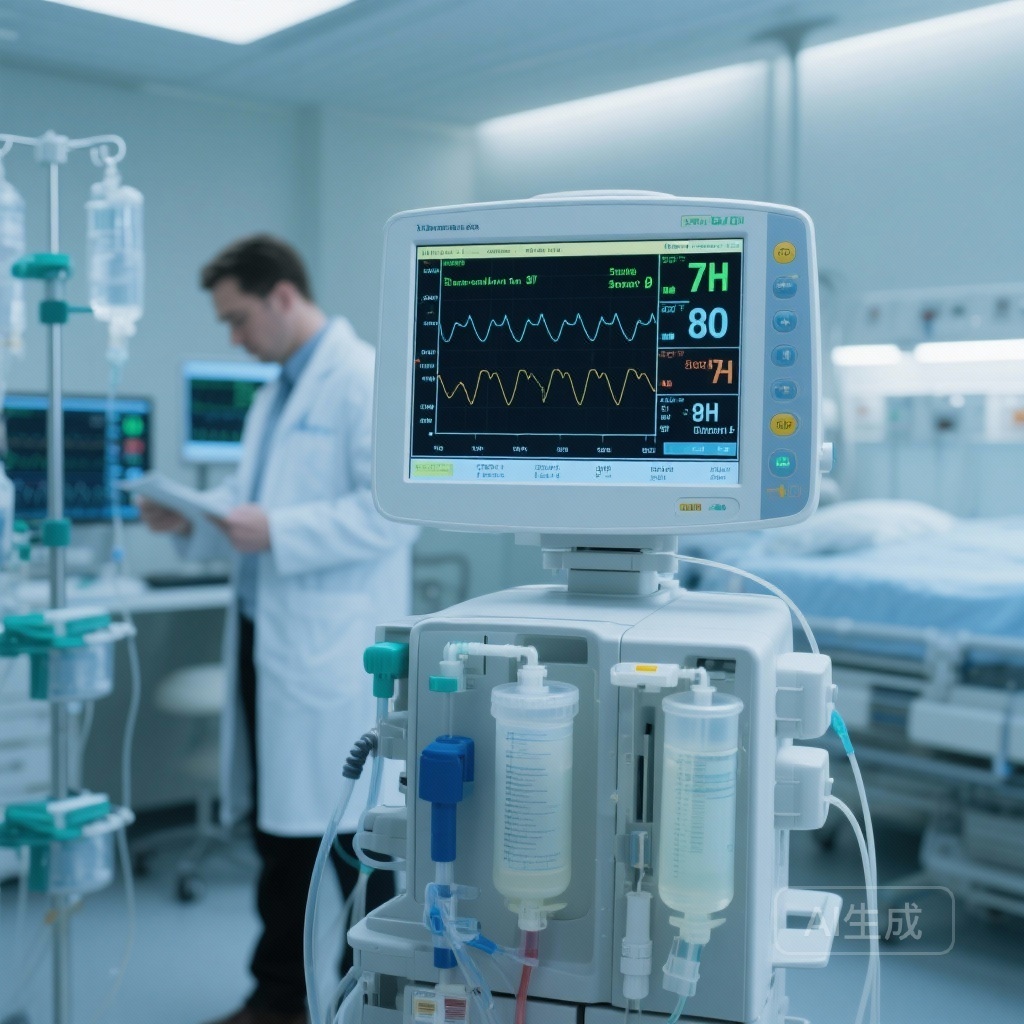
The LIBERATE-D randomized trial found that a conservative, indication-triggered dialysis strategy increased unadjusted kidney-recovery rates at hospital discharge and shortened time to dialysis independence compared with routine thrice-weekly dialysis in patients with dialysis-requiring AKI.
A 250‑ml Ultrafiltration Challenge Identifies Patients at Risk of Becoming Preload‑Dependent During CRRT

A 250‑ml Ultrafiltration Challenge Identifies Patients at Risk of Becoming Preload‑Dependent During CRRT

A randomized cross‑over trial found that a 250‑ml net ultrafiltration challenge reliably identified preload‑independent critically ill patients who became preload‑dependent during continuous renal replacement therapy; a ≥5% calibrated cardiac index change during a postural maneuver predicted this risk.
Lactate Predicts Citrate Accumulation During Continuous Kidney Replacement Therapy: incidence, severity, and clinical implications

Lactate Predicts Citrate Accumulation During Continuous Kidney Replacement Therapy: incidence, severity, and clinical implications

In 911 critically ill patients on RCA-CKRT, citrate accumulation occurred in 17%. Pre-CKRT lactate strongly predicted accumulation (OR 2.34 per 1-unit increase on log scale); VIS was less discriminatory. Accumulation linked to liver dysfunction but not to shock and—after adjustment—did not increase mortality.
Urine‑guided Intraoperative Hydration Halves AKI Risk After CRS‑HIPEC with Cisplatin: Randomized Trial Shows Promise

Urine‑guided Intraoperative Hydration Halves AKI Risk After CRS‑HIPEC with Cisplatin: Randomized Trial Shows Promise

A randomized trial found that maintaining high intraoperative urine output (≥3 ml·kg−1·h−1 or ≥200 ml·h−1) during cytoreductive surgery and cisplatin‑based HIPEC reduced 7‑day postoperative AKI from 39.3% to 21.4% and lowered major 30‑day complications without increasing adverse events.
Predicting Early Acute Kidney Injury After Liver Transplantation: A Clinically Useful 48‑Hour Risk Model

Predicting Early Acute Kidney Injury After Liver Transplantation: A Clinically Useful 48‑Hour Risk Model

A single-center study developed and internally validated a 48‑hour post‑liver transplant AKI risk model using five readily available preoperative and intraoperative variables (HE, alcohol cirrhosis, ALBI ≥ −1.78, operation time ≥560 min, and FFP transfusion). The model showed good discrimination (AUC ≈0.76).