Patient Information
Human epidermal growth factor receptor 2 (HER2/ERBB2) is overexpressed or amplified in approximately 15% to 20% of gastric cancer (GC) cases. While HER2-targeted therapy significantly improves survival, the development of acquired resistance remains a major clinical challenge. This report summarizes findings from a cohort of 30 patients, specifically focusing on 15 HER2+ GC patients who received sequential treatment with trastuzumab and trastuzumab deruxtecan (T-DXd). The patient cohort exhibited characteristic intrapatient heterogeneity, where HER2 expression varied across different regions of the primary and metastatic tumors.
Diagnosis
Diagnosis of HER2+ GC was established via immunohistochemistry (IHC) and in situ hybridization (ISH) according to established guidelines. However, the study utilized advanced spatial transcriptomic analysis (GeoMx Digital Spatial Profiler) on over 1,500 regions of interest (ROIs) to capture the biological complexity of the disease. Key findings during the diagnostic phase revealed that HER2 expression is often non-uniform, leading to challenges in predicting treatment response using single-biopsy techniques.
Differential Diagnosis
In the context of treatment failure, clinicians must differentiate between:
1. **Primary Resistance**: A lack of initial response to HER2-targeted agents.
2. **Acquired Resistance**: Initial response followed by disease progression due to clonal evolution or pathway bypass.
3. **HER2 Loss**: The complete disappearance of the target protein following therapy.
4. **Alternative Pathway Activation**: Upregulation of other drivers such as MET or EGFR that circumvent HER2 inhibition.
Treatment and Management
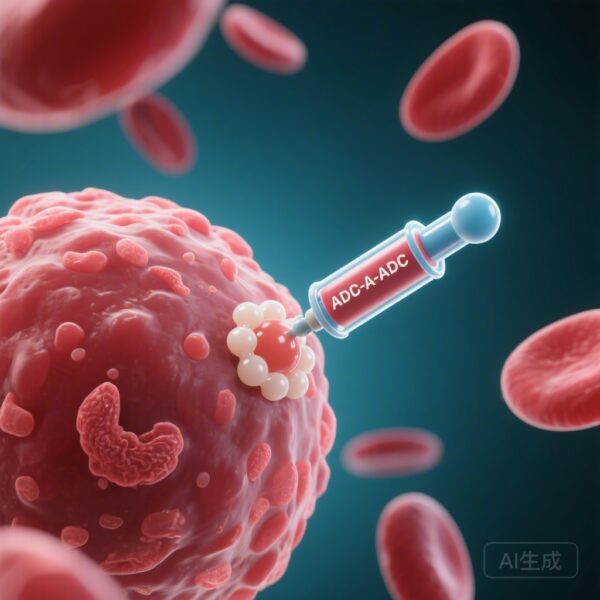
Patients in this study were managed with standard-of-care HER2-targeted regimens. Initial treatment typically involved trastuzumab in combination with chemotherapy. Upon disease progression (acquired trastuzumab resistance), patients were transitioned to the antibody-drug conjugate (ADC) trastuzumab deruxtecan (T-DXd). The management strategy relied on patient-matched samples—comparing pre-treatment and post-resistance biopsies—to determine the molecular shift occurring under the selective pressure of therapy.
Outcome and Prognosis
Spatial interrogation revealed distinct resistance phenotypes occurring in vivo:
* **Trastuzumab Resistance**: Approximately one-third of patients developed an epithelial-mesenchymal transition (EMT) phenotype, which was strongly associated with the upregulation of PD-L1 and the chemokine CCL2. Another third of the cohort exhibited activation of the endoplasmic reticulum-associated degradation (ERAD) pathway, specifically involving the gene GOLM1. Additionally, an increase in CLDN18.2 expression was observed, suggesting a potential shift in targetable surface proteins.
* **T-DXd Resistance**: Patients who developed resistance to T-DXd showed evidence of HLA (human leukocyte antigen) loss, potentially aiding immune evasion, and a significant increase in oxidative phosphorylation (OXPHOS) pathways.
Discussion
This spatial profiling effort underscores the biological plasticity of HER2+ gastric cancer. The discovery that CLDN18.2 is upregulated in trastuzumab-resistant tumors provides a clear rationale for clinical trials investigating CLDN18.2-targeted agents in the second- or third-line setting. Furthermore, the identification of the ERAD pathway and GOLM1 as drivers of resistance suggests new intracellular targets that could be exploited to sensitize tumors to HER2 blockade.
The correlation between EMT and PD-L1 upregulation suggests that immune checkpoint inhibitors might be more effective when used in combination with targeted therapies in the resistance setting. These results emphasize that resistance is not a monolithic process but a multifactorial evolution involving metabolic shifts, immune evasion, and structural cellular changes. Future clinical trials should consider these spatial insights to develop more durable and personalized therapeutic strategies for patients with HER2+ gastric cancer.
References
1. Sheng T, et al. Spatial profiling of patient-matched HER2 positive gastric cancer reveals resistance mechanisms to targeted therapy. Gut. 2026;75(4):733-747. PMID: 41167802.
2. Bang YJ, et al. Trastuzumab in combination with chemotherapy versus chemotherapy alone for treatment of HER2-positive advanced gastric or gastro-oesophageal junction cancer (ToGA): a phase 3, open-label, randomised controlled trial. Lancet. 2010.
3. Shitara K, et al. Trastuzumab Deruxtecan in Previously Treated HER2-Positive Gastric Cancer. N Engl J Med. 2020.