Highlights
– In a pooled, prospective cohort of 230 patients with basilar artery occlusion transferred from primary to comprehensive stroke centers, IV thrombolysis (IVT) before transfer was independently associated with a twofold higher odds of favorable 3‑month functional outcome (mRS 0–2).
– IVT was strongly associated with basilar artery recanalization noted on arrival at the comprehensive stroke center (adjusted OR 23.7), suggesting frequent early reperfusion during transfer.
– No statistically significant increase in 90‑day mortality or 24‑hour intracerebral hemorrhage (ICH) was observed with pretransfer IVT.
Background: clinical context and unmet need
Basilar artery occlusion (BAO) is an uncommon but catastrophic cause of ischemic stroke. It commonly produces severe brainstem dysfunction with high rates of death and disability if recanalization is not achieved. Endovascular therapy (EVT) is increasingly used for large‑vessel occlusions and clearly benefits many anterior circulation strokes; however, randomized evidence for posterior circulation large‑vessel occlusion—particularly BAO—has been less definitive and guidance is often extrapolated from anterior circulation data.
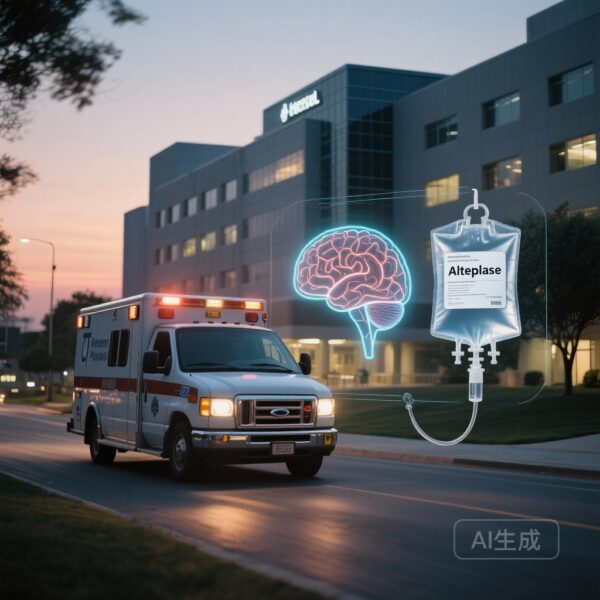
In many healthcare systems, patients with suspected large‑vessel occlusion first present to primary stroke centers (PSCs) that cannot perform EVT and are transferred to comprehensive stroke centers (CSCs). The decision to administer IV thrombolysis (IVT) before transfer—commonly called the “drip‑and‑ship” strategy—balances the potential for early reperfusion against bleeding risks and logistical constraints. While drip‑and‑ship outcomes are well described in anterior circulation large‑vessel occlusion, the specific benefits and risks of IVT in BAO patients undergoing transfer have been uncertain.
Study design and methods
Liebart et al. pooled data from three prospectively collected cohorts of patients with BAO who were initially admitted to a PSC and transferred to a CSC (Rothschild Foundation Hospital, Montpellier University Hospital, Stanford Hospital) for consideration of EVT. The analysis included 230 consecutive patients transferred between participating centers regardless of whether EVT was ultimately performed.
Key features:
- Population: Adults with acute ischemic stroke due to angiographically or radiologically confirmed BAO who required transfer for EVT consideration.
- Exposure: IVT administered at the PSC before transfer versus no IVT.
- Primary effectiveness outcome: Favorable 3‑month functional outcome defined as modified Rankin Scale (mRS) 0–2.
- Secondary outcomes: Excellent outcome (mRS 0–1), basilar artery recanalization during transfer (mTICI 2a–3 at CSC arrival), 90‑day mortality, and any ICH on 24‑hour imaging.
- Analysis: Multivariable logistic regression adjusted for prespecified confounders (including age, baseline NIHSS, onset‑to‑treatment/times, anticoagulant use, and other clinical covariates).
Key results
Overall cohort characteristics: 230 patients (median age 71 years, IQR 60–78), 47% female, median NIHSS at PSC 14 (IQR 7–24). Ninety patients (39%) received IVT prior to transfer. Most common reasons for withholding IVT were presentation beyond 4.5 hours (61%) and pre‑existing anticoagulant use (14%).
Primary outcome
Favorable 3‑month outcome (mRS 0–2) occurred in 39% of IVT‑treated patients versus 24% of non‑IVT patients. After adjustment for major confounders, pretransfer IVT was associated with higher odds of favorable outcome (adjusted OR 2.02, 95% CI 1.03–3.97; p = 0.04). The absolute difference (15%) is clinically meaningful given the typically poor prognosis of BAO without reperfusion.
Secondary outcomes
Excellent outcome (mRS 0–1) rates were higher in the IVT group but exact adjusted estimates were reported as secondary analyses.
Recanalization during transfer: IVT was very strongly associated with basilar artery recanalization at CSC arrival (aOR 23.7, 95% CI 6.9–81.3; p < 0.001), indicating that much of the benefit may stem from early vessel opening occurring before EVT can be performed.
Safety outcomes
There was no statistically significant difference in 90‑day mortality between the groups (aOR 1.12, 95% CI 0.58–2.18). Any ICH on 24‑hour imaging also did not differ significantly (aOR 1.55, 95% CI 0.77–3.10). Although point estimates for ICH favored a small increase, confidence intervals included both harm and no effect, and the study was not powered to detect modest safety differences.
Interpretation and clinical implications
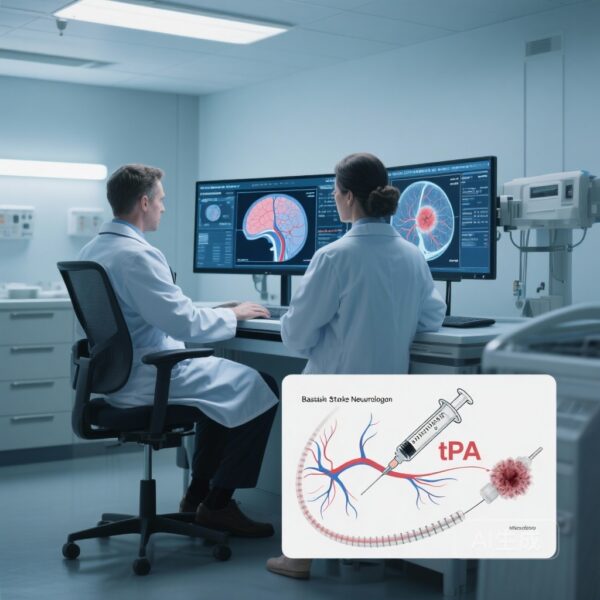
These prospective cohort data support the use of IV thrombolysis in eligible BAO patients at PSCs prior to transfer for EVT consideration. The findings are biologically plausible: IVT can achieve early clot lysis and reperfusion, and for patients transferred over tens of minutes to hours, IVT may avert the need for EVT or reduce infarct progression until EVT is available. The striking association between IVT and documented recanalization on CSC arrival substantiates this mechanism.
From a clinical standpoint, a higher proportion of good outcomes (absolute improvement ~15%) is meaningful for a condition with high baseline morbidity and mortality. Given the lack of a clear increase in mortality or symptomatic ICH in this cohort, the data argue for not withholding IVT solely because a patient will be transferred for EVT—provided standard eligibility criteria are met.
Expert commentary: strengths, limitations, and remaining questions
Strengths of the study include prospectively collected, multicenter data; inclusion of consecutive transferred patients regardless of final EVT status (reducing selection bias); and appropriate adjustment for important confounders. The finding of recanalization at arrival is an objective intermediate outcome that supports the plausibility of improved functional outcomes.
Limitations include the observational design, which cannot fully exclude residual confounding by indication. For example, clinicians might have been more likely to give IVT to patients perceived as having a better prognosis or earlier presentation despite adjustment. Selection bias may also operate if patients with extreme comorbidity or advanced imaging findings were systematically excluded from IVT. The sample size (n=230) limits precision for safety endpoints; confidence intervals for ICH and mortality are wide and compatible with both modest harm and no effect.
Generalizability to all jurisdictions requires caution. IVT availability, transfer times, and local protocols vary; the magnitude of benefit seen here may depend on typical transfer durations and the rapidity of EVT at receiving centers. Moreover, recent randomized trials in anterior circulation stroke have questioned whether bridging IVT is essential before EVT in certain settings; posterior circulation strokes may differ pathophysiologically and in clot composition, so findings cannot be fully extrapolated.
Open questions include: (1) What is the absolute time window during which pretransfer IVT retains benefit in BAO? (2) How do anticoagulant use and recent antiplatelet therapy modify risk? (3) Would a randomized trial of IVT versus no IVT in patients with BAO destined for transfer be feasible and ethical given existing practice? Pending such trials, high‑quality observational data like this study are informative.
Biological plausibility and mechanism
The basilar artery is a relatively central, large‑diameter vessel; early IVT may lyse thrombi that are still susceptible to fibrinolysis, especially embolic thrombi originating from proximal sources. Recanalization during transfer prevents ischemic propagation in highly eloquent brainstem territories. Conversely, long‑standing atherothrombotic BAO or highly organized thrombus may be less responsive, explaining why IVT will not uniformly substitute for EVT.
Clinical recommendations and practice considerations
Until randomized data are available specifically for BAO, these results support current guideline‑consistent practice: administer IVT to eligible patients presenting within the time window even if transfer for EVT is anticipated. Clinicians should continue to apply standard exclusion criteria (e.g., recent anticoagulant use, bleeding risk, extended time window). Systems of care should prioritize rapid imaging, decision‑making, and transfer to minimize onset‑to‑reperfusion time; where feasible, telestroke assessment and standardized transfer protocols can increase appropriate IVT use.
Conclusion
In this multicenter prospective cohort of patients with basilar artery occlusion transferred for EVT consideration, pretransfer IV thrombolysis was associated with substantially higher odds of vessel recanalization on arrival and with better 3‑month functional outcomes, without clear increases in mortality or early intracerebral hemorrhage. Given the observational design and limited sample size, these findings are hypothesis‑generating but support current practice of offering IVT to eligible BAO patients presenting to PSCs prior to transfer. Further research, ideally randomized when ethical and feasible, should refine selection criteria and quantify absolute benefits and risks across transfer timeframes and clot etiologies.
Funding and ClinicalTrials.gov
Funding: As reported in the primary publication (Liebart et al., Neurology 2025). No industry funding affecting the interpretation of the study was identified in the report.
ClinicalTrials.gov: Not applicable (prospective cohort analysis of transferred patients pooled from institutional cohorts).
References
1. Liebart S, Lansberg MG, Adwane G, et al.; Post‑Transfer collaborators. Effectiveness and Safety of IV Thrombolysis Before Hospital Transfer for Thrombectomy in Patients With Basilar Artery Occlusion. Neurology. 2025 Dec 9;105(11):e214355. doi: 10.1212/WNL.0000000000214355.
2. Goyal M, Menon BK, van Zwam WH, et al.; HERMES collaborators. Endovascular thrombectomy after large‑vessel ischaemic stroke: a meta‑analysis of individual patient data from five randomised trials. N Engl J Med. 2016;374(17):1693–1702.
3. Berkhemer OA, Fransen PS, Beumer D, et al.; MR CLEAN Investigators. A randomized trial of intraarterial treatment for acute ischemic stroke. N Engl J Med. 2015;372(1):11–20.
4. Powers WJ, Rabinstein AA, Ackerson T, et al. 2018 Guidelines for the Early Management of Patients With Acute Ischemic Stroke: A Guideline for Healthcare Professionals From the American Heart Association/American Stroke Association. Stroke. 2018;49(3):e46–e110.
Note: Additional randomized trials and observational studies have explored bridging versus direct EVT strategies in anterior circulation stroke; posterior circulation (BAO) evidence remains more limited and heterogeneous, underscoring the value of the current prospective cohort data.