Highlights
Mechanistic Discovery
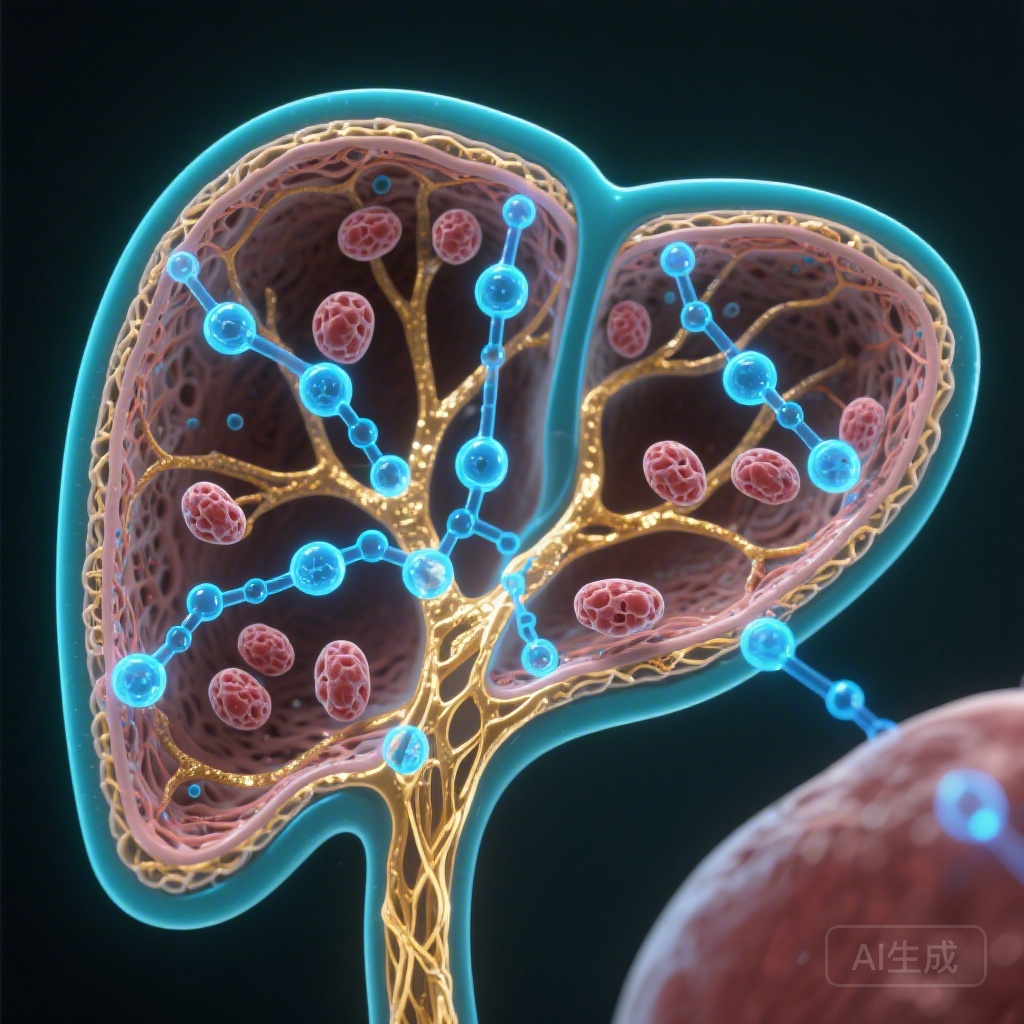
Researchers identified that hydrostatic pressure in the liver activates the Integrin αV-YAP-CTGF axis specifically within pericentral liver sinusoidal endothelial cells (LSECs).
Fibrogenic Driver
Connective tissue growth factor (CTGF) derived from LSECs acts as a primary mediator, stimulating hepatic stellate cells (HSCs) to produce type I and type IV collagen.
Therapeutic Potential
Inhibition of Integrin αV or endothelial-specific knockout of CTGF significantly ameliorates liver fibrosis, portal hypertension, and suppresses the development of liver tumors in experimental models.
Clinical Validation
Spatial transcriptomics and single-cell RNA sequencing of human samples from patients with Fontan-associated liver disease (FALD) confirm the relevance of this pathway in clinical disease progression.
Background: The Clinical Challenge of Congestive Hepatopathy
Congestive hepatopathy (CH) is a distinct form of liver injury resulting from chronic passive venous congestion, typically secondary to right-sided heart failure, constrictive pericarditis, or complex congenital heart disease requiring Fontan circulation. Unlike other forms of chronic liver disease, the primary insult in CH is mechanical: elevated central venous pressure is transmitted directly to the hepatic veins and sinusoids. Over time, this chronic pressure leads to a unique pattern of centrilobular fibrosis, which can progress to cirrhosis, portal hypertension, and hepatocellular carcinoma (HCC).
Despite its clinical significance, the molecular mechanisms by which mechanical pressure is translated into a profibrotic biochemical signal—a process known as mechanotransduction—have remained poorly understood. Currently, management is limited to treating the underlying cardiac condition, leaving a significant unmet medical need for therapies that directly target the fibrotic process in the liver.
Study Design: A Multi-modal Analysis of Pressure-Induced Injury
To elucidate these mechanisms, Kato and colleagues utilized a robust experimental framework combining murine models, in vitro mechanical stimulation, and advanced human transcriptomics.
Animal Models
Partial inferior vena cava ligation (pIVCL) was performed in mice to induce chronic hepatic congestion. This model effectively mimics the hemodynamic changes seen in human CH. To assess the functional role of specific proteins, the researchers utilized endothelial cell-specific CTGF knockout mice.
Molecular Profiling
Single-cell RNA sequencing (scRNA-seq) was conducted on murine livers following pIVCL to identify cell-type-specific transcriptional changes. This was complemented by spatial transcriptomics on human liver samples obtained from patients with Fontan-associated liver disease (FALD), allowing researchers to map gene expression to specific anatomical zones within the liver lobule.
In Vitro Stimulation
Cultured endothelial cells were subjected to controlled hydrostatic pressure to replicate the mechanical environment of the congested liver, facilitating the study of intracellular signaling pathways.
Key Findings: Pericentral LSECs as the Epicenter of Fibrogenesis
The study’s primary discovery is that liver sinusoidal endothelial cells (LSECs), particularly those located in the pericentral zone (Zone 3), are the first responders to increased hydrostatic pressure.
Activation of the YAP Pathway
The scRNA-seq data revealed that the most significant changes occurred in LSECs, where the integrin signaling pathway and Yes-associated protein (YAP) were markedly activated. YAP is a well-known transcriptional co-activator involved in mechanotransduction. The researchers found that hydrostatic pressure triggers Integrin αV, which in turn leads to the nuclear translocation and activation of YAP.
The Role of CTGF and Collagen IV
The most significantly upregulated gene in these activated LSECs was Connective Tissue Growth Factor (CTGF/CCN2). Furthermore, activated LSECs increased their own expression of type IV collagen (COL4), contributing to the basement membrane-like changes (capillarization) of the sinusoids.
Crosstalk with Hepatic Stellate Cells
Crucially, the study demonstrated a paracrine signaling mechanism. LSEC-derived CTGF acts on neighboring hepatic stellate cells (HSCs), the primary collagen-producing cells in the liver. This stimulation leads to the upregulation of type I collagen (COL1) and further COL4 production by HSCs, driving the overall fibrotic process.
Impact on Portal Hypertension and Carcinogenesis
The consequences of this pathway extend beyond simple scarring. In the pIVCL model, the activation of the Integrin αV-YAP-CTGF axis was directly linked to the development of portal hypertension. Perhaps most strikingly, the chronic activation of this axis was associated with liver tumorigenesis. Endothelial-specific knockout of CTGF not only reduced fibrosis but also significantly suppressed the formation of liver tumors, suggesting that CTGF contributes to a pro-oncogenic microenvironment in the congested liver.
Mechanistic Insights: The Integrin-YAP-CTGF Connection
The study identifies Integrin αV as the mechanical sensor on the LSEC surface. When pressure increases, Integrin αV initiates a signaling cascade that inhibits the Hippo pathway, allowing YAP to enter the nucleus. Once in the nucleus, YAP binds to TEAD transcription factors to drive the expression of CTGF.
This axis represents a specialized mechanosensitive unit. By pharmacological inhibition of Integrin αV, the researchers were able to alleviate CH-induced liver fibrosis and portal hypertension in mice, accompanied by a decrease in CTGF and collagen expression. This provides a proof-of-concept that targeting the upstream sensors of pressure can halt the downstream fibrotic cascade.
Clinical Implications: Fontan-Associated Liver Disease
The transition from murine models to human pathology was achieved through the analysis of Fontan-associated liver disease (FALD) samples. FALD represents the most severe clinical manifestation of chronic hepatic congestion. Spatial transcriptomics of these clinical samples confirmed that YAP activation and CTGF upregulation occur specifically in the pericentral LSECs as fibrosis progresses. This suggests that the Integrin αV-YAP-CTGF axis is not merely an experimental observation but a fundamental driver of human disease, making it a viable target for drug development.
Expert Commentary and Limitations
This research represents a significant leap forward in our understanding of ‘cardiac cirrhosis.’ For decades, the liver damage in heart failure was viewed as an inevitable consequence of hemodynamics. This study shifts the paradigm by identifying LSECs as active participants that translate mechanical stress into pathological remodeling.
However, some limitations remain. While the study focuses on the Integrin αV-YAP-CTGF axis, other mechanosensitive pathways (such as Piezo1 or other integrin heterodimers) may also contribute to the phenotype. Additionally, while Integrin αV inhibitors showed promise in mice, the systemic side effects of blocking integrins—which are involved in many physiological processes—must be carefully evaluated in human clinical trials. Future research should also investigate whether this pathway is equally relevant in other forms of congestion, such as Budd-Chiari syndrome.
Conclusion
The identification of the Integrin αV-YAP-CTGF axis in LSECs provides a molecular blueprint for how physical pressure leads to liver destruction. By demonstrating that CTGF induction in the endothelium is an upstream event in fibrogenesis, this study opens the door for targeted therapies that could potentially prevent or reverse liver damage in patients with chronic heart failure or Fontan circulation. As we move toward precision medicine, targeting such niche mechanotransduction pathways offers hope for managing complex multi-organ diseases like congestive hepatopathy.
References
1. Kato S, Hikita H, Tsukamoto O, et al. Activation of the Integrin αV-YAP-CTGF Axis in Liver Sinusoidal Endothelial Cells Promotes Liver Fibrogenesis, Leading to Portal Hypertension and Liver Carcinogenesis in Congestive Hepatopathy. Gastroenterology. 2026. PMID: 41758081.
2. Simonetto DA, Yang HY, Yin M, et al. Chronic passive venous congestion drives hepatic fibrogenesis via sinusoidal endothelial cell-derived HIF1α. Journal of Hepatology. 2015;63(3):648-659.
3. Wells RG. The role of mechanical stiffness and alterations in the extracellular matrix in liver fibrosis. Clinical Liver Disease. 2015;5(5):110-112.
4. Gwon MG, Gu H, Le CT, et al. CCN2: A master regulator of fibrosis and potential therapeutic target. Cells. 2021;10(11):2986.