Highlights
Cardiovascular involvement remains the primary driver of morbidity and mortality in patients with Fabry disease, even in the era of disease-specific therapies. A recent multicenter longitudinal study of 680 adult patients identified that 13.5 percent of the population experienced a major adverse cardiovascular event (MACE) over a median follow-up of 7.1 years. Key independent predictors of these events include advancing age, declining estimated glomerular filtration rate (eGFR), prolonged QRS interval, and increased left ventricular mass index (LVMI). These findings underscore the critical need for early risk stratification and more aggressive management of cardiac involvement in this rare lysosomal storage disorder.
Introduction: The Burden of Cardiac Involvement in Fabry Disease
Fabry disease is a rare, X-linked lysosomal storage disorder caused by a deficiency in the enzyme alpha-galactosidase A. This deficiency leads to the progressive accumulation of globotriaosylceramide (Gb3) and its deacylated form, lyso-Gb3, within various cell types, including cardiomyocytes, vascular endothelial cells, and renal podocytes. While the disease affects multiple organ systems, cardiovascular complications have emerged as the leading cause of death in the modern era, surpassing renal failure due to the success of dialysis and transplantation.
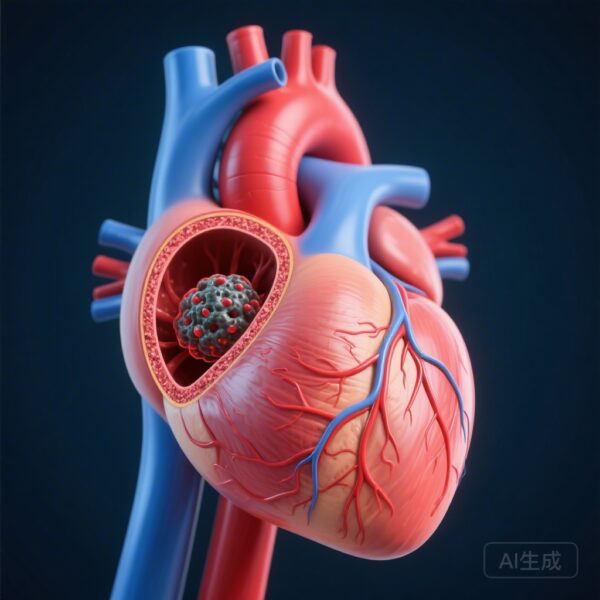
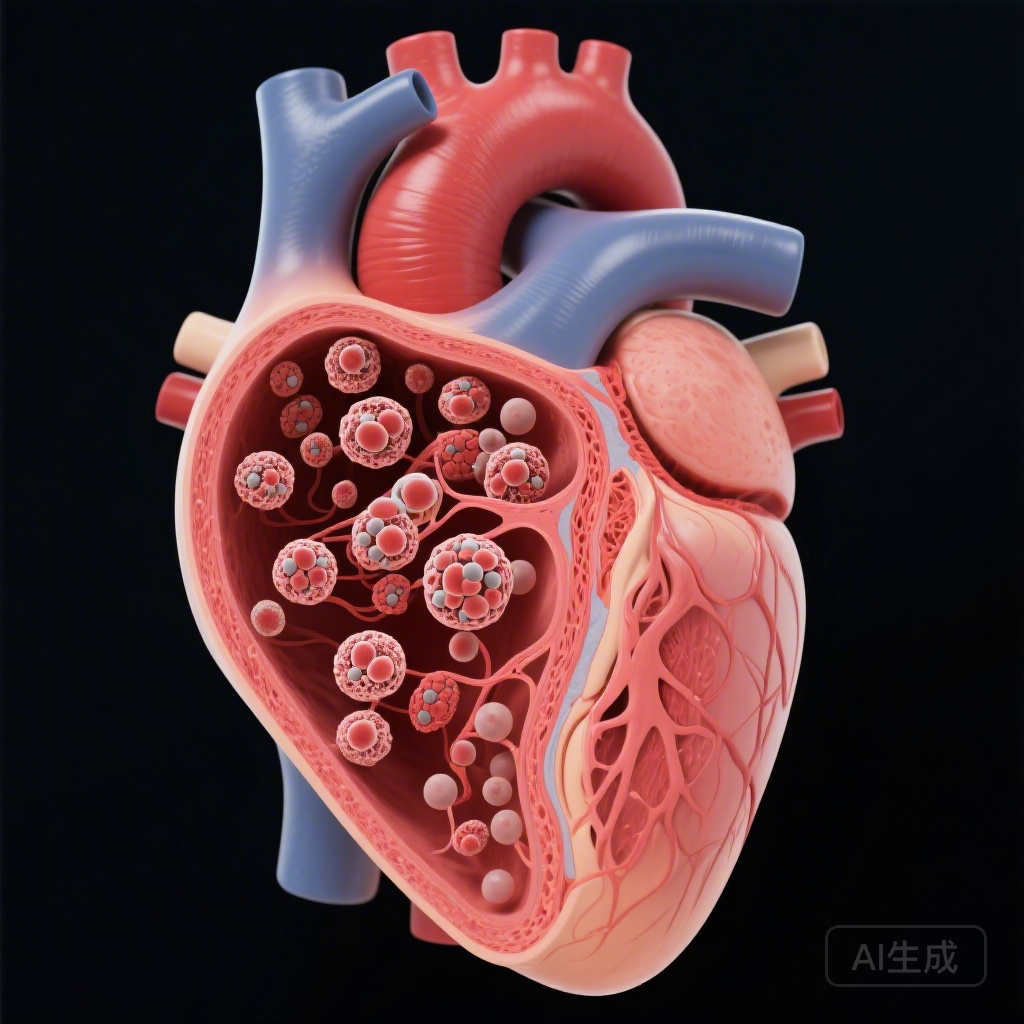
Cardiac manifestations of Fabry disease typically include left ventricular hypertrophy (LVH), which can mimic hypertrophic cardiomyopathy, as well as conduction system abnormalities, valvular dysfunction, and coronary microvascular dysfunction. Over time, the storage of Gb3 triggers a cascade of inflammation and oxidative stress, eventually leading to replacement fibrosis. This fibrosis is often irreversible and serves as a substrate for malignant arrhythmias and progressive heart failure. Despite the availability of enzyme replacement therapy (ERT) and chaperone therapy, many patients continue to experience clinical progression, leading researchers to investigate the specific determinants of long-term cardiovascular outcomes.
Study Methodology and Patient Demographics
To address the gaps in our understanding of cardiovascular risk in Fabry disease, Monda and colleagues conducted a multicenter, retrospective, longitudinal study of consecutively referred adult patients across several specialized centers. The study included a robust cohort of 680 patients with a mean age of 42.3 years. Notably, 41.0 percent of the participants were male, reflecting the X-linked nature of the disease where females, while often considered carriers, can develop significant clinical manifestations due to random X-chromosomal inactivation.
At the time of inclusion, 68.7 percent of the cohort was receiving disease-specific therapy (ERT or chaperone therapy). The primary endpoint of the study was the occurrence of Major Adverse Cardiovascular Events (MACE), defined as a composite of cardiovascular death, major arrhythmic events (such as ventricular tachycardia or fibrillation), bradyarrhythmias requiring pacemaker implantation, and stroke. The researchers aimed to identify which clinical and demographic factors at baseline were most predictive of these outcomes over a long-term follow-up period.
Analyzing Major Adverse Cardiovascular Events (MACE)
During a median follow-up of 7.1 years (interquartile range, 3.9 to 11.6 years), 92 patients (13.5 percent) reached the primary composite endpoint. The data revealed that at the 10-year mark, the overall freedom from MACE was 85.1 percent. However, this figure masks a significant disparity when the data is disaggregated by sex and clinical phenotype.
The study highlights that cardiovascular events are not evenly distributed across the lifespan of a Fabry patient. Instead, there is a progressive increase in event rates as patients age, reflecting the cumulative nature of lysosomal storage and subsequent tissue damage. The types of events observed were diverse, ranging from sudden cardiac death and life-threatening arrhythmias to strokes, demonstrating the widespread impact of Fabry disease on the cardiovascular and cerebrovascular systems.
Gender Disparities in Clinical Outcomes
One of the most striking findings of the study was the significant difference in event-free survival between males and females. At 10 years, freedom from MACE was 76.1 percent in males compared to 91.3 percent in females (log-rank p < 0.001). This confirms that while females do experience significant morbidity, males with Fabry disease face a substantially higher risk of early and severe cardiovascular complications.
This gender gap is largely attributed to the classic phenotype typically seen in hemizygous males with little to no residual enzyme activity. In contrast, females often have a mosaic of normal and affected cells, which may delay the onset of clinical symptoms. Nevertheless, the 8.7 percent event rate in females at 10 years is not negligible, reinforcing the modern clinical consensus that Fabry disease should be viewed as a spectrum of disease in both sexes rather than a carrier state in women.
Identifying Independent Predictors of Cardiovascular Events
Through multivariable analysis, the study identified four key independent predictors of MACE, providing a roadmap for clinical risk stratification.
1. Advancing Age
Age was a potent predictor, with a hazard ratio (HR) of 1.04 per year. This suggests that for every year of life, the risk of a major cardiovascular event increases by 4 percent. In Fabry disease, age is a surrogate for the duration of exposure to toxic metabolites and the transition from storage to irreversible fibrosis.
2. Renal Function (eGFR)
The estimated glomerular filtration rate was found to be inversely related to cardiovascular risk (HR 0.99 per 1 mL/min per 1.73 m2). This highlights the critical heart-kidney crosstalk in Fabry disease. Patients with declining renal function are at significantly higher risk for cardiac events, potentially due to shared pathways of microvascular damage and the systemic effects of chronic kidney disease, such as hypertension and volume overload.
3. QRS Duration
Interestingly, the QRS interval on a standard electrocardiogram emerged as a significant predictor (HR 1.02 per 1 ms). A prolonged QRS duration often reflects conduction system disease and underlying myocardial fibrosis. This finding suggests that simple, non-invasive tools like the ECG remain invaluable in assessing the risk of arrhythmias and sudden death in this population.
4. Left Ventricular Mass Index (LVMI)
Increased LVMI was also an independent predictor (HR 1.01 per 1 g/m2). Left ventricular hypertrophy is the hallmark of Fabry cardiomyopathy, and as the mass increases, so does the risk of heart failure and rhythm disturbances. The study confirms that even small incremental increases in heart mass carry prognostic weight.
Clinical Implications and the Unmet Need
Perhaps the most sobering conclusion of this research is that cardiovascular disease remains an unmet need in Fabry disease. Despite more than two-thirds of the patients being on disease-specific therapy, a substantial number still experienced major adverse events. This suggests that current therapies, while effective at slowing disease progression, may be initiated too late in the disease course to fully mitigate cardiac risk.
The transition from Gb3 accumulation to replacement fibrosis represents a point of no return for many patients. Once fibrosis is established (typically identified by Late Gadolinium Enhancement on cardiac MRI), the benefits of ERT or chaperone therapy on cardiac remodeling appear limited. This underscores the importance of early diagnosis, potentially through newborn screening or family screening of index cases, to initiate therapy before irreversible structural damage occurs.
Furthermore, the study suggests that management should not focus solely on enzyme replacement. Aggressive control of traditional cardiovascular risk factors, such as blood pressure and lipids, along with the use of renin-angiotensin-aldosterone system (RAAS) inhibitors for renal and cardiac protection, is essential. The role of implantable cardioverter-defibrillators (ICDs) and pacemakers also requires careful consideration in patients who exhibit the high-risk markers identified in this study, such as prolonged QRS intervals or significant LVH.
Conclusion: Moving Toward Precision Management
The work of Monda et al. provides essential data for the long-term management of Fabry disease. By identifying age, eGFR, QRS duration, and LVMI as independent predictors of MACE, the study allows clinicians to more accurately identify patients at the highest risk for adverse outcomes. As we move toward a more personalized approach to rare diseases, these markers should be integrated into routine clinical monitoring.
Future research must focus on whether earlier initiation of therapy or the use of combination therapies (e.g., ERT combined with substrate reduction therapy) can further reduce the incidence of MACE. Until then, vigilant monitoring and comprehensive cardiovascular care remain the cornerstones of management for all patients living with Fabry disease.
References
1. Monda E, Bakalakos A, Del Franco A, et al. Cardiovascular Morbidity and Mortality in Fabry Disease. Circ Genom Precis Med. 2026;e005361. doi:10.1161/CIRCGEN.125.005361.
2. Ortiz A, Germain DP, Desnick RJ, et al. Fabry disease revisited: Management and treatment recommendations for adult patients. Mol Genet Metab. 2018;123(4):416-427.
3. Linhart A, Germain DP, Olivotto I, et al. An expert consensus document on the management of cardiovascular manifestations of Fabry disease. Eur J Heart Fail. 2020;22(7):1076-1096.