Highlights
Physiological recovery, defined by the return of heart rate and heart rate variability (HRV) to baseline, often lags significantly behind the resolution of self-reported symptoms, particularly in moderate-to-severe COVID-19 cases.
In moderate-to-severe COVID-19, digital recovery took an average of 60.23 days, compared to only 12.05 days for self-reported symptom resolution—a nearly five-fold discrepancy.
Behavioral metrics, such as daily steps and active calories, typically return to baseline levels as soon as symptoms resolve, creating a potential ‘activity-physiology gap’ where patients resume full exertion while their cardiovascular systems remain stressed.
Recovery trajectories differ by pathogen; while COVID-19 and influenza show prolonged physiological stress, Group A Streptococcus (GAS) recovery is more rapid, likely due to the efficacy of antibiotic interventions.
Background: The Challenge of Defining ‘Recovery’
The determination of when a patient has ‘recovered’ from an acute communicable disease has traditionally relied on two pillars: the cessation of symptoms (subjective) and the end of the infectious period (public health policy). However, clinicians have long observed that many patients continue to experience fatigue, reduced exercise tolerance, or autonomic dysfunction long after their fever has subsided and their viral tests have turned negative. This discrepancy is particularly evident in the wake of the COVID-19 pandemic, where the phenomenon of ‘Long COVID’ has highlighted the limitations of current recovery definitions.
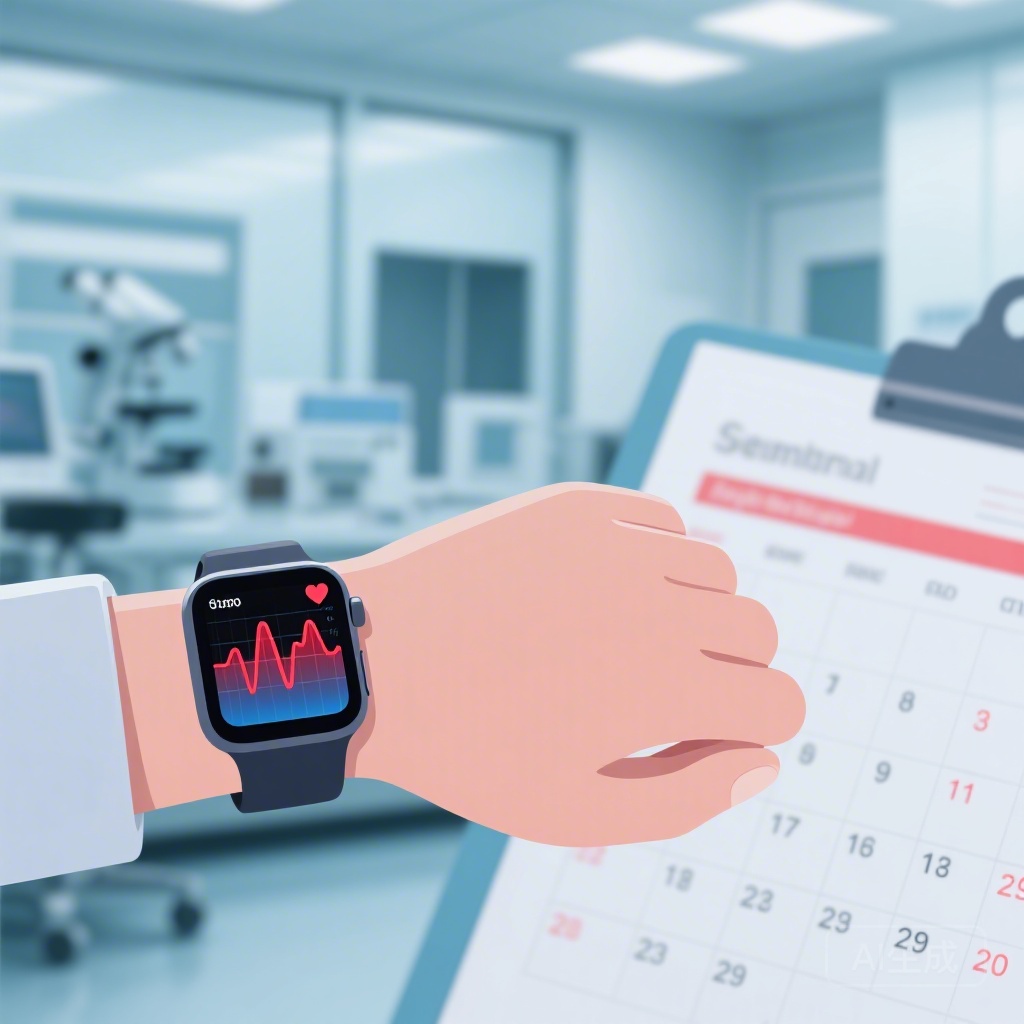
Accurate detection of physiological recovery is critical for preventing complications and determining when it is safe for an individual to return to high-intensity work or athletic activity. Until recently, continuous physiological monitoring of large populations during and after infection was unfeasible. The proliferation of wearable technology, specifically smartwatches capable of tracking heart rate, HRV, and activity levels, offers a new window into the ‘invisible’ phase of recovery.
Study Design: A 2-Year Prospective Digital Cohort
The study, published in Lancet Digital Health (Levi et al., 2026), utilized a 2-year prospective cohort design in Israel, involving 4,795 participants. The researchers integrated data from three primary sources: passive smartwatch data (heart rate and HRV-based stress), daily self-reported symptom questionnaires via a dedicated app, and electronic medical records (EMR) from Maccabi Healthcare Services.
Participants were required to be at least 18 years old and have used their own smartphones. The study monitored three distinct infections: COVID-19 (3,097 cases), influenza (633 cases), and Group A streptococcus (380 cases). To ensure a robust baseline, participants’ physiological data were collected during healthy periods. Digital recovery was defined as the point when heart rate and HRV during sedentary periods returned to these pre-infection baseline levels. The primary outcome was the lag time between the day a participant reported being symptom-free and the day their physiological metrics normalized.
Key Findings: The Disconnect Between Feeling and Being Well
The COVID-19 Recovery Lag
The most striking findings emerged from the COVID-19 cohort. For individuals with mild cases, digital recovery (7.14 days) and symptom resolution (8.53 days) were relatively aligned. However, in moderate-to-severe cases, a massive disconnect was observed. While these patients reported feeling symptom-free by approximately day 12, their physiological metrics did not return to baseline until an average of 60.23 days (95% CI 59.58 to 60.89). This suggests that for nearly two months post-infection, the cardiovascular and autonomic nervous systems of these patients remained in a state of heightened stress or dysregulation despite the absence of overt symptoms.
Influenza and GAS Comparison
Influenza cases also exhibited a lag, though less pronounced than severe COVID-19. In moderate-to-severe influenza, digital recovery took 7.85 days compared to 12.06 days for symptom resolution. Interestingly, for Group A Streptococcus (GAS), digital recovery often preceded or coincided with symptom resolution. For mild GAS, digital recovery occurred at -1.12 days (meaning physiology normalized slightly before symptoms vanished), while symptoms lasted roughly 7.95 days. This difference may be attributed to the rapid physiological response to antibiotic treatment, which is standard for GAS but unavailable for the viral cohorts.
The Activity-Physiology Gap
A critical observation of the study was the behavior of participants. As soon as individuals reported being symptom-free, their behavioral metrics—daily steps, distance walked, active time, and active calories—immediately returned to baseline levels. This indicates that patients resume their regular daily routines and physical exertion based on their subjective feeling of wellness. However, in the moderate-to-severe COVID-19 group, this means patients were back to ‘normal’ activity levels while their physiological markers were still significantly aberrant.
Expert Commentary and Clinical Implications
These findings challenge the current public health consensus. Many international health guidelines suggest that individuals can resume normal activities 5 days after symptom cessation. While this may be appropriate from a contagion-control perspective, this study suggests it may be physiologically premature for a significant portion of the population, particularly those who experienced more severe initial symptoms.
The ‘activity-physiology gap’ is of particular concern to sports medicine and occupational health. Resuming high-intensity activity while the heart rate is elevated and HRV is low could potentially increase the risk of cardiovascular events or contribute to the development of chronic post-viral syndromes. Smartwatches could serve as a ‘physiological clearance’ tool, providing objective data to guide a gradual return to activity rather than relying solely on the calendar or subjective reports.
However, the study has limitations. The participants were recruited via social media and were already smartwatch users, which may introduce a selection bias toward a younger, more tech-savvy, or health-conscious demographic. Additionally, while the study links physiological data to recovery, it does not yet prove that modifying behavior based on this data leads to better long-term clinical outcomes, such as a reduction in Long COVID incidence.
Conclusion: Moving Toward Precision Recovery
The study by Levi et al. demonstrates that ‘recovery’ is not a binary state but a complex, multi-layered process where subjective wellness, behavioral resumption, and physiological restoration occur on different timelines. The significant lag observed in COVID-19 recovery highlights the potential of wearable technology to identify patients who remain ‘physiologically vulnerable’ despite feeling better.
For clinicians, the takeaway is clear: patients who have suffered moderate-to-severe viral infections should be advised that their internal recovery may take much longer than their symptoms suggest. Future research must now focus on whether ‘digital recovery’ can be used as a biomarker to tailor post-infection rehabilitation and whether such interventions can reduce the global burden of chronic post-communicable diseases.
Funding and Reference
This study was funded by the European Research Council, the Israel Science Foundation within the Israel Precision Medicine Partnership programme, and the Koret Foundation.
Reference: Levi Y, Gande V, Shmueli E, et al. Smartwatch-derived versus self-reported outcomes of physiological recovery after COVID-19, influenza, and group A streptococcus: a 2-year prospective cohort study. Lancet Digit Health. 2026 Feb 6. doi: 10.1016/j.landig.2025.100956.