Highlights
- Superior Efficacy: The combination of perioperative enfortumab vedotin (EV) and pembrolizumab (P) reduced the risk of event or death by 60% compared to surgery alone (HR 0.40).
- Significant Survival Benefit: Overall survival at two years was 79.7% in the EV-P group versus 63.1% in the control group (HR 0.50).
- Exceptional Pathological Response: 57.1% of patients achieved a pathological complete response (pCR) with the combination therapy, compared to only 8.6% with surgery alone.
- New Standard for Cisplatin-Ineligible Patients: This study addresses a massive unmet need for patients who cannot tolerate standard cisplatin-based chemotherapy.
Background and the Unmet Medical Need
The Current Landscape of Muscle-Invasive Bladder Cancer
Muscle-invasive bladder cancer (MIBC) is an aggressive disease with a high propensity for systemic micrometastasis. For decades, the standard of care for patients with fit physiological profiles has been neoadjuvant cisplatin-based chemotherapy (NAC) followed by radical cystectomy (RC) and pelvic lymph-node dissection (PLND). This combined approach improves survival by eradicating micrometastatic disease before surgical intervention. However, approximately 30% to 50% of patients are deemed “cisplatin-ineligible” due to factors such as renal impairment (creatinine clearance < 60 mL/min), poor ECOG performance status, hearing loss, or grade 2 or higher peripheral neuropathy.
The Prognostic Gap
For these cisplatin-ineligible patients, the clinical standard has historically been upfront radical cystectomy. Without the benefit of neoadjuvant therapy, these patients face a high risk of recurrence and mortality. While adjuvant immunotherapy has recently shown some benefit in this space, the neoadjuvant window remains a critical opportunity to downstage tumors and improve long-term outcomes. The search for an effective, non-cisplatin-based perioperative regimen has been a top priority in urologic oncology.
Study Design: The KEYNOTE-905/EV-303 Trial
Population and Randomization
KEYNOTE-905/EV-303 was a phase 3, open-label, randomized trial involving 344 participants with muscle-invasive bladder cancer (T2-T4aN0M0 or T1-T4aN1M0). All participants were either ineligible for cisplatin or had declined it. Patients were randomly assigned in a 1:1 ratio to receive either perioperative enfortumab vedotin plus pembrolizumab and surgery, or surgery alone (control).
Treatment Protocol
In the experimental arm, patients received three cycles of neoadjuvant enfortumab vedotin (1.25 mg/kg on days 1 and 8) and pembrolizumab (200 mg on day 1) every 3 weeks. Following radical cystectomy, patients continued with adjuvant therapy for a total of 9 cycles of EV and 17 cycles of pembrolizumab. The control arm underwent surgery alone without any neoadjuvant or adjuvant systemic therapy.
Endpoints
The primary endpoint was event-free survival (EFS), defined as the time from randomization to any of the following: progression of disease that precludes surgery, inability to undergo surgery, local or distant recurrence, or death from any cause. Key secondary endpoints included overall survival (OS) and pathological complete response (pCR) rate.
Key Findings and Results
Event-Free and Overall Survival
At a median follow-up of 25.6 months, the results were strikingly in favor of the combination therapy. The estimated 2-year EFS was 74.7% in the EV-P group compared to 39.4% in the surgery-only group. The hazard ratio (HR) for an event or death was 0.40 (95% CI, 0.28 to 0.57; P<0.001), representing a 60% reduction in risk.
Overall survival also showed a statistically significant and clinically meaningful improvement. The 2-year OS was 79.7% for the EV-P group versus 63.1% for the control group, with a hazard ratio for death of 0.50 (95% CI, 0.33 to 0.74; P<0.001). These findings suggest that the perioperative combination not only delays recurrence but also extends the lives of patients who previously had few options.
Pathological Response Rates
One of the most impressive findings was the pathological complete response rate. Among those who underwent surgery, 57.1% of patients in the EV-P arm had no viable tumor remaining (ypT0N0) at the time of cystectomy. In the control group, the pCR rate was only 8.6%. This estimated difference of 48.3 percentage points highlights the potent antitumor activity of the EV-P combination in the neoadjuvant setting.
Surgical Feasibility
Crucially, the addition of neoadjuvant therapy did not appear to compromise the ability to proceed to surgery. Radical cystectomy was performed in 87.6% of the EV-P group and 89.7% of the control group. This indicates that the toxicity of the combination therapy was generally manageable enough to allow for definitive surgical intervention.
Safety and Adverse Events
While the efficacy results were remarkable, the combination therapy was associated with a higher burden of toxicity. Adverse events occurred in all participants in the EV-P group. Grade 3 or higher adverse events were reported in 71.3% of the EV-P group compared to 45.9% in the surgery-only group.
Drug-related grade 3 or higher adverse events in the EV-P arm occurred in 45.5% of patients. Common toxicities associated with enfortumab vedotin included skin reactions (rash), peripheral neuropathy, and hyperglycemia. These are consistent with the known safety profile of EV in the metastatic setting. Clinicians must be vigilant in monitoring for these side effects, particularly in an older or comorbid population that is typically cisplatin-ineligible.
Expert Commentary: Mechanistic Insights and Clinical Impact
The Synergy of ADC and Immunotherapy
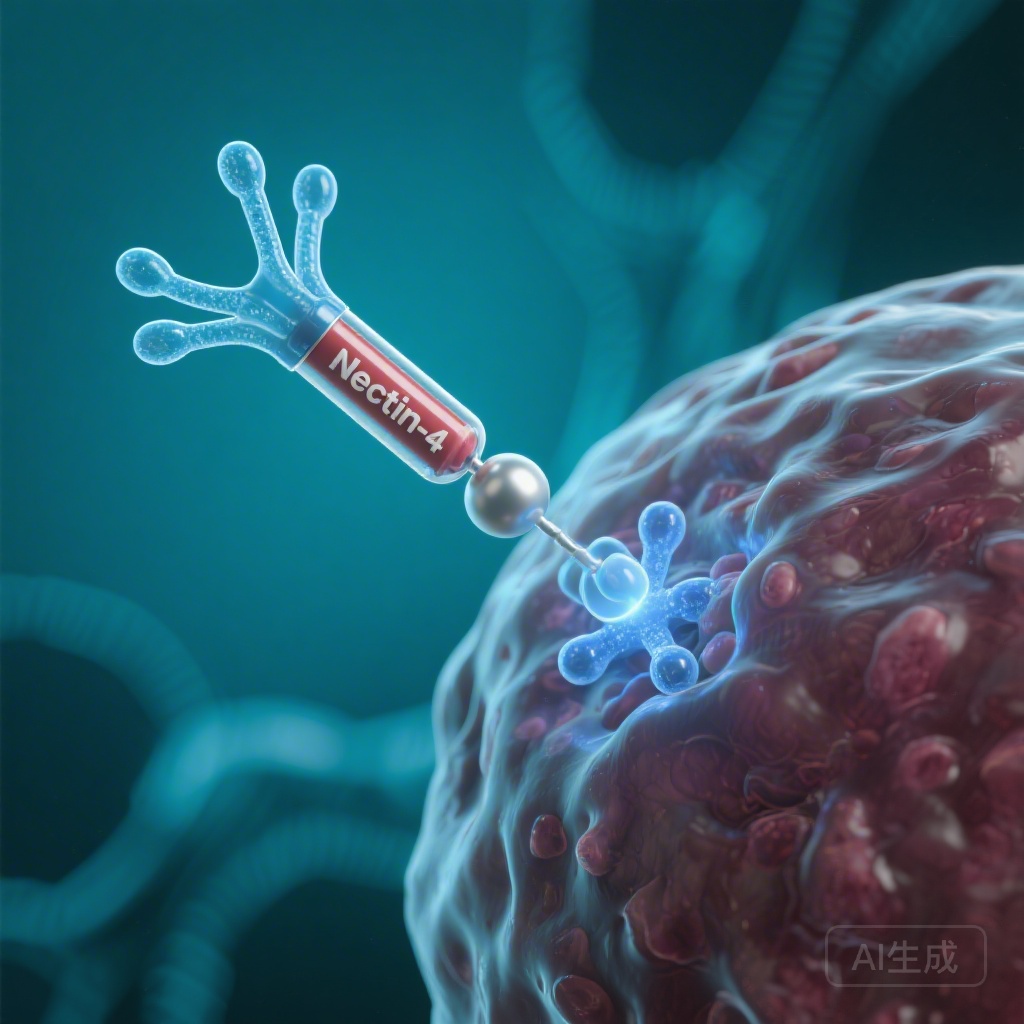
Enfortumab vedotin is an antibody-drug conjugate (ADC) that targets Nectin-4, an adhesion molecule that is overexpressed in nearly all urothelial cancers. The payload, monomethyl auristatin E (MMAE), is a microtubule-disrupting agent that induces cell cycle arrest and apoptosis. Beyond direct cytotoxicity, EV is thought to induce immunogenic cell death, which can release tumor antigens and promote an inflammatory microenvironment. When combined with pembrolizumab, which blocks the PD-1/PD-L1 inhibitory pathway, the immune system is further primed to recognize and eliminate residual cancer cells. This synergy likely accounts for the high pCR rates observed.
Redefining the Standard of Care
For years, the oncology community has struggled with the treatment of cisplatin-ineligible MIBC. The KEYNOTE-905/EV-303 trial provides high-level evidence that a perioperative approach with EV-P is not only feasible but vastly superior to surgery alone. This regimen will likely become the new standard of care for this patient population. It also raises the question of whether this combination could eventually challenge cisplatin-based NAC in patients who *are* eligible for cisplatin, a topic currently being explored in other ongoing trials.
Limitations and Future Directions
Despite the clear success, some questions remain. The trial utilized a perioperative approach (both neoadjuvant and adjuvant), making it difficult to tease out the relative contribution of the adjuvant phase. Furthermore, the high rate of Grade 3+ adverse events suggests that patient selection and proactive toxicity management will be essential for real-world implementation. Future research may focus on identifying biomarkers beyond Nectin-4 expression that can predict which patients benefit most from this intensive combination.
Conclusion
In a predominantly cisplatin-ineligible population with muscle-invasive bladder cancer, perioperative treatment with enfortumab vedotin plus pembrolizumab followed by surgery significantly improved event-free survival, overall survival, and pathological complete response rates compared to surgery alone. These findings represent a landmark shift in the management of MIBC, offering a potent systemic alternative for patients who were previously limited to surgical intervention with high recurrence risks.
Funding and ClinicalTrials.gov
This study was funded by Merck Sharp and Dohme, a subsidiary of Merck (Rahway, NJ), and Astellas Pharma. ClinicalTrials.gov number: NCT03924895.
References
1. Vulsteke C, Adra N, Danchaivijitr P, et al. Perioperative Enfortumab Vedotin and Pembrolizumab in Bladder Cancer. N Engl J Med. 2026;394:10.1056/NEJMoa2511674.
2. Powles T, Valderrama BP, Gupta S, et al. Enfortumab Vedotin and Pembrolizumab in Untreated Advanced Urothelial Cancer. N Engl J Med. 2024;390(10):889-901.
3. Lerner SP, McConkey DJ, Hoadley KA, et al. Bladder Cancer Molecular Subtypes and Response to Neoadjuvant Chemotherapy. Clin Cancer Res. 2018;24(10):2254-2264.