Highlights
- NEUROTHERM was a double‑blind, randomized, placebo‑controlled pharmacodynamic trial testing a single IV paracetamol dose in febrile brain‑injured patients monitored with intracerebral temperature probes.
- Paracetamol reduced mean cerebral temperature (CT) by 0.6°C over 6 hours versus placebo; responders (≈70%) achieved ≈1°C reduction and spent a median 215 minutes with CT <38.5°C.
- Cerebral temperature exceeded systemic temperature by ≈0.3°C in both groups, indicating potentially underestimated brain heat if only systemic measurements are used.
- A single IV dose was well tolerated but produced modest decreases in systolic blood pressure and heart rate; one‑third of patients did not respond to paracetamol.
Background
Fever is common after acute brain injury and is associated with worse neurological outcome across etiologies, including traumatic brain injury (TBI), subarachnoid hemorrhage, and ischemic stroke. Elevated body temperature increases cerebral metabolic rate and may exacerbate secondary brain injury through increased oxygen consumption, excitotoxicity, and blood–brain barrier disruption. Current neurocritical care practice typically treats fever aggressively, with antipyretics (most commonly paracetamol/acetaminophen), surface or intravascular cooling, or a combination of methods. Despite its ubiquitous use, evidence quantifying the effect of paracetamol on intracerebral temperature — as opposed to systemic temperature (ST) — in seriously brain‑injured patients has been lacking.
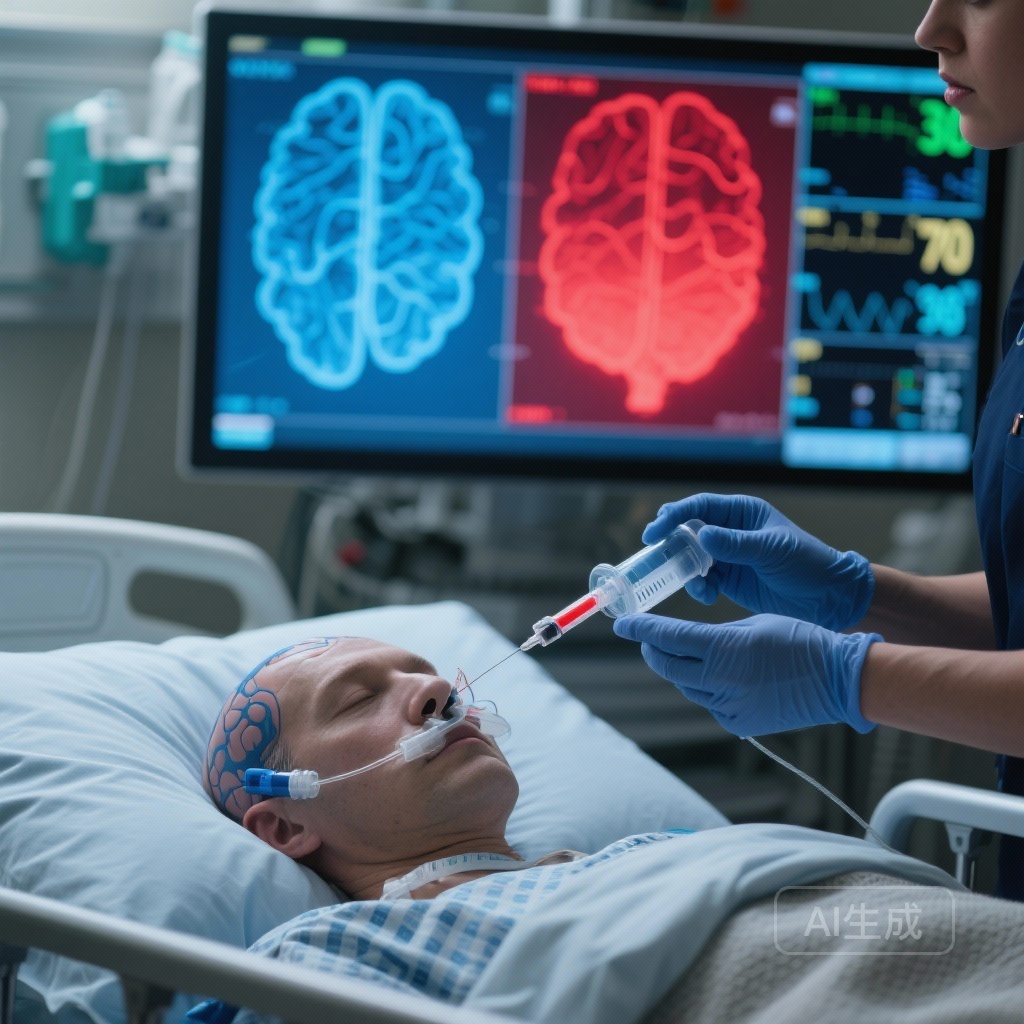
The NEUROTHERM trial sought to fill that gap by directly measuring intracerebral temperature with implanted thermal probes in febrile, brain‑injured patients and by quantifying the short‑term pharmacodynamic effect of a single IV paracetamol dose compared with placebo.
Study design
NEUROTHERM was a prospective, randomized, double‑blind, placebo‑controlled pharmacodynamic trial conducted in a Neuro‑ICU setting. Eligible patients were adults with acute brain injury who were febrile, defined in the protocol as cerebral temperature (CT) ≥ 38.5°C for more than 30 minutes, and who had intracerebral monitoring that included a thermal probe. Patients were randomized to receive a single intravenous dose of paracetamol or placebo.
Cerebral and systemic temperatures were recorded every 10 minutes for 6 hours after drug administration. The prespecified primary endpoint was the difference in mean CT over the 6‑hour posttreatment period. Secondary analyses included time spent below the 38.5°C threshold, comparisons of CT versus ST, responder analyses, and hemodynamic safety signals.
Key trial demographics: 99 patients were randomized (49 paracetamol, 50 placebo), mean age 55 ± 13 years, 24% female. The spectrum of brain injuries included common Neuro‑ICU diagnoses (the primary report provides detailed inclusion diagnoses and monitoring parameters).
Key results
The NEUROTHERM trial produced several clinically relevant findings regarding the acute effect of paracetamol on intracerebral temperature.
Primary endpoint: mean cerebral temperature
Over the 6‑hour monitoring window, mean CT was significantly lower in the paracetamol group than in the placebo group: 38.4 ± 0.5°C versus 39.0 ± 0.5°C (p < 0.001). The absolute mean reduction attributable to paracetamol was therefore 0.6°C across the cohort.
Responder analyses and time below threshold
Response to a single IV dose was heterogeneous. Approximately 70% of patients were classified as responders; in this subgroup paracetamol reduced mean CT by about 1.0°C. However, roughly 30% of patients did not show a significant CT decline after paracetamol.
Time‑based analyses showed that paracetamol substantially increased time with CT below the 38.5°C febrile cutoff: median time with CT < 38.5°C was 215 minutes (interquartile range 0–290) in the paracetamol group versus 0 minutes (0–5) in the placebo group (p < 0.001). In practical terms, a single dose kept the brain below the prespecified fever threshold for a median of about 3.6 hours among treated patients.
Systemic versus cerebral temperature
Across both groups, CT was consistently higher than ST by approximately 0.3°C (mean CT 38.7 ± 0.6 vs ST 38.4 ± 0.6°C, p < 0.001). This gradient was stable between treatment arms and highlights that peripheral temperature measurements may underestimate intracerebral heat when guiding fever management decisions.
Safety and hemodynamics
Paracetamol was generally well tolerated. The treatment arm showed modest decreases in systolic arterial pressure and heart rate compared with placebo, but no other clinically meaningful adverse effects were reported in the monitoring window. The trial report did not identify higher rates of renal or hepatic laboratory abnormalities attributable to a single dose; however, longer‑term safety with repeated dosing was not assessed in this pharmacodynamic study.
Interpretation and clinical implications
NEUROTHERM provides the first randomized, intracerebrally‑monitored evidence that paracetamol lowers cerebral temperature in febrile Neuro‑ICU patients. The overall mean CT reduction (0.6°C) is modest but statistically robust; in the 70% of responders, the effect size (≈1.0°C) is likely to be clinically meaningful, at least in the short term.
Clinicians should understand several practical implications:
- Single-dose paracetamol can transiently reduce intracerebral temperature and can be useful as an initial, rapidly available antipyretic strategy in brain‑injured patients.
- Because CT exceeded ST by ≈0.3°C, reliance solely on peripheral temperature (oral, axillary, bladder) may underrecognize brain hyperthermia. When available, intracerebral or tympanic measures closer to brain temperature may better guide management.
- One‑third of patients did not respond to a single IV dose, implying that some febrile Neuro‑ICU patients will need adjunctive measures (repeated antipyretics, external/intravascular cooling) to reach target temperatures.
- The paracetamol effect was time‑limited after a single dose (median ≈3.6 hours under threshold), so repeated dosing strategies or escalation to active cooling will be necessary for sustained fever control.
In sum, paracetamol remains a reasonable first‑line pharmacologic antipyretic in neurocritical care, but clinicians should anticipate variable responsiveness and consider early use of physical cooling when intracerebral temperature control is a priority (for example, in raised intracranial pressure or during secondary injury risk periods).
Biological plausibility and mechanism
Paracetamol exerts antipyresis by acting on central thermoregulatory set points in the hypothalamus, likely through modulation of prostaglandin E2 synthesis and other central pathways. Because intracerebral temperature reflects both systemic thermal load and local metabolic heat production within the brain, paracetamol’s central action plausibly reduces CT. The magnitude of CT reduction will depend on the relative contributions of systemic fever drivers (e.g., infection, inflammation) and local brain metabolic rate; patients with ongoing high metabolic demand or persistent inflammatory drivers may therefore show limited response to a single dose.
Study strengths and limitations
Strengths:
- Randomized, double‑blind, placebo‑controlled design with direct intracerebral temperature measurement provides high‑quality pharmacodynamic evidence.
- High‑frequency temperature sampling (every 10 minutes) allowed precise characterization of the temporal effect.
- Clear, clinically meaningful endpoints (absolute temperature differences, time below a prespecified febrile threshold).
Limitations:
- Short monitoring window: the trial evaluated a single IV dose and followed patients for 6 hours. It does not address the effects of repeated dosing or longer‑term temperature control strategies.
- No clinical outcome data were reported (e.g., intracranial pressure trends, neurological outcome, mortality) — the trial was designed for pharmacodynamics rather than patient‑centered outcomes.
- Heterogeneity of underlying brain pathologies and concurrent therapies in Neuro‑ICU populations may affect generalizability; subgroup effects by diagnosis were not the primary focus of the report.
- About 30% nonresponders raise questions about predictors of response; the trial did not define simple bedside predictors for nonresponse to a single paracetamol dose.
Clinical takeaways and recommended practice considerations
Based on NEUROTHERM, clinicians can consider the following pragmatic approach to febrile brain‑injured patients:
- Administer an initial IV dose of paracetamol as a rapid, low‑risk first step to lower intracerebral temperature, recognizing that the expected mean reduction is modest (~0.6°C) and that a single dose will often provide only temporary control.
- Monitor temperatures closely, ideally with measures that reflect intracranial heat when available. If CT remains ≥38.5°C or if ICP is elevated/neurological status deteriorates, escalate promptly to physical cooling (surface or intravascular), repeat pharmacologic dosing per institutional protocols, or combine modalities.
- Be vigilant for hemodynamic effects; although modest, paracetamol can reduce systolic blood pressure and heart rate in some patients, and blood pressure targets in neurocritical care must be maintained.
- Document and audit response rates locally and consider research protocols to evaluate repeated dosing, combined strategies, and effects on ICP and clinical outcomes.
Research implications and future directions
NEUROTHERM opens multiple avenues for further study:
- Randomized trials comparing standardized fever‑control bundles (repeated paracetamol dosing ± physical cooling) that include intracerebral temperature monitoring and clinically meaningful outcomes such as ICP control, neurological recovery, and mortality.
- Investigation into predictors of paracetamol nonresponse (e.g., severity of inflammation, infection source, cerebral metabolic rate), which could support early individualized escalation strategies.
- Pharmacokinetic/pharmacodynamic studies examining dose–response relationships for paracetamol in Neuro‑ICU patients, including the effect of repeated dosing and interactions with other sedative or vasoactive drugs.
- Cost‑effectiveness comparisons of pharmacologic antipyresis versus physical cooling when the aim is controlling intracerebral temperature specifically.
Conclusion
The NEUROTHERM randomized pharmacodynamic trial provides the first intracerebral temperature evidence that paracetamol lowers brain temperature in febrile Neuro‑ICU patients. A single IV dose produced a mean CT reduction of 0.6°C over 6 hours and increased time below the febrile threshold substantially, with about 70% of patients showing a meaningful (~1°C) response. However, 30% of patients were nonresponders and the effect of a single dose was time‑limited, indicating that paracetamol should be used as an initial antipyretic component within a broader, protocolized fever‑control strategy. Larger trials are needed to determine whether paracetamol‑based temperature control translates into improved intracranial physiology or neurological outcomes.
Funding and clinicaltrials.gov
The primary NEUROTHERM manuscript lists study funding sources and disclosures; readers should consult the original publication for detailed funding statements and conflicts of interest. The trial registration number and detailed protocol are reported in the published article: de Mesmay M, Geral L, Grégoire C, et al. Effect of Paracetamol on Cerebral Temperature in Febrile Brain‑Injured Patients. The NEUROTHERM Study: A Randomized Controlled Pharmacodynamic Trial. Crit Care Med. 2025 Nov 11. doi: 10.1097/CCM.0000000000006951. PMID: 41217349.
References
1) de Mesmay M, Geral L, Gregoire C, Roy M, Welschbillig S, Le Cossec C, Engrand N. Effect of Paracetamol on Cerebral Temperature in Febrile Brain‑Injured Patients. The NEUROTHERM Study: A Randomized Controlled Pharmacodynamic Trial. Crit Care Med. 2025 Nov 11. doi: 10.1097/CCM.0000000000006951. PMID: 41217349.
2) Carney N, Totten AM, O’Reilly C, et al. Guidelines for the Management of Severe Traumatic Brain Injury, Fourth Edition. Neurosurgery. 2017;80(1):6–15. (Brain Trauma Foundation guidance on temperature management and other neurocritical care practices.)
Expert commentary (selected)
“NEUROTHERM supplies a missing piece of evidence for bedside fever control in severe brain injury — paracetamol does lower intracerebral temperature, but the effect is modest and variable. Practitioners should use paracetamol as an early step but be ready to escalate when brain temperature remains elevated.” — Clinical Neurocritical Care expert (commentary summarized from editorial perspectives accompanying the NEUROTHERM publication).
For clinicians and units that treat large numbers of Neuro‑ICU patients, NEUROTHERM supports protocolized fever management that pairs initial pharmacologic antipyresis with predefined criteria for escalation to active cooling, ICP‑directed management, and evaluation of causes of persistent fever.