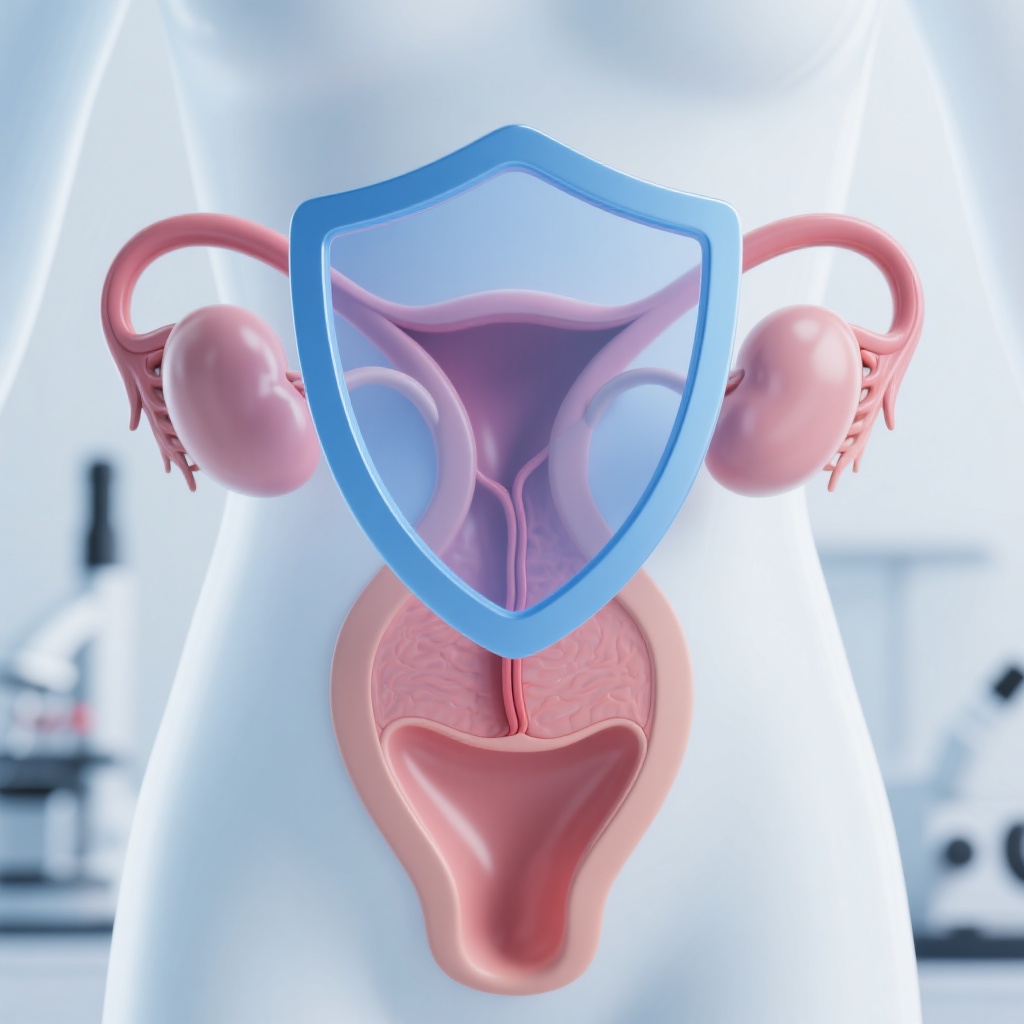
The Evolution of Ovarian Cancer Prevention: The Role of Opportunistic Salpingectomy
Ovarian carcinoma remains one of the most lethal gynecologic malignancies, largely due to its asymptomatic progression and late-stage diagnosis. Historically, the five-year survival rate has stubbornly remained below 50 percent. However, a significant paradigm shift has occurred in our understanding of the disease’s etiology. Recent evidence suggests that high-grade serous carcinoma (HGSC), which accounts for approximately 70 percent of all ovarian cancer cases, actually originates in the fimbriated end of the fallopian tubes rather than the ovaries themselves. This realization has led to the clinical recommendation of opportunistic bilateral salpingectomy (OBS)—the removal of the fallopian tubes during other pelvic surgeries, such as hysterectomy or tubal permanent contraception, while preserving the ovaries to maintain hormonal health.
Highlighting the Paradigm Shift
Three key highlights emerge from the latest research: First, OBS is associated with an approximate 80 percent reduction in the risk of developing serous ovarian cancer. Second, the histotype distribution of ovarian cancers changes dramatically in patients who have undergone the procedure, with high-grade serous cases dropping from nearly 70 percent to just 23 percent. Third, the safety profile of OBS is excellent, as it does not appear to hasten the onset of menopause or increase surgical complication rates compared to standard tubal ligation or hysterectomy alone.
Background: From Ovarian to Tubal Origins
The “tubal hypothesis” posits that serous tubal intraepithelial carcinoma (STIC) lesions serve as the precursor for most HGSCs. These malignant cells are thought to shed from the fallopian tube and implant on the surface of the ovary or the peritoneum. If the fallopian tubes are removed before these lesions develop or spread, the primary pathway for HGSC development is effectively severed. This clinical context has motivated healthcare systems, particularly in British Columbia, Canada, to adopt OBS as a standard-of-care primary prevention strategy since 2010. Despite the biological plausibility, long-term population-based data were needed to quantify the actual risk reduction and observe how the procedure affects the broader landscape of ovarian cancer histotypes.
Study Design: A Population-Level Analysis
To address these questions, researchers conducted a comprehensive population-based retrospective cohort study in British Columbia, covering the period from 2008 to 2020. The study population included 85,823 individuals who underwent either a hysterectomy or tubal permanent contraception. Of these, 40,527 individuals underwent OBS, while 45,296 underwent a comparator surgery (either hysterectomy alone or traditional tubal ligation).
Methodological Rigor and Bias Control
The primary endpoint was the incidence of serous ovarian carcinoma. To ensure the validity of the findings and control for potential “healthy user” bias or unmeasured confounding factors, the researchers used breast cancer as a negative control outcome. Because OBS is not biologically linked to breast cancer risk, any significant difference in breast cancer rates between the two groups would suggest underlying selection bias. The study followed the STROBE reporting guidelines and utilized Cox proportional hazards models to estimate hazard ratios (HR) with 95% confidence intervals.
Key Findings: Quantifying the Protective Effect
The results of the study provide some of the strongest evidence to date for the effectiveness of OBS. The crude hazard ratio for serous ovarian carcinoma in the OBS group compared to the control group was 0.22 (95% CI, 0.05-0.95). This translates to a nearly 80 percent reduction in risk. In contrast, the hazard ratio for the control outcome, breast cancer, was 0.99 (95% CI, 0.84-1.17), indicating that the groups were well-matched and the reduction in ovarian cancer risk was specifically due to the surgical intervention rather than general health differences.
Histotype Distribution Shifts
The second aim of the study examined the histotype distribution of ovarian carcinomas that occurred in individuals without fallopian tubes. By analyzing data from a global RedCap database, researchers identified 26 cases of ovarian cancer in patients post-salpingectomy. Only 6 of these 26 cases (23.1%) were HGSC. In a historical cohort where fallopian tubes remained intact, HGSC typically accounts for 68.1% of cases. This statistically significant difference (P < .001) suggests that while OBS does not eliminate all ovarian cancers (such as clear cell or endometrioid types which may have different origins), it disproportionately prevents the most aggressive and common form, HGSC.
Expert Commentary and Clinical Implications
For clinicians, these findings reinforce the importance of counseling patients on the benefits of OBS during preoperative planning for any pelvic surgery. The fact that the median follow-up for the OBS group was shorter than the comparator group (4.72 years vs. 8.45 years) is a limitation, yet the early emergence of a significant risk reduction is a powerful indicator of the procedure’s efficacy. From a health policy perspective, OBS is not only clinically effective but also cost-effective, as the incremental cost of adding salpingectomy to a hysterectomy is minimal compared to the massive financial and human cost of treating advanced ovarian cancer.
Biological Plausibility and Future Directions
The biological mechanism—the removal of the fimbria—aligns perfectly with the observed data showing a shift in histotypes. The remaining cases of HGSC in the OBS group might be explained by pre-existing STIC lesions that had already seeded the peritoneum before the surgery or rare cases where HGSC originates from the primary peritoneal surface. Future research should continue to follow these cohorts to see if the protective effect persists or even strengthens over 20 to 30 years as the population reaches the peak age for ovarian cancer incidence.
Conclusion: Moving Toward Universal Implementation
This study provides robust support for the effectiveness of opportunistic bilateral salpingectomy as a preventive intervention. By achieving an 80 percent reduction in serous ovarian cancer risk and significantly altering the histotype landscape, OBS stands as one of the most successful primary prevention strategies in modern gynecologic oncology. Clinicians should confidently offer OBS to all patients undergoing pelvic surgery who have completed childbearing, as this simple surgical addition has the potential to save thousands of lives by preventing the “silent killer” at its source.
References
1. Sowamber R, et al. Serous Ovarian Cancer Following Opportunistic Bilateral Salpingectomy. JAMA Netw Open. 2026;9(2):e2557267.
2. Hanley GE, et al. Outcomes from opportunistic salpingectomy for ovarian cancer prevention. Obstet Gynecol. 2017;130(2):308-315.
3. Kobel M, et al. Ovarian carcinoma histotype distribution. Human Pathology. 2008;39(9):1385-1393.
4. Kwon JS, et al. Cost-effectiveness analysis of opportunistic salpingectomy. Obstet Gynecol. 2015;126(1):152-160.