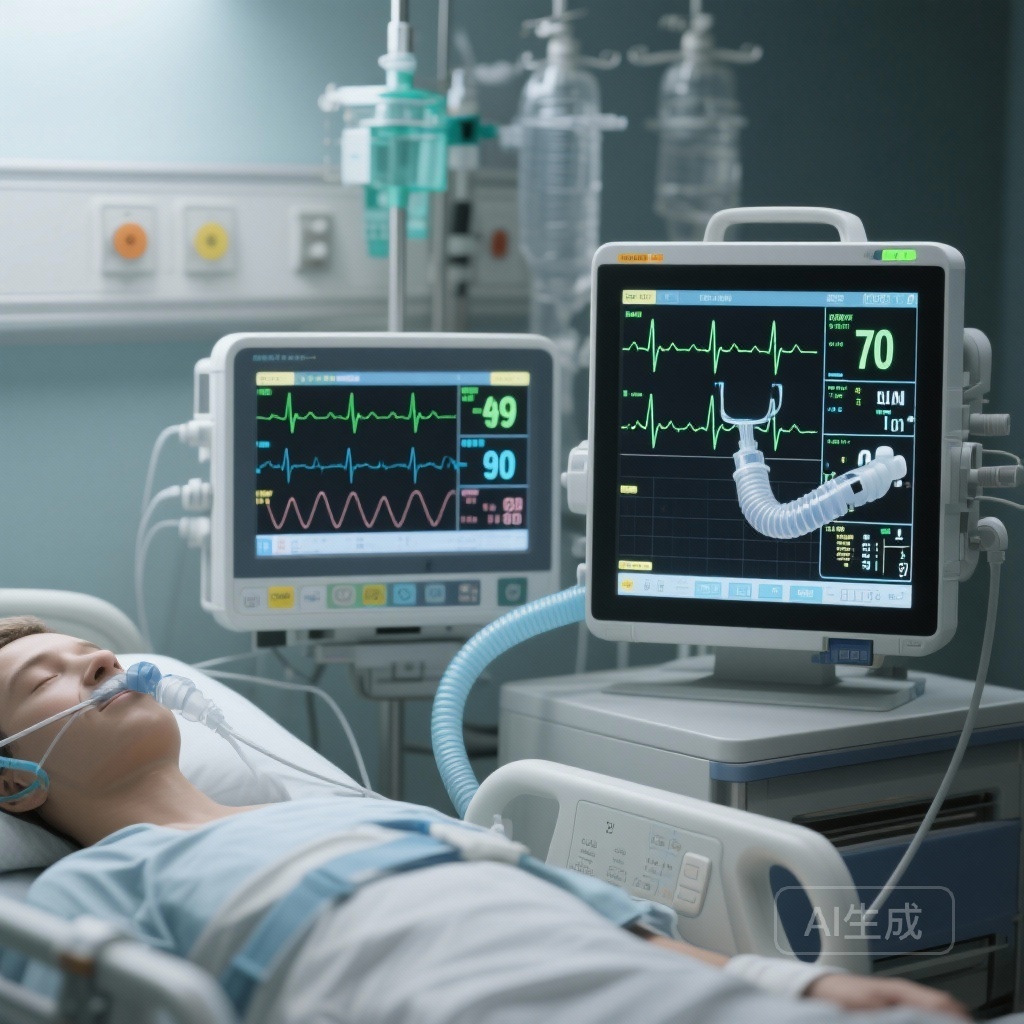
Introduction: The Clinical Dilemma of Hemodynamic Support at Extubation
Liberating a patient from mechanical ventilation is a critical milestone in the management of the critically ill. Traditionally, the presence of vasopressor support, such as norepinephrine, has been viewed as a relative contraindication to extubation. The prevailing clinical dogma suggests that if a patient requires exogenous catecholamines to maintain mean arterial pressure, they may lack the physiological reserve to handle the increased work of breathing and the cardiovascular stress associated with the transition to spontaneous ventilation. This concern is particularly acute in patients with obesity, a population characterized by distinct physiological challenges and a high risk of respiratory complications.
However, emerging evidence suggests that the rigid requirement for the total cessation of vasopressors prior to extubation may unnecessarily prolong the duration of mechanical ventilation, thereby increasing the risk of ventilator-associated pneumonia and ICU-acquired weakness. A recent landmark study by De Jong et al. (2025), published in Intensive Care Medicine, specifically addresses this dilemma in the context of patients with obesity, providing much-needed clarity on whether low-dose norepinephrine at the time of extubation truly impacts reintubation rates.
The Physiological Challenge of Obesity in the ICU
Patients with obesity (Body Mass Index [BMI] ≥ 30 kg/m²) present a unique set of challenges in the intensive care unit. From a respiratory perspective, they often exhibit reduced functional residual capacity (FRC), decreased lung compliance, and increased airway resistance. These factors coalesce to increase the work of breathing significantly. Furthermore, the cephalad displacement of the diaphragm by abdominal adipose tissue predisposes these patients to basal atelectasis and impaired gas exchange.
From a cardiovascular standpoint, obesity is frequently associated with increased blood volume, higher cardiac output requirements, and often, some degree of diastolic dysfunction. The transition from positive pressure ventilation (which reduces preload and afterload on the left ventricle) to spontaneous negative pressure ventilation can cause an abrupt increase in venous return and left ventricular afterload. In patients with marginal cardiac reserve, this shift can trigger pulmonary edema—a leading cause of weaning failure. Therefore, the question of whether norepinephrine—a drug that increases afterload but also maintains perfusion pressure—is safe during this transition is of paramount clinical importance.
Study Design: A Rigorous Two-Stage Approach
To investigate this issue, the researchers employed a robust two-stage methodology. The first stage involved a retrospective analysis of a large, prospectively collected dataset (the main cohort) to identify associations between norepinephrine use at extubation and subsequent clinical outcomes.
The Main Cohort: Real-World Evidence
The main cohort included 3,186 critically ill patients, of whom 837 were classified as having obesity. This large sample size allowed for a detailed analysis of practice patterns. Within the obese subgroup, 213 patients (25%) were extubated while still receiving norepinephrine support. The median dose was relatively low—0.6 mg/h in absolute terms, which translated to 0.097 µg/kg/min based on real body weight.
The Validation Cohort: Testing the Hypothesis
Recognizing the limitations of retrospective data, the authors validated their findings using data from a multicenter randomized-controlled trial (the validation cohort, NCT04014920). This cohort consisted of 656 patients with obesity. The use of an RCT-derived dataset for validation significantly enhances the reliability of the results, as it reduces the impact of confounding factors that might influence clinician decisions in a purely observational setting.
Key Findings: Stability Across Cohorts
The primary endpoint of the study was the rate of reintubation within seven days of the initial extubation. The results were remarkably consistent across both the main and validation cohorts.
Reintubation Rates and Hemodynamic Parameters
In the main cohort, the reintubation rate for patients with obesity who were extubated on norepinephrine was 16%, compared to 17% in those who were not (p = 0.85). This lack of statistical significance suggests that, at the doses used, norepinephrine did not act as a predictor of weaning failure.
In the validation cohort, the findings were mirrored: an 18% reintubation rate in the norepinephrine group versus 15% in the group without vasopressors (p = 0.45). Again, the difference was not statistically significant. Interestingly, the researchers also analyzed the 2,349 patients without obesity and found similar results, suggesting that the safety of low-dose norepinephrine at extubation may be a generalizable phenomenon across the broader ICU population.
Dose-Specific Considerations
An essential aspect of this study was the quantification of the norepinephrine dose. The median dose of 0.097 µg/kg/min represents a common clinical threshold often described as “low-dose” or “physiological support.” The study indicates that at these levels, the vasopressor does not appear to interfere with the respiratory mechanics or the metabolic demands required for successful extubation.
Mechanistic Insights: The Hemodynamic-Respiratory Interface
Why does norepinephrine not increase reintubation risk? Several physiological mechanisms may explain these findings. First, maintaining adequate mean arterial pressure (MAP) ensures optimal perfusion to the respiratory muscles. Diaphragmatic fatigue is a major contributor to weaning failure; by ensuring that the diaphragm receives sufficient oxygen delivery, low-dose norepinephrine may actually support the increased work of breathing.
Second, in patients with obesity who may have underlying obesity-related cardiomyopathy or diastolic dysfunction, a controlled MAP might prevent the sympathetic surge and subsequent tachycardia that often accompanies the stress of extubation. While norepinephrine increases afterload, its alpha-1 adrenergic effects also increase venous return, which may maintain stroke volume in a way that balances the increased work of the heart during the transition to spontaneous breathing.
Expert Commentary: Shifting the Extubation Paradigm
This study contributes to a growing body of literature suggesting that the “all-or-nothing” approach to vasopressor weaning is outdated. Historically, clinicians feared that any requirement for norepinephrine indicated a state of “shock” that was incompatible with extubation. However, modern intensive care recognizes that many patients remain on low-dose vasopressors not because of acute circulatory collapse, but because of sedative-induced vasodilation, autonomic dysfunction, or a slightly altered hemodynamic set-point following a major illness.
Experts in the field suggest that the focus should shift from the *presence* of the drug to the *stability* of the patient. If a patient is on a stable, low dose of norepinephrine, has achieved adequate fluid balance, and meets all other respiratory weaning criteria (e.g., successful Spontaneous Breathing Trial [SBT], adequate cough, and mental status), then the vasopressor itself should not be the sole barrier to extubation.
Addressing Potential Bias and Study Limitations
Despite the multicenter validation, it is important to acknowledge certain limitations. The decision to extubate a patient on norepinephrine is often subjective and made by experienced clinicians. This may introduce a selection bias where only the “healthiest” of the hemodynamically supported patients were chosen for extubation. Furthermore, the study primarily looked at reintubation within seven days; while this is a standard metric, it may be influenced by factors other than the immediate hemodynamic state at the time of extubation, such as subsequent hospital-acquired infections.
Clinical Implications: When to Proceed with Extubation
For the bedside clinician, this study provides reassurance. In patients with obesity—who are already at high risk for difficult airways and respiratory failure—the requirement for low-dose norepinephrine (typically < 0.1 µg/kg/min) should not automatically trigger a delay in extubation.
Instead, clinicians should perform a holistic assessment:
1. **Hemodynamic Stability:** Is the norepinephrine dose stable or decreasing over the last 6-12 hours?
2. **SBT Performance:** Did the patient pass a Spontaneous Breathing Trial without significant tachycardia or hypertensive urgency?
3. **Fluid Status:** Has the patient been adequately diuresed to minimize the risk of weaning-induced pulmonary edema?
4. **Obesity Management:** Are there strategies in place for post-extubation support, such as Non-Invasive Ventilation (NIV) or High-Flow Nasal Oxygen (HFNO)?
Conclusion and Summary
The study by De Jong et al. (2025) represents a significant step forward in evidence-based weaning protocols. By demonstrating that norepinephrine use at the time of extubation does not increase reintubation rates in patients with obesity, the authors have challenged a long-standing clinical taboo. This finding allows for more aggressive liberation from mechanical ventilation, potentially reducing ICU length of stay and the complications associated with prolonged intubation. As we continue to refine our understanding of the hemodynamic-respiratory interface, the focus remains on individualized patient care rather than rigid adherence to traditional contraindications.
Funding and Clinical Trials
The validation cohort data was derived from a study registered under clinicaltrials.gov identifier NCT04014920. The authors report no specific conflicts of interest related to the primary findings of this cohort analysis.
References
1. De Jong A, Capdevila M, Aarab Y, et al. Norepinephrine use at extubation in critically ill patients with obesity: a cohort study with multicenter validation. Intensive Care Med. 2025;51(12):2341-2353. doi:10.1007/s00134-025-08066-x.
2. Jaber S, Quintard H, Cinotti R, et al. Risk factors and outcomes for airway management in the obese patient. Curr Opin Crit Care. 2018;24(1):33-40.
3. Thille AW, Richard JC, Brochard L. The role of ICU-acquired weakness in weaning failure. Intensive Care Med. 2013;39(11):2045-2048.