Highlighting the Impact of Nocturnal Hypoxemia on Lung Cancer Survival
Recent clinical evidence has increasingly suggested a complex interplay between sleep-disordered breathing and oncological outcomes. While the relationship between obstructive sleep apnea (OSA) and cancer risk has been explored in various cohorts, the specific impact of sleep-related hypoxemia on the survival of patients already diagnosed with non-small cell lung cancer (NSCLC) has remained less clear. The NEOSAS-GFPC study group recently addressed this gap in a large-scale, multi-center prospective study, revealing that it is the severity of sustained nocturnal oxygen desaturation, rather than the frequency of apnea events themselves, that serves as a critical prognostic marker in this population.
Introduction: The Intersection of Sleep Medicine and Oncology
For years, clinicians have recognized that chronic intermittent hypoxia—a hallmark of sleep apnea—can induce systemic inflammation and oxidative stress. However, in the context of oncology, the implications are even more profound. Hypoxia is a known driver of tumor aggressiveness, promoting angiogenesis, epithelial-mesenchymal transition, and immune evasion. In patients with NSCLC, the presence of comorbid sleep-disordered breathing may exacerbate these pathways. Despite this biological plausibility, clinical practice has not yet standardized the screening of sleep disorders in lung cancer management. The NEOSAS-GFPC study provides a much-needed evidence base to reconsider the role of nocturnal oxygen monitoring in the routine care of NSCLC patients.
The NEOSAS-GFPC Study: A Rigorous Multi-Center Evaluation
Study Population and Methodology
The NEOSAS-GFPC study was a prospective, multi-center investigation involving 27 study sites across France. Between February 2016 and December 2020, researchers enrolled 1,201 patients with newly diagnosed NSCLC. Eligible participants were required to have an Eastern Cooperative Oncology Group performance status (ECOG-PS) of 0 to 2, ensuring they were fit enough for potential interventions and follow-up.
Of the initial cohort, 1,001 patients provided valid home sleep-study data and were included in the final analysis. The population was predominantly male (71%), with a mean age of 63.6 years. Notably, only 11% of the cohort had early-stage (Stage I or II) disease, reflecting the common clinical reality of late-stage NSCLC diagnosis. OSA was defined using the 3% oxygen desaturation index (ODI), with a threshold of 16 or more events per hour. The primary endpoint was overall survival over an 18-month follow-up period.
Key Findings: Dissecting the Data
The Prevalence of Sleep-Disordered Breathing
The study found a remarkably high prevalence of OSA among NSCLC patients. Thirty-eight percent (383 patients) met the criteria for OSA. Interestingly, when comparing patients with OSA to those without, researchers found no significant differences in baseline quality of life, sleep quality, ECOG performance status, or cancer stage at the time of diagnosis. This suggests that OSA often exists as a silent comorbidity that does not manifest through typical daytime symptoms or functional decline in the early stages of cancer treatment.
Hypoxemia vs. Apnea: Identifying the True Prognostic Indicator
The most striking finding of the NEOSAS-GFPC study was the distinction between the presence of OSA (based on the ODI) and the severity of nocturnal hypoxemia. While the diagnosis of OSA itself was not associated with a difference in survival, specific metrics of sustained hypoxemia were highly predictive of mortality.
After adjusting for critical confounders—including age, sex, cancer stage, ECOG-PS, surgical treatment, and baseline daytime oxygen saturation—two specific indices emerged as independent risk factors for death:
1. Time spent with oxygen saturation below 90% (T90): Patients with a T90 of 35% or higher had a significantly increased risk of death compared to those with a T90 of less than 4% (Hazard Ratio [HR] 1.35; 95% CI, 1.05–1.74).
2. Mean nocturnal oxygen saturation (SpO2): Patients with a mean SpO2 of less than 91% faced a nearly 50% higher risk of mortality compared to those with a mean SpO2 of 93% or higher (HR 1.48; 95% CI, 1.16–1.98).
These results indicate that while the intermittent respiratory pauses of OSA are common, the profound and sustained drops in oxygen levels are what truly compromise the survival of NSCLC patients.
Clinical Significance and Biological Plausibility
Mechanisms of Hypoxia-Induced Tumor Progression
Why does nocturnal hypoxemia carry such a heavy prognostic weight? The biological answer likely lies in the activation of Hypoxia-Inducible Factors (HIFs). When oxygen levels drop, HIF-1α and HIF-2α are stabilized, leading to the transcription of dozens of genes involved in tumor survival. This includes the upregulation of Vascular Endothelial Growth Factor (VEGF), which drives tumor vascularization, and changes in glucose metabolism (the Warburg effect) that allow cancer cells to thrive in low-oxygen environments.
Furthermore, nocturnal hypoxemia may create a pro-inflammatory systemic environment that suppresses the anti-tumor immune response. T-cell exhaustion and the recruitment of myeloid-derived suppressor cells are enhanced under hypoxic conditions, potentially rendering treatments like immunotherapy less effective. Given that modern NSCLC management heavily relies on the immune checkpoint blockade, the presence of untreated nocturnal hypoxemia could be a significant, yet modifiable, barrier to treatment success.
Expert Commentary and Limitations
The NEOSAS-GFPC study is one of the largest prospective cohorts to date examining sleep-disordered breathing in lung cancer. Its multi-center design and rigorous adjustment for performance status and cancer stage lend significant weight to its conclusions. However, some limitations must be considered. The study utilized home sleep testing rather than in-lab polysomnography, which may underestimate the severity of sleep apnea in some cases. Additionally, the 18-month follow-up period, while appropriate for advanced NSCLC, may not capture the long-term impact on patients with early-stage disease who undergo curative-intent surgery.
Medical experts suggest that these findings should prompt a shift in how we evaluate NSCLC patients. The focus should perhaps move away from simply counting apnea events (ODI/AHI) and toward a more nuanced assessment of the nocturnal oxygen profile. If sustained hypoxemia is the driver of poor outcomes, then the next logical step is to investigate whether supplemental oxygen or CPAP therapy can mitigate this risk.
Conclusion: Integrating Sleep Assessment into Oncology Care
The NEOSAS-GFPC study provides compelling evidence that severe nocturnal hypoxemia is a potent, independent predictor of lower overall survival in patients with newly diagnosed NSCLC. These findings underscore a critical unmet need in oncology: the systematic identification of patients at risk for sleep-related oxygen desaturation.
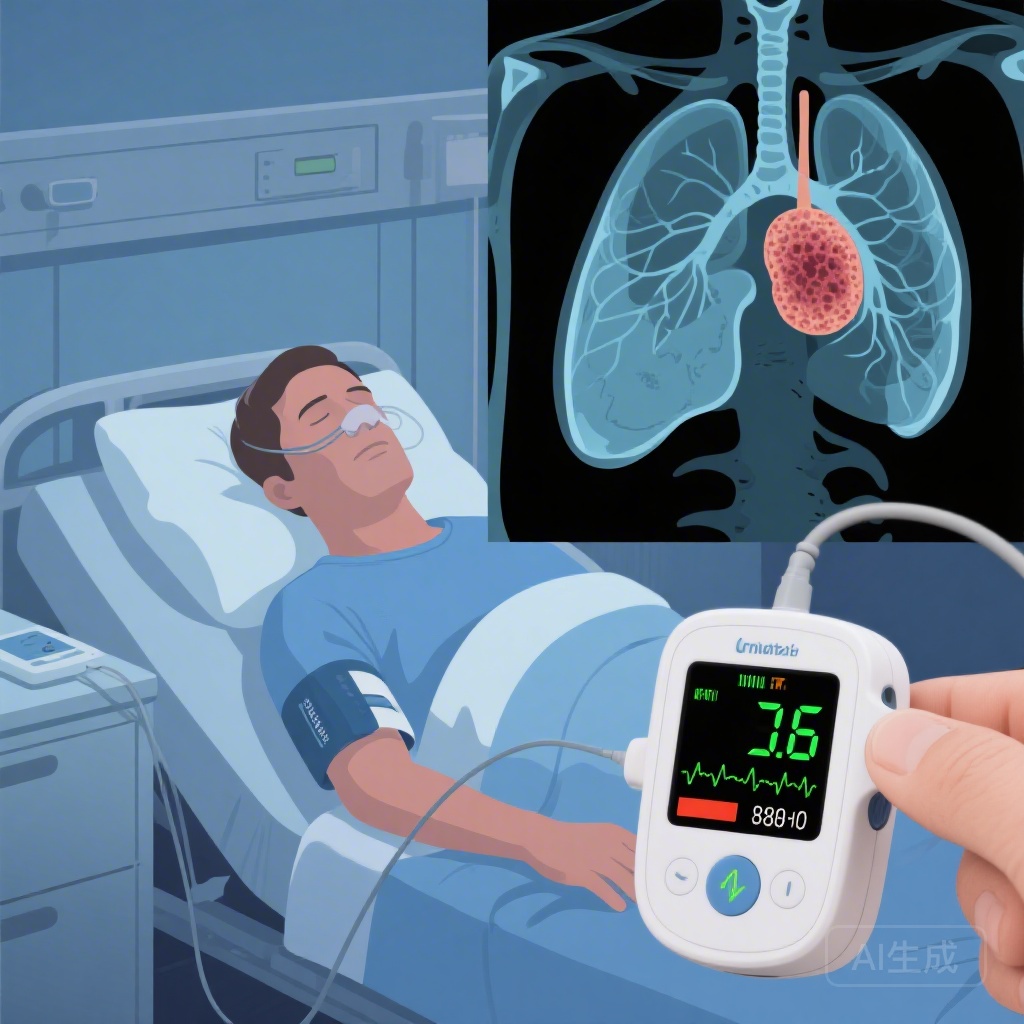
As we move toward more personalized cancer care, integrating simple nocturnal oximetry or home sleep studies into the initial staging process could provide valuable prognostic information. More importantly, it opens the door for interventional trials to determine if correcting nocturnal hypoxemia through oxygen therapy or positive airway pressure can improve survival outcomes and quality of life for those battling lung cancer. For clinicians, the message is clear: when treating the lungs, we must not ignore how they breathe during the night.
Funding and Clinical Trial Information
The NEOSAS-GFPC study was supported by various regional and national grants in France and was registered at ClinicalTrial.gov under the number NCT02648087.
References
1. Justeau G, Greillier L, Vinas F, et al. Association of sleep-related hypoxemia with survival in patients with non-small cell lung cancer – the NEOSAS-GFPC study group. Chest. 2026. PMID: 41812988.
2. Almendros I, Farré R. Sleep Apnea and Cancer: Current Insights and Future Directions. Frontiers in Neurology. 2020;11:599.
3. Hunyor I, Cook KM. The hypoxemic drive: Role of hypoxia in the tumor microenvironment. Journal of Clinical Investigation. 2018;128(1):4-14.