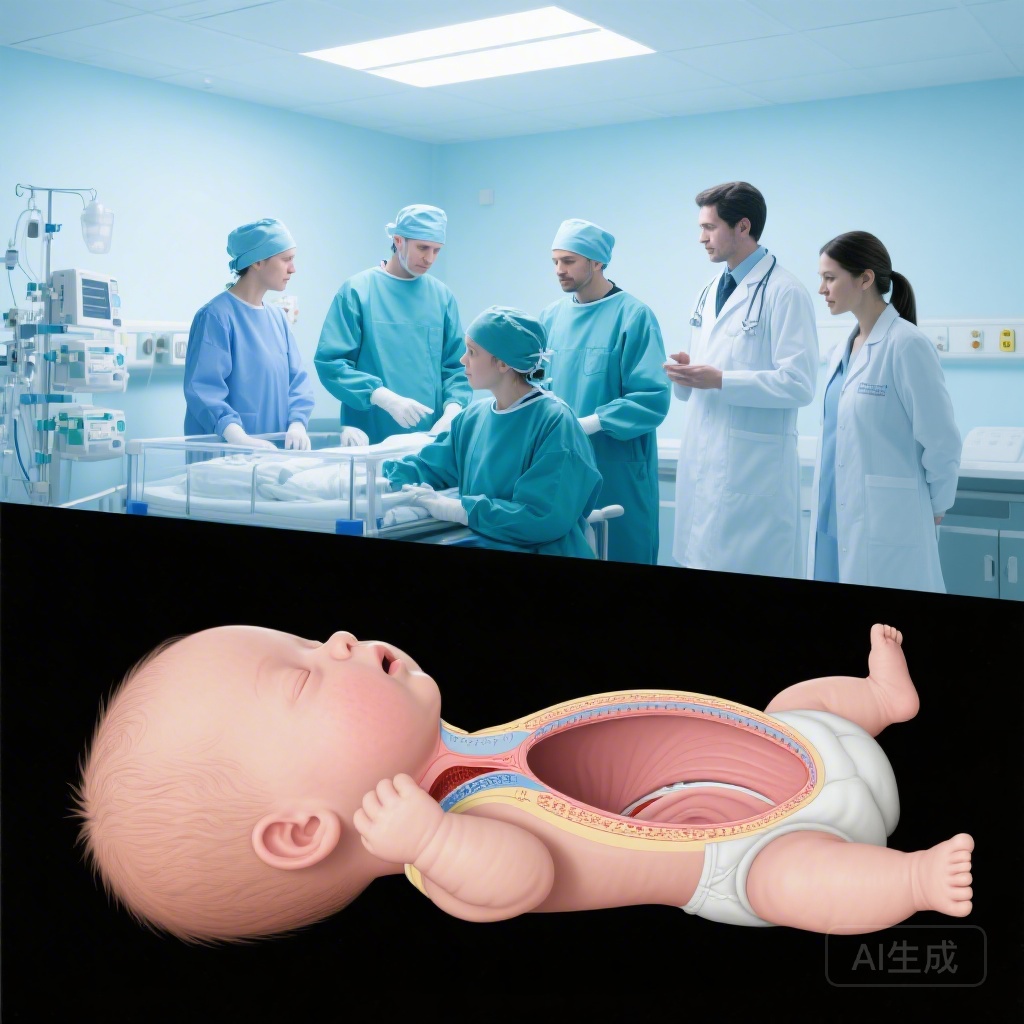
Introduction and Context
Unilateral vocal fold immobility (UVFI) remains one of the most significant and frequent complications following pediatric cardiothoracic surgery, particularly procedures involving the aortic arch. The recurrent laryngeal nerve, which controls the movement of the vocal folds, follows a complex anatomical path that loops around the aorta, making it highly susceptible to injury during corrective cardiac procedures in neonates and infants. When this nerve is damaged, the resulting vocal fold paralysis can lead to a weak, breathy cry, but more critically, it results in an unprotected airway. This often leads to dysphagia (difficulty swallowing) and aspiration, where food or liquid enters the lungs, potentially causing pneumonia and significantly delaying the infant’s recovery.
Historically, the management of UVFI in this vulnerable population has been marked by significant heterogeneity. Some centers preferred a “wait and see” approach, hoping for spontaneous nerve recovery, while others moved toward early intervention with injection laryngoplasty (IL). However, a lack of standardized protocols has made it difficult to compare outcomes or determine the true efficacy of early surgical intervention. The publication of a new multidisciplinary protocol in JAMA Otolaryngology–Head & Neck Surgery marks a pivotal shift toward standardizing care for these high-risk patients, aiming to bridge the clinical gap between cardiac surgery and long-term developmental success.
New Guideline Highlights
The primary focus of this new clinical pathway is the implementation of a standardized, multidisciplinary approach that integrates pediatric otolaryngology, cardiology, and speech-language pathology. Key highlights of the protocol include:
- Mandatory Post-operative Screening: All infants undergoing high-risk cardiothoracic surgery (especially aortic arch repairs) must undergo bedside screening for signs of UVFI, such as a weak cry or coughing during feeds.
- Standardized Diagnostic Imaging: Flexible fiberoptic laryngoscopy (FFL) is established as the gold standard for confirming vocal fold position and mobility.
- Standardized Feeding Evaluations: Formal bedside swallow evaluations and, when necessary, fiberoptic endoscopic evaluation of swallowing (FEES) are used to categorize the severity of dysphagia.
- Early Intervention with Injection Laryngoplasty: The protocol provides specific criteria for when to proceed with IL, focusing on patients who fail feeding trials and are at high risk for prolonged gastrostomy tube dependence.
Updated Recommendations and Key Changes
Previously, many institutions relied on clinician preference, leading to delays in diagnosis and prolonged hospital stays. The new evidence-driven protocol introduces several upgrades over historical management strategies:
| Feature | Previous Approach | New Standardized Protocol |
|---|---|---|
| Diagnostic Timing | Symptom-based or delayed. | Systematic screening within 24-48 hours post-extubation. |
| Multidisciplinary Input | Consult-based (siloed). | Integrated team (ENT, Cardiology, SLP) daily rounds. |
| Treatment Focus | Observation (Conservative). | Early Injection Laryngoplasty for aspiration risk. |
| Success Metric | Weight gain. | Oral diet advancement and NGT removal speed. |
The evidence driving these changes stems from a prospective cohort study of 128 patients, where those treated under the standardized pathway with IL showed a 100% rate of oral diet advancement by the time of discharge, compared to only 64.3% in the non-intervention group.
Topic-by-Topic Recommendations
1. Diagnostic Criteria and Risk Stratification
The consensus emphasizes that every patient undergoing surgery involving the aortic arch at age 1 year or younger should be considered high-risk. Diagnostics should include:
- Flexible Laryngoscopy: To be performed by an otolaryngologist to assess vocal fold mobility (unilateral vs. bilateral).
- Swallow Assessment: Conducted by a speech-language pathologist to determine the risk of aspiration and the safe consistency of oral intake.
2. Treatment Strategies: Injection Laryngoplasty (IL)
Injection laryngoplasty is the temporary “bulking” of the paralyzed vocal fold to allow the healthy fold to meet it, creating a seal that protects the airway during swallowing. The recommendations suggest:
- Filler Material: Use of temporary materials (e.g., carboxymethylcellulose or hyaluronic acid) that allow for future nerve recovery.
- Timing: IL should ideally be performed during the initial admission to minimize the duration of nasogastric tube (NGT) feeding.
3. Follow-up and Feeding Progression
The goal of intervention is the removal of the NGT. The study found that patients who underwent IL had a median time to NGT removal of 30 days, compared to 58 days for those managed conservatively. This difference of nearly a month is clinically significant for neurodevelopmental and nutritional outcomes.
Case Study: A Clinical Application
Patient Vignette: Leo, a 3-week-old infant, underwent a complex aortic arch reconstruction for coarctation. Three days after extubation, the nursing staff noticed Leo had a very faint, “breathy” cry and was coughing during bottle-feeding trials. Under the new protocol, the otolaryngology team performed a bedside flexible laryngoscopy, confirming left-sided UVFI.
Following a multidisciplinary discussion, Leo underwent injection laryngoplasty on post-operative day five. Within 48 hours of the procedure, Leo’s swallow study showed significantly improved airway protection. He was discharged home on full oral feeds with a thickened consistency, and his nasogastric tube was removed just two weeks later—significantly earlier than the predicted three-month wait common in conservative management.
Expert Commentary and Insights
Experts involved in the development of this pathway note that while IL is highly effective, it is not a “one-size-fits-all” solution. A key controversy remains: how to account for baseline clinical differences. Infants who did not receive IL in the study often had different clinical profiles—some were deemed “too sick” for an additional procedure, while others were thought to have mild enough symptoms to recover without it.
“The power of this protocol lies in its ability to reduce the ‘wait-and-see’ inertia that often leaves these babies dependent on feeding tubes for months,” says one lead researcher. “However, we must remain cautious. The decision to inject should be driven by the clinical need for airway protection and the goal of oral feeding, rather than just the diagnosis of immobility alone.” Future research is now shifting toward the long-term impact of early IL on speech development and the incidence of permanent nerve injury versus transient neuropraxia.
Practical Implications
For healthcare systems, the implementation of this standardized pathway suggests a potential for reduced long-term costs. While the initial hospital stay might be slightly longer for IL patients (median 28 days vs 23 days), the 28-day reduction in NGT dependence represents a major victory for families and reduces the risk of long-term feeding aversion and the need for surgical gastrostomy tube placement. Clinicians are encouraged to adopt these multidisciplinary steps to ensure that the success of a life-saving heart surgery isn’t overshadowed by the complications of a silent, immobile vocal fold.
References
- Nelson L, Belsky MA, Meister KD, Balakrishnan K, Freccero A, Sidell D. Standardizing Management of Pediatric Vocal Fold Immobility After Cardiothoracic Surgery. JAMA Otolaryngology–Head & Neck Surgery. 2026; doi:10.1001/jamaoto.2025.41746635.
- Meister KD, et al. Pediatric Vocal Fold Immobility: A Systematic Review. Otolaryngology–Head and Neck Surgery. 2021.
- Lyu SY, et al. Long-term outcomes of pediatric injection laryngoplasty. International Journal of Pediatric Otorhinolaryngology. 2022.