Highlights
- Nerandomilast, a selective phosphodiesterase 4B (PDE4B) inhibitor, previously met its primary endpoint of reducing FVC decline at 52 weeks in the FIBRONEER-IPF trial.
- Extended follow-up data (averaging ~14.8 months) shows no significant difference in the composite endpoint of acute exacerbation, respiratory hospitalization, or death.
- The 18 mg BID dose was associated with a numerically lower risk of death (HR 0.66), though this did not reach statistical significance.
- The safety profile remains favorable, with low discontinuation rates due to adverse events compared to traditional antifibrotic therapies.
Background: The Challenge of Idiopathic Pulmonary Fibrosis
Idiopathic pulmonary fibrosis (IPF) remains one of the most challenging conditions in respiratory medicine. Characterized by progressive, irreversible scarring of the lung parenchyma, it leads to a relentless decline in lung function, respiratory failure, and eventually death. For the past decade, the standard of care has been anchored by two antifibrotic agents: nintedanib and pirfenidone. While these medications have been revolutionary in slowing the rate of forced vital capacity (FVC) decline, they do not halt or reverse the disease, and their use is often limited by significant gastrointestinal side effects.
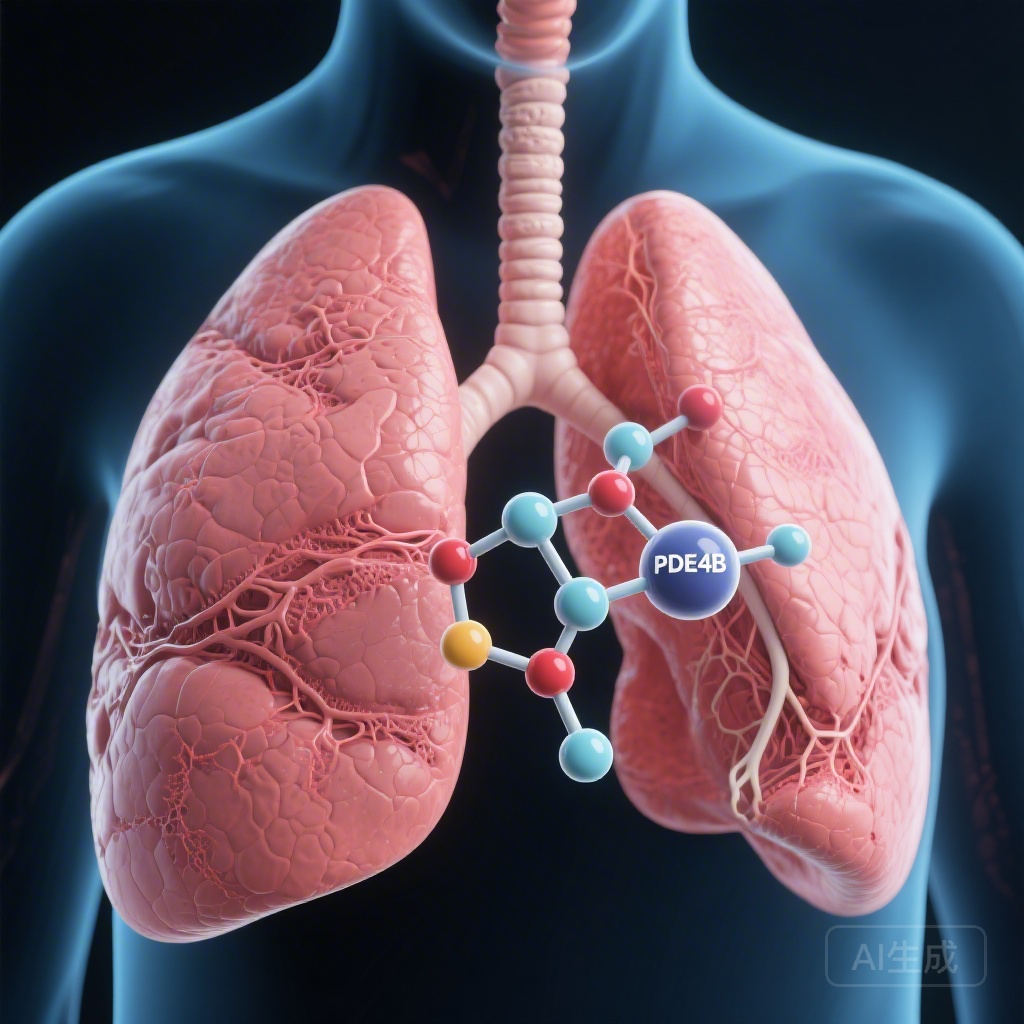
The search for novel pathways has led to the investigation of phosphodiesterase 4 (PDE4) inhibition. PDE4 is a key enzyme in the degradation of cyclic adenosine monophosphate (cAMP), a secondary messenger that modulates inflammatory and fibrotic signaling. However, non-selective PDE4 inhibitors (such as roflumilast) are notorious for causing severe nausea and emesis, primarily due to the inhibition of the PDE4D isoform in the central nervous system. Nerandomilast was specifically designed to be more selective for the PDE4B isoform, which is predominantly expressed in inflammatory and fibrotic cells, potentially offering a more tolerable therapeutic window.
Study Design and Methodology
The FIBRONEER-IPF trial was a large-scale, randomized, double-blind, placebo-controlled Phase 3 study. It initially aimed to evaluate the efficacy and safety of nerandomilast over a 52-week period. Following the completion of the primary 52-week analysis, patients continued their randomized treatment until the final patient in the cohort completed their end-of-treatment visit. This design allowed for the collection of long-term data over a mean exposure period of approximately 14.8 months.
Patient Population and Randomization
A total of 1,177 patients were randomized into three groups: placebo, nerandomilast 9 mg BID, and nerandomilast 18 mg BID. The study included a broad spectrum of IPF patients, reflecting real-world clinical practice. The baseline characteristics were well-balanced across the three arms, including age, gender, and baseline lung function measures.
Endpoints and Follow-up
While the primary endpoint focused on the rate of FVC decline at week 52, the key secondary endpoint for the full follow-up period was the time to the first occurrence of a composite event: acute IPF exacerbation, hospitalization for a respiratory cause, or death. Other time-to-event endpoints, including all-cause mortality and individual components of the composite, were also rigorously assessed at the final database lock.
Key Findings from the Extended Follow-up Period
The data from the whole follow-up period provides a critical look at whether the physiological benefits seen in FVC translate into tangible clinical outcomes such as survival and reduced hospitalization.
The Key Secondary Composite Endpoint
At the final database lock, the hazard ratios (HR) for the key secondary composite endpoint did not show a statistically significant benefit for nerandomilast over placebo. Specifically, the HR for the 9 mg BID group was 0.92 (95% CI: 0.69, 1.22), and for the 18 mg BID group, it was 0.99 (95% CI: 0.75, 1.31). These findings suggest that over a roughly 15-month period, nerandomilast did not significantly delay the time to the first major respiratory event or death compared to placebo.
Mortality Trends
One of the most noteworthy observations in the long-term data was the mortality signal. In the nerandomilast 18 mg BID group, the hazard ratio for death was 0.66 (95% CI: 0.41, 1.08). While the 95% confidence interval crosses 1.0, indicating a lack of statistical significance, the 34% numerical reduction in the risk of death is clinically intriguing. The 9 mg BID group showed a hazard ratio of 0.95 (95% CI: 0.61, 1.49), suggesting a potential dose-dependent response in survival outcomes that warrants further investigation in larger or longer-term cohorts.
Safety and Tolerability Profile
Safety is a paramount concern in IPF therapy, given the elderly population and frequent comorbidities. The FIBRONEER-IPF trial demonstrated that nerandomilast was generally well-tolerated. Adverse events leading to treatment discontinuation occurred in 13.0% of the placebo group, 13.5% of the 9 mg BID group, and 16.1% of the 18 mg BID group. These rates are notably lower than those reported in historical trials of other antifibrotics, where discontinuation rates due to side effects often exceed 20-25%. The selective PDE4B inhibition strategy appears to have successfully mitigated the severe gastrointestinal distress typically associated with this class of drugs.
Clinical Interpretation and Expert Commentary
The results of the FIBRONEER-IPF trial present a nuanced picture for clinicians. On one hand, the primary endpoint was met, establishing nerandomilast as an effective agent for slowing FVC decline. On the other hand, the long-term clinical event data did not mirror this success with statistical significance.
The Divergence Between FVC and Clinical Events
In many interstitial lung disease (ILD) trials, there is an observable gap between physiological markers (like FVC) and clinical events (like hospitalization). This may be due to the relatively short follow-up period; 15 months may not be sufficient to capture a significant number of exacerbations or deaths in a controlled trial environment where patients receive optimal supportive care. Furthermore, the composite endpoint might be influenced by factors outside the drug’s mechanism, such as regional differences in hospitalization practices.
PDE4B Selectivity: A Progress in Tolerability
From a pharmacological perspective, nerandomilast represents a significant step forward. By targeting PDE4B, the drug addresses the fibro-inflammatory pathway while avoiding the emetic effects associated with PDE4D. This improved tolerability profile is essential for long-term adherence. In a disease where patients may remain on therapy for several years, a drug that is easier to take is more likely to provide sustained benefit.
Conclusion
The FIBRONEER-IPF trial confirms that nerandomilast is a viable and well-tolerated therapeutic option for managing FVC decline in patients with idiopathic pulmonary fibrosis. While the extended follow-up did not demonstrate a significant reduction in the composite endpoint of exacerbations, hospitalizations, or death, the numerical trend toward improved survival in the 18 mg BID group is promising. Nerandomilast joins the ranks of emerging therapies that aim to refine the management of IPF, emphasizing the importance of targeting specific molecular pathways to improve patient outcomes while maintaining quality of life.
References
1. Oldham JM, Azuma A, Kreuter M, et al. Nerandomilast in idiopathic pulmonary fibrosis: data from the whole follow-up period of the FIBRONEER-IPF trial. American Journal of Respiratory and Critical Care Medicine. 2026. PMID: 41738262.
2. Richeldi L, du Bois RM, Raghu G, et al. Efficacy and safety of nintedanib in idiopathic pulmonary fibrosis. New England Journal of Medicine. 2014;370(22):2071-2082.
3. King TE Jr, Bradford WZ, Castro-Bernardini S, et al. A phase 3 trial of pirfenidone in patients with idiopathic pulmonary fibrosis. New England Journal of Medicine. 2014;370(22):2083-2092.