Highlights
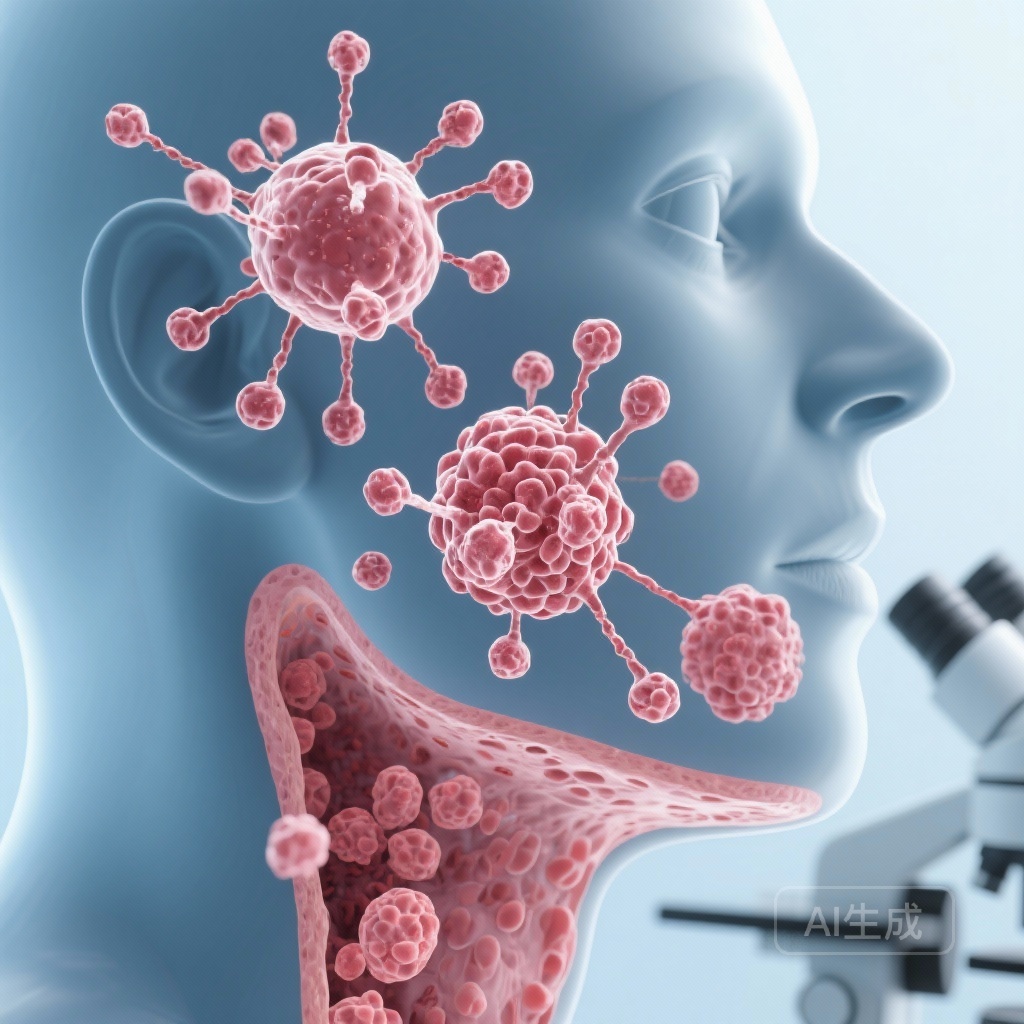
The Phase II trial of neoadjuvant nivolumab combined with carboplatin and paclitaxel in patients with locally advanced, resectable squamous cell carcinoma of the head and neck (SCCHN) demonstrated a primary site pathologic complete response (pCR) rate of 45%. Major pathologic response (MPR) was achieved in 73% of patients at the primary site, suggesting high sensitivity to the chemo-immunotherapy combination. The treatment regimen was clinically manageable, with 82% of patients completing all neoadjuvant cycles and 100% achieving R0 resection. Unplanned survival analysis at three years showed a recurrence-free survival (RFS) of 74% and overall survival (OS) of 83%, providing a strong rationale for larger phase III confirmatory studies.
Clinical Context and the Unmet Need in SCCHN
Locally advanced squamous cell carcinoma of the head and neck (SCCHN) remains a formidable challenge in clinical oncology. While surgery followed by adjuvant radiotherapy or chemoradiotherapy is the standard of care for resectable disease, long-term survival rates for Stage III and IV HPV-negative patients have historically remained suboptimal. The prognostic significance of pathologic response following neoadjuvant therapy has been well-documented; patients who achieve a major pathologic response (MPR) or pathologic complete response (pCR) typically exhibit superior overall survival (OS) compared to those with minimal response. However, traditional neoadjuvant chemotherapy regimens have often been limited by toxicity or insufficient efficacy. The emergence of immune checkpoint inhibitors, specifically PD-1 inhibitors like nivolumab, has revolutionized the treatment of recurrent or metastatic SCCHN. This study, led by Zinner and colleagues, sought to investigate whether moving immunotherapy into the neoadjuvant setting—combined with standard chemotherapy—could improve pathologic response rates and potentially translate into better long-term survival for patients with resectable disease.
Study Design: The Integration of PD-1 Inhibition
This single-arm, open-label Phase II trial enrolled 34 patients with newly diagnosed, locally advanced resectable SCCHN. The cohort included patients with Stage III-IV HPV-negative disease (located in the oral cavity, oropharynx, hypopharynx, or larynx) and Stage II-III HPV-positive oropharyngeal disease. The neoadjuvant protocol consisted of 6 weeks of carboplatin and paclitaxel administered alongside nivolumab (given every two weeks). Following the neoadjuvant phase, patients underwent definitive surgery, followed by adjuvant radiotherapy with or without chemotherapy based on pathological findings. The primary endpoint was the rate of pCR at the primary tumor site. Secondary endpoints included safety, tolerability, R0 resection rates, and long-term survival outcomes. This design is particularly noteworthy because it addresses the biological hypothesis that neoadjuvant immunotherapy can prime the immune system more effectively when the primary tumor and regional lymph nodes are still intact, potentially creating a broader and more durable anti-tumor T-cell response.
Efficacy: Pathologic Response and Survival Outcomes
The results of the trial are highly encouraging, particularly regarding the primary endpoint. Of the 34 patients enrolled, 33 proceeded to surgery. The efficacy analysis revealed that 24 patients (73%) achieved at least an MPR at the primary site, while 15 patients (45%) achieved a pCR. These figures are significantly higher than those typically observed with neoadjuvant chemotherapy alone in similar populations. Surgical outcomes were also excellent, with 100% of the 33 patients achieving R0 (negative margin) resections. The median follow-up after surgery was 35.3 months. Despite the single-arm nature of the study, the survival data at the 3-year mark are impressive. The recurrence-free survival (RFS) was 74%, and the overall survival (OS) was 83%. Most of the cohort (79%) had oral cavity tumors, which are historically less responsive to induction therapies than oropharyngeal sites, making these response rates even more significant for clinical practice.
Safety and Treatment Tolerability
Safety is a critical concern when adding immunotherapy to cytotoxic chemotherapy in the neoadjuvant setting, as any significant toxicity could potentially delay or prevent definitive surgery. In this study, 27 patients (82%) were able to complete all intended cycles of neoadjuvant therapy. Grade 3 or 4 treatment-related adverse events (AEs) were experienced by 14 patients (41%). While this reflects the intensive nature of the triplet regimen, the toxicities did not preclude the majority of patients from receiving their scheduled surgery. The safety profile was consistent with the known side effects of carboplatin, paclitaxel, and nivolumab, with no new or unexpected safety signals reported. The investigators noted that the manageable safety profile supports the feasibility of this combination in a curative-intent setting.
Expert Commentary: Mechanistic Insights and Future Directions
The findings from Zinner et al. contribute to a growing body of evidence supporting neoadjuvant chemo-immunotherapy in solid tumors. The high pCR rate of 45% suggests a synergistic effect between taxane-based chemotherapy and PD-1 blockade. Chemotherapy may induce immunogenic cell death, releasing tumor antigens that are then more effectively presented to the immune system under the cover of PD-1 inhibition. From a clinical perspective, the transition to neoadjuvant immunotherapy represents a shift toward personalized surgical oncology. Achieving a pCR might eventually lead to debates regarding treatment de-escalation, such as reduced doses of adjuvant radiation, although such shifts must be validated in prospective trials. One limitation of the current study is its single-arm design and relatively small sample size. However, the high rate of R0 resections and the robust 3-year OS in a predominantly HPV-negative population provide a clear signal of efficacy. The next logical step is a randomized Phase III trial comparing this neoadjuvant triplet to the current standard of care to definitively establish its impact on long-term survival and quality of life.
Conclusion
The Phase II trial of neoadjuvant nivolumab plus carboplatin and paclitaxel demonstrates that this combination is both effective and tolerable for patients with locally advanced resectable SCCHN. By achieving a pCR in nearly half of the patients and ensuring a 100% R0 resection rate, the study highlights a promising therapeutic window before surgical intervention. These results warrant further investigation in larger, randomized cohorts, particularly for the high-risk HPV-negative population, where the need for improved survival outcomes remains most urgent.
Funding and ClinicalTrials.gov
This study was supported by Bristol Myers Squibb and institutional research funds. ClinicalTrials.gov Identifier: NCT03159585.
References
1. Zinner RG, Mastrolonardo EV, Johnson JM, et al. Neoadjuvant nivolumab plus carboplatin and paclitaxel in patients with locally advanced resectable squamous cell carcinoma of the head and neck: a phase II, single-arm trial. Clin Cancer Res. 2025. doi: 10.1158/1078-0432.CCR-25-2807.
2. Ferris RL, Blumenschein G Jr, Fayette J, et al. Nivolumab for Recurrent Squamous-Cell Carcinoma of the Head and Neck. N Engl J Med. 2016;375(19):1856-1867.
3. Burtness B, Harrington KJ, Greil R, et al. Pembrolizumab alone or with chemotherapy versus cetuximab with chemotherapy for recurrent or metastatic squamous cell carcinoma of the head and neck (KEYNOTE-048): a randomised, open-label, phase 3 study. Lancet. 2019;394(10212):1915-1928.