Highlights
Multilevel Impact
The BE IMMUNE trial demonstrated that a multicomponent nudge strategy targeting clinicians and patients simultaneously led to a statistically significant 5.1 percentage point increase in influenza vaccination rates compared to usual care.
Synergistic Interventions
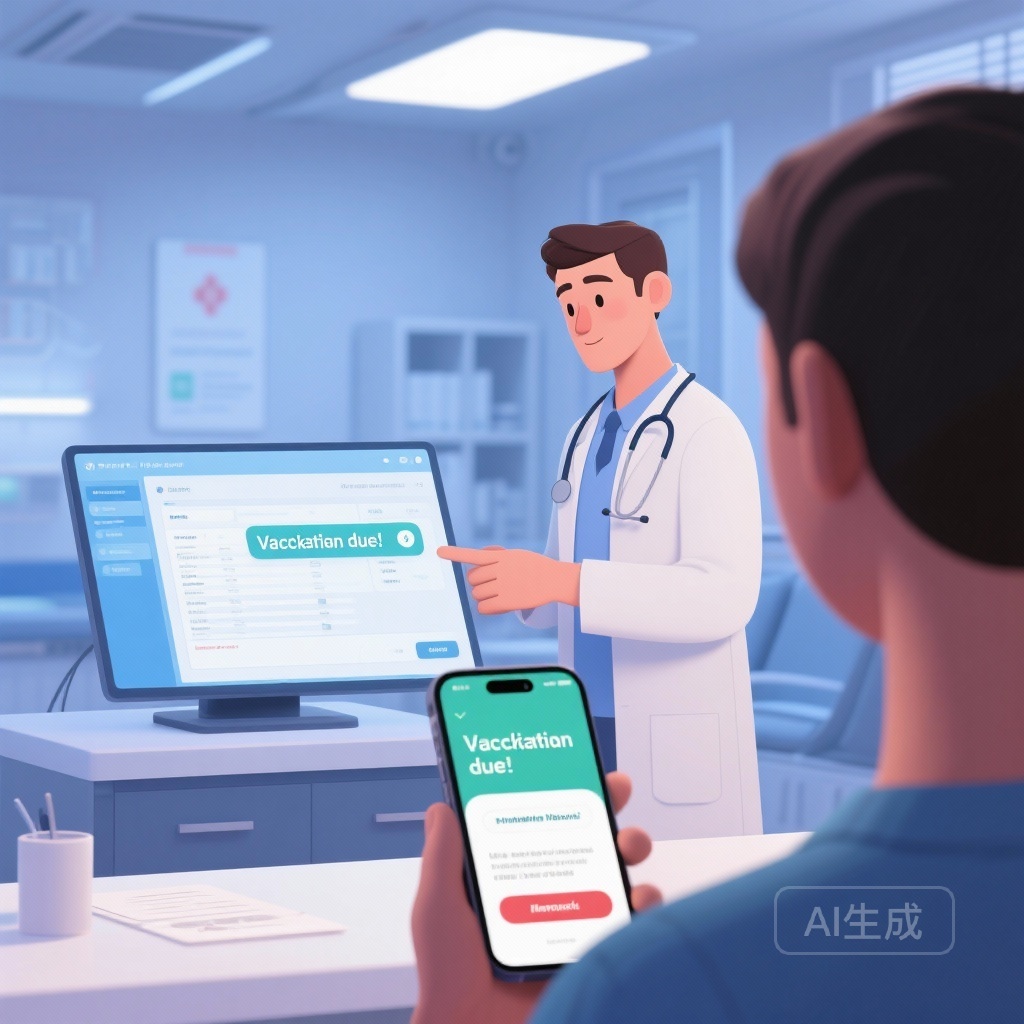
The intervention successfully integrated three distinct behavioral economics principles: patient reminders (texting), default bias (pended orders in the EHR), and social norming (peer clinician comparisons).
Limits of Complexity
While nudges were effective overall, adding bidirectional messaging for high-risk patients did not provide incremental benefits over standard one-way text reminders, suggesting that simpler nudge designs may be sufficient for high-risk cohorts.
Introduction: The Persistent Challenge of Influenza Vaccination
Influenza remains a major public health concern, particularly for adults aged 50 and older who face higher risks of complications, hospitalization, and mortality. Despite long-standing recommendations for annual vaccination, immunization rates in the United States often fall short of national targets. Traditional approaches to increasing uptake, such as patient education or simple physician reminders, have shown modest results.
In recent years, behavioral economics has emerged as a powerful framework for addressing these gaps. By understanding the cognitive biases and heuristics that influence decision-making, health systems can design ‘nudges’—low-cost interventions that alter the choice architecture without forbidding any options or significantly changing economic incentives. The BE IMMUNE (Behavioral Economics to Improve and Motivate Vaccination in Primary Care Using Nudges Through the Electronic Health Record) trial represents a major effort to apply these principles at scale within large academic health systems.
Study Design and Methodology: A Pragmatic Approach
The BE IMMUNE trial was a pragmatic, randomized clinical trial conducted across 48 primary care clinics within Penn Medicine in Philadelphia and UW Medicine in Seattle. The study focused on a critical demographic: patients aged 50 years and older who were scheduled for primary care visits during the 2023-2024 influenza season.
Participant Characteristics
A total of 80,039 patients were included in the analysis. The mean age was 65.8 years, with a fairly even distribution between females (56.0%) and males (43.6%). This large-scale, real-world population ensured that the findings would be highly generalizable to diverse primary care settings.
The Multicomponent Nudge Intervention
Clinics were randomized in a 2:1 ratio to either the intervention arm or usual care. The intervention was designed to address barriers at multiple levels of the clinical encounter:
1. Patient-Level Nudge: Patients received pre-visit text message reminders. These messages were designed to prime the patient for the vaccination discussion before they even entered the clinic.
2. Clinician-Level Nudge (The Pended Order): Within the Electronic Health Record (EHR), an automatic pended order for the influenza vaccine was created for eligible patients. This leveraged the principle of ‘default bias,’ making vaccination the path of least resistance for the physician.
3. System-Level Nudge (Social Norming): Clinicians received monthly reports comparing their panel’s vaccination rates with those of their top-performing peers. This utilized social comparison to motivate performance improvements.
Additionally, the trial explored a secondary question: among high-risk patients (those identified as least likely to complete vaccination), would bidirectional texting (allowing the patient to interact or ask questions via text) outperform standard one-way reminders? These patients were individually randomized to receive one of the two texting formats.
Key Findings: Statistically Significant Gains in Coverage
The results of the BE IMMUNE trial provide robust evidence for the efficacy of multilevel nudging. The primary outcome was the completion of influenza vaccination during the scheduled primary care visit.
Primary Outcome Results
The study found a clear and statistically significant improvement in vaccination rates:
– Intervention Group: 31.4% vaccination rate.
– Usual Care Group: 26.4% vaccination rate.
– Adjusted Odds Ratio (AOR): 1.28 (97.5% CI, 1.13-1.45; p < 0.001).
– Risk Difference: 5.1 percentage points (97.5% CI, 2.6-7.5).
This 5.1 percentage point increase, while seemingly modest in isolation, represents a substantial public health impact when scaled across a large population. It indicates that for every 20 patients seen in an intervention clinic, one additional patient was vaccinated who otherwise would not have been.
The High-Risk Subgroup and Bidirectional Messaging
The secondary analysis regarding bidirectional texting yielded different results. Among the patients identified as high risk for non-completion, the adjusted odds ratio comparing bidirectional versus standard text messaging was 1.00 (97.5% CI, 0.98-1.02; p = 0.92). This suggests that the added complexity and potential cost of managing bidirectional communication did not translate into higher vaccination rates for this specific group.
Discussion: Why Multilevel Nudges Work
The success of the BE IMMUNE trial can be attributed to its comprehensive approach to choice architecture. By targeting the patient, the clinician, and the peer group simultaneously, the intervention closed multiple gaps where vaccination opportunities are typically lost.
The Power of the Default
The pended order is perhaps the most potent element of the clinician-facing intervention. In a busy primary care setting, clinicians face significant ‘decision fatigue.’ By pre-populating the vaccine order, the intervention reduced the cognitive load and the number of clicks required to finalize the immunization, effectively turning the vaccine into the ‘default’ choice.
Priming the Patient
The pre-visit text messages served to reduce the ‘information asymmetry’ and ‘forgetfulness’ that often hinder vaccination. By the time the clinician mentioned the vaccine, the patient had already been primed to consider it, likely making the clinical conversation more efficient and productive.
Social Norming and Accountability
The peer comparison reports tapped into the professional desire for excellence and the psychological tendency to conform to high-performing peer groups. Seeing that colleagues were achieving higher vaccination rates likely served as a persistent motivator for clinicians to prioritize these discussions during visits.
Expert Commentary and Clinical Implications
Experts in implementation science suggest that the BE IMMUNE trial provides a blueprint for how modern health systems should approach preventative care. The use of the EHR as a platform for behavioral intervention is particularly noteworthy. As health systems become increasingly digitized, the ability to automate nudges at the point of care becomes a scalable and cost-effective strategy.
However, the lack of benefit from bidirectional texting is an important cautionary note. It suggests that while patients appreciate reminders, the ‘friction’ of engaging in a text conversation may not be the primary barrier to vaccination. Instead, the simple presence of the reminder and the ease of the clinic-based process are the more critical drivers of behavior.
Study Limitations
While the trial was large and pragmatic, some limitations exist. The study was conducted within two large academic health systems, which may have more robust IT infrastructure than smaller, independent practices. Furthermore, the intervention was limited to the duration of the flu season, and long-term sustainability of the ‘peer comparison’ effect remains to be seen.
Conclusion: A Scalable Model for Preventive Care
The BE IMMUNE Randomized Clinical Trial confirms that multicomponent nudges are an effective tool for increasing influenza vaccination rates among older adults. By addressing the behaviors of both clinicians and patients through integrated EHR and communication strategies, health systems can achieve meaningful improvements in immunization coverage. As healthcare continues to shift toward value-based care, these behavioral economic strategies will be essential in meeting population health goals and reducing the burden of vaccine-preventable diseases.
Funding and Trial Registration
This research was supported by grants from the National Institutes of Health and internal health system funding. ClinicalTrials.gov Identifier: NCT06057727.
References
1. Mehta SJ, Waddell KJ, Linn KA, et al. Nudges to Clinicians and Patients for Influenza Vaccines During Visits: The BE IMMUNE Randomized Clinical Trial. JAMA Intern Med. 2026;186(1):12-21. doi:10.1001/jamainternmed.2025.7133.
2. Milkman KL, Patel MS, Gandhi L, et al. A megastudy of text-based nudges encouraging patients to get vaccinated at their upcoming healthy-visit appointments. Proc Natl Acad Sci U S A. 2021;118(20):e2101165118.
3. Thaler RH, Sunstein CR. Nudge: Improving Decisions About Health, Wealth, and Happiness. Yale University Press; 2008.