Introduction: Balancing Anatomical Success and Quality of Life
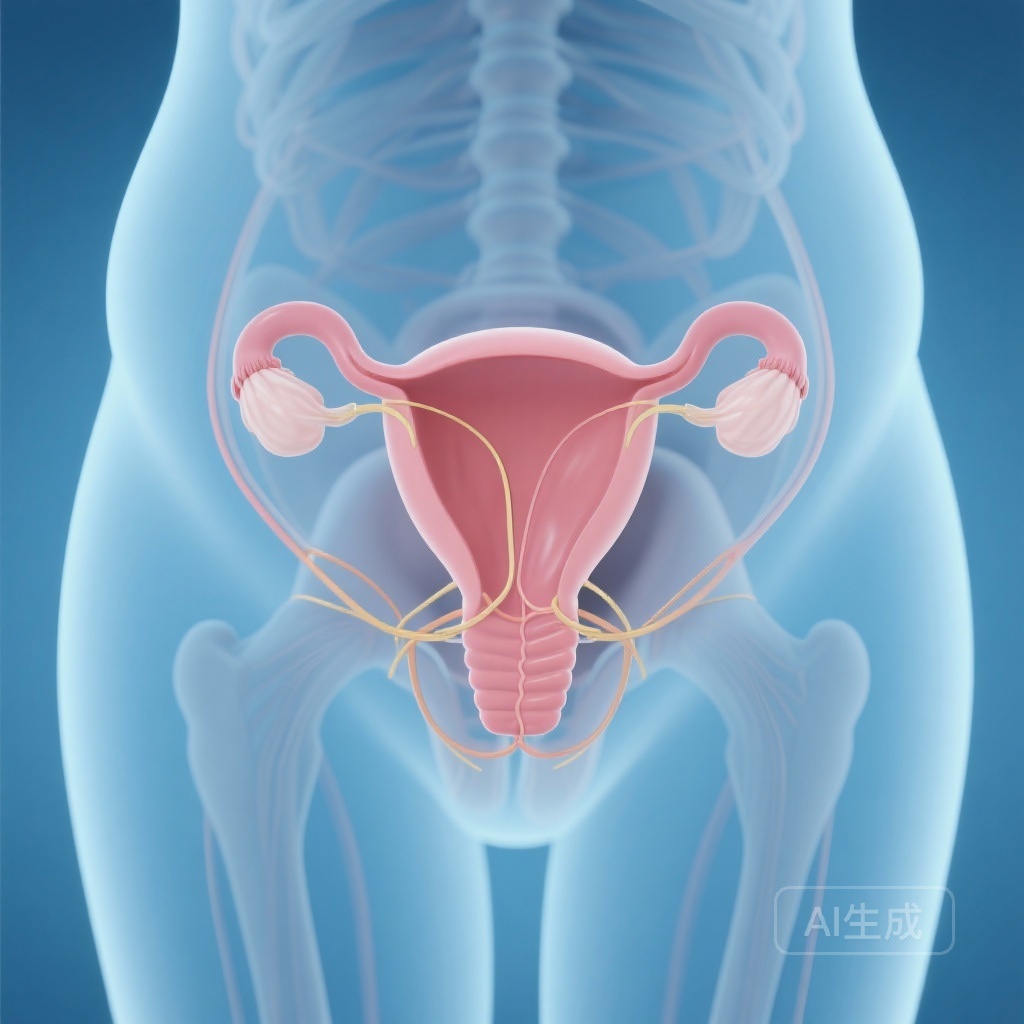
Pelvic organ prolapse (POP) is a prevalent condition that significantly impacts the quality of life for millions of women worldwide. Beyond the physical discomfort and mechanical symptoms of a vaginal bulge, POP often exerts a profound influence on sexual health and psychological well-being. Surgical intervention remains a cornerstone of management for symptomatic uterine prolapse, with various techniques available to surgeons today. However, a persistent concern for both clinicians and patients is the potential impact of these procedures on sexual function. While the primary goal is often anatomical restoration, the risk of developing de novo dyspareunia or worsening sexual satisfaction is a critical consideration in preoperative counseling.
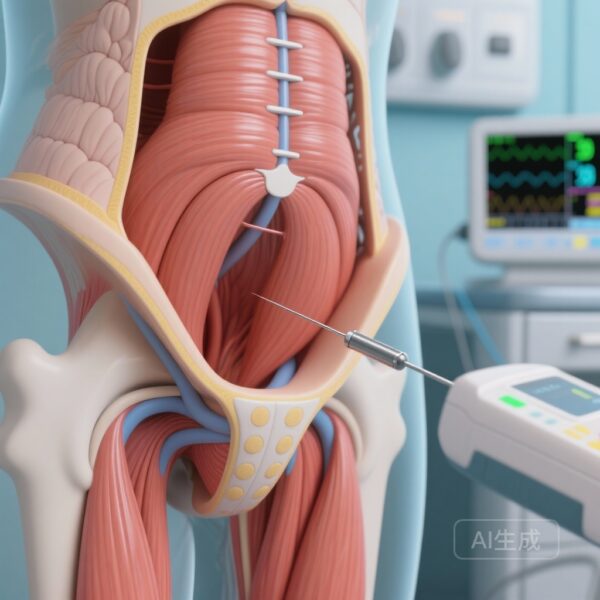
Two common surgical approaches for treating primary mild to moderate uterine prolapse are the Manchester procedure (MP) and sacrospinous hysteropexy (SSH). The Manchester procedure involves a partial cervical amputation and shortening of the cardinal ligaments to elevate the uterus, whereas sacrospinous hysteropexy involves suspending the uterus or vaginal apex to the sacrospinous ligament using sutures. A recent randomized clinical trial (RCT) provided pivotal data indicating that the Manchester procedure was superior to SSH regarding anatomical success at a two-year follow-up. Despite these findings, the comparative impact of these two techniques on sexual function remained an open question. This planned analysis of the same RCT seeks to provide definitive evidence regarding the postoperative sexual outcomes of these procedures.
Study Design: A Rigorous Comparison of Functional Outcomes
This study was designed as a multicenter, randomized clinical trial to compare the effects of the Manchester procedure and sacrospinous hysteropexy on sexual function and the incidence of dyspareunia. The researchers followed a cohort of women treated for primary mild to moderate uterine prolapse over a 24-month period. The study utilized an equivalence design, which is particularly appropriate when the goal is to determine if a newer or alternative treatment provides outcomes that are not significantly worse or better than the standard of care within a clinically meaningful margin.
The primary outcome measure was the change in the score on the Pelvic Organ Prolapse/Urinary Incontinence Sexual Questionnaire-IUGA-Revised (PISQ-IR) from baseline to the 24-month follow-up. The PISQ-IR is a validated tool specifically designed to assess sexual function in women with pelvic floor disorders. It accounts for both sexually active and non-sexually active women, which is vital in this demographic. An equivalence margin of ±0.31 points was predefined, representing the minimally clinically important difference (MCID) for the total PISQ-IR score. Secondary outcomes included the incidence of dyspareunia (painful intercourse) and the rate of de novo dyspareunia, defined as pain during intercourse that was not present prior to the surgery.
Key Findings: Proven Equivalence in Sexual Satisfaction
A total of 393 women participated in the analysis, with 197 undergoing the Manchester procedure and 196 receiving sacrospinous hysteropexy. At the 24-month mark, the data revealed several significant insights into how these surgeries affect the sexual lives of patients.
Improvements in Sexually Active Patients
Among the women who were sexually active throughout the study (101 in the MP group and 99 in the SSH group), both procedures resulted in statistically significant improvements in PISQ-IR scores. The Manchester procedure group saw a mean improvement of 0.27 points (95% CI 0.19 to 0.34), while the SSH group improved by 0.20 points (95% CI 0.11 to 0.29). The mean difference between the two groups was 0.087. Crucially, the 95% confidence interval for this difference (0.01 to 0.17) fell entirely within the predefined equivalence margin of ±0.31. This confirms that while the Manchester procedure showed a numerically higher improvement, the difference between the two techniques is not clinically significant regarding sexual function.
Dyspareunia and De Novo Symptoms
One of the most encouraging findings for clinicians is the relatively low rate of de novo dyspareunia. In the sexually active cohort, de novo dyspareunia occurred in 5% of the Manchester group and 13% of the SSH group. While the numerical percentage was higher in the SSH group, the difference did not reach statistical significance (95% CI -0.1% to 16.5%). When the analysis was expanded to include women who became non-sexually active post-surgery (possibly due to pain), the rates of de novo dyspareunia were 6% for the Manchester procedure and 11% for SSH. Again, this difference was not statistically significant, suggesting that neither procedure carries an inherently higher risk of causing new-onset pain during intercourse.
Insights into Non-Sexually Active Patients
For women who were not sexually active at baseline (59 in the MP group and 64 in the SSH group), the study measured the “condition-impact” score. This score reflects how much the prolapse itself interferes with their sexual status or desire. Both groups showed a decrease in condition-impact scores (MP: -0.25; SSH: -0.21), indicating that the surgery reduced the negative impact of prolapse on their sexual identity. Furthermore, approximately 24% of women who were not sexually active before surgery (20 in the MP group and 19 in the SSH group) transitioned to becoming sexually active after the 24-month follow-up, highlighting the restorative potential of these surgeries beyond simple anatomy.
Expert Commentary: Clinical Implications and Anatomical Context
The findings of this study are particularly relevant when viewed alongside the anatomical outcomes of the same trial. Previously reported data showed that the Manchester procedure was more effective than SSH in preventing anatomical recurrence of uterine prolapse. The current analysis adds a crucial layer of reassurance: choosing the Manchester procedure for its anatomical superiority does not come at the cost of sexual function.
From a mechanistic perspective, the Manchester procedure preserves the upper part of the cervix and the natural attachments of the cardinal ligaments, which may contribute to the stability of the vaginal vault and the preservation of vaginal length. Sacrospinous hysteropexy, while effective for apical suspension, involves a more lateral and posterior fixation that can sometimes alter the vaginal axis or cause tension near the pelvic nerves. However, the data suggest that these theoretical differences do not translate into a perceptible difference in sexual quality of life for the average patient.
Clinicians should note that while equivalence was established, the slight trend favoring the Manchester procedure (lower de novo dyspareunia and slightly higher PISQ-IR improvement) aligns with its superior anatomical performance. This suggests that for many patients with primary uterine prolapse, the Manchester procedure may be the preferred choice. Nevertheless, the choice of procedure should always be individualized, taking into account the patient’s specific anatomy, surgical history, and personal preferences regarding cervical preservation.
Conclusion: A Unified Approach to Uterine Prolapse
In conclusion, this planned analysis of a multicenter randomized clinical trial provides high-level evidence that both the Manchester procedure and sacrospinous hysteropexy lead to similar, positive improvements in sexual function for women with uterine prolapse. Both procedures were shown to be equivalent within a clinically defined margin, and neither demonstrated a significantly higher risk of de novo dyspareunia. Given that the Manchester procedure has previously demonstrated higher anatomical success rates in this same patient population, these findings reinforce its position as a highly effective and safe option for the surgical management of uterine prolapse. For the urogynocologist, these results provide essential data for evidence-based preoperative counseling, allowing for more confident discussions regarding the functional and sexual outcomes of prolapse repair.
References
1. Stoter LM, Peters K, Enklaar RA, Schulten SFM, Weemhoff M, van Leijsen SAL, van Eijndhoven HWF, Kluivers KB. Sexual function after the Manchester procedure versus sacrospinous hysteropexy in women treated for uterine prolapse: a planned analysis of a randomized clinical trial. Am J Obstet Gynecol. 2025 Dec 17:S0002-9378(25)00932-9. doi: 10.1016/j.ajog.2025.12.035. PMID: 41419154.
2. Messelink B, et al. Standardization of terminology of pelvic floor muscle function and dysfunction: report of the pelvic floor clinical assessment group of the International Continence Society. Neurourol Urodyn. 2005;24(4):374-80.
3. Roovers JP, et al. Sexual function and vaginal surgery. A review of the literature. Int Urogynecol J Pelvic Floor Dysfunct. 2005;16(6):441-4.