Highlight
Long-Term Mortality Gap
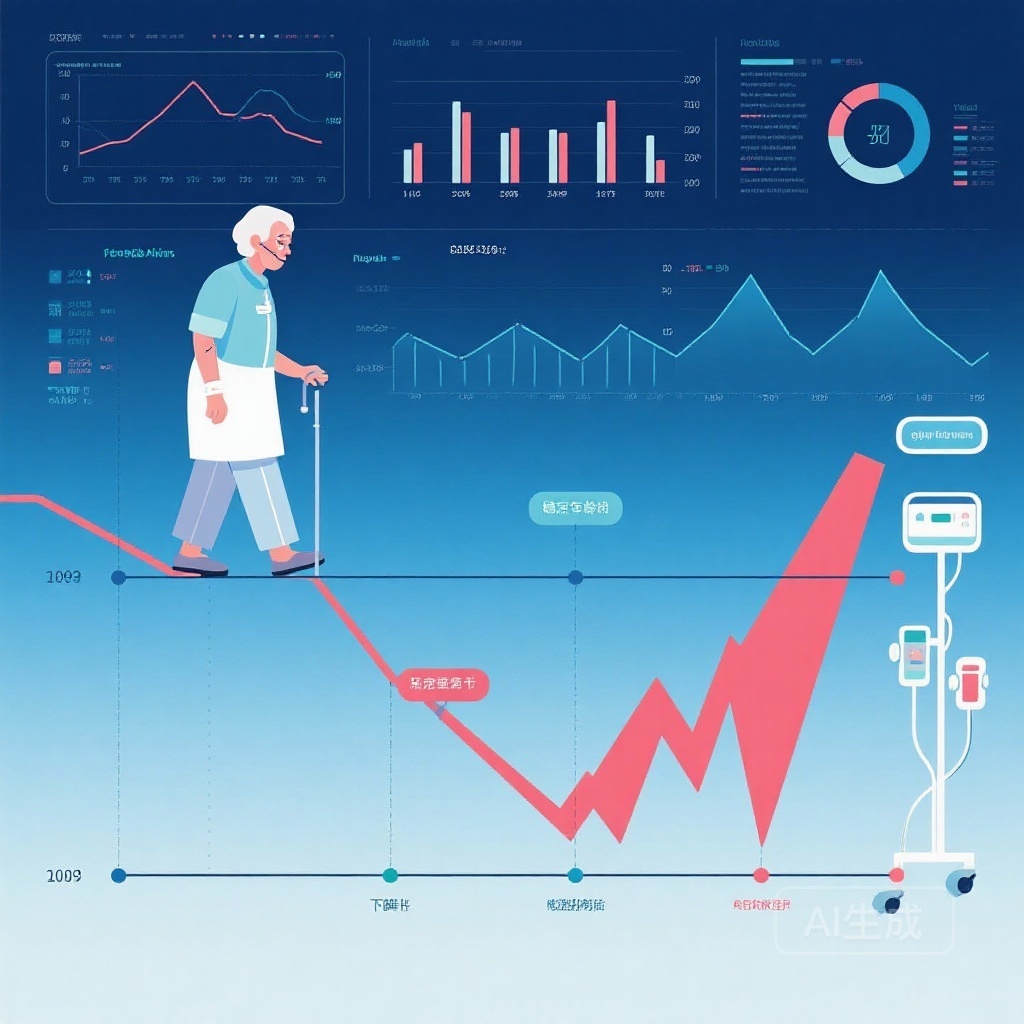
Survivors of intensive care aged 60–89 exhibit a persistent excess mortality risk that remains detectable five years post-discharge when compared to age-matched individuals in the general population.
The Vulnerability of the ‘Young-Old’
Previously fit individuals in the 60–79 age bracket experience the most pronounced relative loss in both survival and functional independence, identifying them as a primary cohort for targeted post-ICU rehabilitation.
Age-Attenuation Effect
In survivors aged 90 and older, the functional and survival trajectories eventually converge with those of the general population, suggesting that at advanced ages, the impact of a critical illness episode becomes less distinguishable from the background rate of senescence.
Background: The Rising Tide of Geriatric Critical Care
As global populations age, intensive care units (ICUs) are increasingly populated by older adults. While short-term ICU mortality has improved due to advancements in critical care medicine, the long-term ‘legacy’ of critical illness in the elderly remains poorly understood. Clinicians often face the challenge of providing prognostic clarity to families: will a survivor return to their baseline, or does the ICU stay mark the beginning of a terminal functional decline?
Existing literature has frequently focused on one-year outcomes, but this often fails to capture the full trajectory of recovery or the transition to long-term care. Furthermore, many studies lack a robust control group from the general population, making it difficult to differentiate between the natural progression of aging and the specific sequelae of critical illness. This study by Jung et al. (2025) provides a necessary deep-dive into five-year outcomes, utilizing a massive dataset to map how the ‘ICU survivor’ path diverges from the typical aging process.
Study Design: A Nationwide Longitudinal Analysis
This observational study utilized longitudinal claims data from a major statutory health insurance organization in Germany, covering a period that allowed for a five-year follow-up. The cohort included an impressive 3,261,169 individuals aged 60 to 99 years. Within this population, the researchers identified 40,441 individuals who had survived an ICU admission by at least six months, ensuring the focus was on long-term survivorship rather than acute peri-ICU mortality.
Methodology and Endpoints
To evaluate functional status, the researchers leveraged a nationwide standardized program used to determine eligibility for long-term care support in Germany. Functional deficits were graded based on the need for assistance in daily living. The primary outcomes were 5-year survival and functional trajectories, analyzed using multi-state modeling to account for competing risks (e.g., the risk of death versus the risk of transitioning to a higher level of care). This methodological approach allowed the team to visualize how patients move between states of ‘no deficit,’ ‘mild-moderate deficit,’ ‘severe deficit,’ and ‘death.’
Key Findings: Mortality and Functional Decline
The study’s results challenge several assumptions about aging and resilience. The most striking finding was the non-linear relationship between age and the relative impact of intensive care.
Excess Mortality in the 60–79 Cohort
Among survivors aged 60–79, there was a significant peak in excess mortality compared to their peers in the general population. For these individuals, the ICU event appeared to be a ‘sentinel event’ that dramatically shortened life expectancy. Interestingly, this group also showed the highest risk for functional decline. For a 65-year-old who was previously fit (no functional deficits), an ICU stay was associated with a much steeper downward trajectory than for a 65-year-old who had not been hospitalized in the ICU.
The Paradox of the Nonagenarian
Counterintuitively, the difference in outcomes between ICU survivors and the general population diminished with advancing age. By the time patients reached the 90–99 age group, the survival and functional trajectories of ICU survivors were nearly identical to those of the general population. This ‘age-attenuation’ suggests that in the tenth decade of life, the physiological reserve is already so limited that the specific insult of a critical illness does not significantly accelerate the already high background rate of decline and mortality.
Gender-Specific Transitions
Data revealed a notable gender disparity in functional outcomes. Women were at a statistically higher risk than men for transitioning from a state of ‘no functional deficit’ to ‘mild-moderate deficits’ following ICU survival. This suggests that while women may survive the acute insult, they may be more prone to the lingering functional morbidity associated with Post-Intensive Care Syndrome (PICS).
Expert Commentary: Clinical and Policy Implications
Targeting the ‘Window of Opportunity’
The finding that 60–79-year-olds suffer the greatest relative loss is clinically actionable. It suggests that this ‘young-old’ cohort has enough physiological reserve to survive the ICU but is most at risk of losing their high baseline quality of life. Interventions—such as early mobilization, post-ICU clinics, and intensive physical therapy—might yield the highest ‘return on investment’ in this specific age group.
Advance Care Planning (ACP)
For patients in their 80s and 90s, the data provides a different kind of clarity. Since their trajectories converge with the general population, clinicians can frame the ICU stay not as a unique destroyer of function, but as part of a broader end-of-life trajectory. This can inform more realistic discussions about the goals of care and the limitations of aggressive intervention in the very elderly.
Study Limitations
While the study is robust due to its sample size, it relies on claims data, which may lack the granular clinical detail found in electronic health records (e.g., specific physiological parameters during the ICU stay). Furthermore, the associations are non-causal; it is possible that the comorbidities that led to the ICU admission, rather than the ICU care itself, are the primary drivers of the observed trajectories.
Conclusion
The study by Jung et al. underscores that the impact of critical illness is not a transient phase but a five-year (and likely longer) trajectory. The identification of the 60–79 age group as being at the highest relative risk for functional and survival loss provides a clear mandate for clinicians to focus rehabilitation and monitoring efforts on these individuals. As we continue to refine geriatric critical care, understanding these long-term pathways is essential for transitioning from a model of ‘saving lives’ to one of ‘preserving life quality.’
References
1. Jung C, Marschall U, Hennig B, et al. Five-year mortality and functional trajectories in older survivors of intensive care compared to the general population. Intensive Care Med. 2025;51(12):2329-2340. doi:10.1007/s00134-025-08163-x.
2. Herridge MS, et al. Functional disability 5 years after acute respiratory distress syndrome. N Engl J Med. 2011;364:1293-1304.
3. Iwashyna TJ, et al. Long-term cognitive impairment and functional disability among survivors of severe sepsis. JAMA. 2010;304(16):1787-1794.