

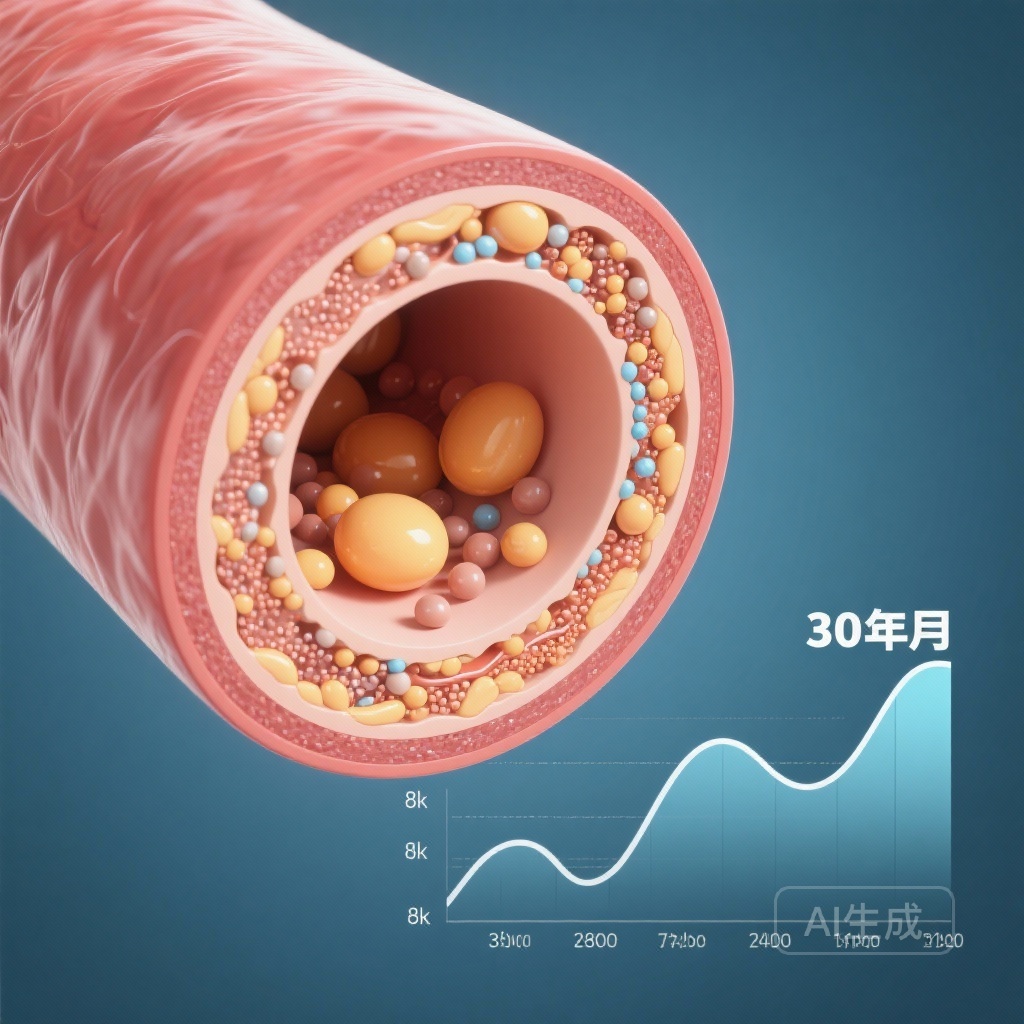
Lipoprotein(a) và Triển vọng 30 Năm: Xác Định Lại Nguy Cơ Tim Mạch và Đột Quỵ Dài Hạn ở Phụ Nữ

Lipoprotein(a) và Triển vọng 30 Năm: Xác Định Lại Nguy Cơ Tim Mạch và Đột Quỵ Dài Hạn ở Phụ Nữ

Những Điểm Nổi Bật

Mức độ Lipoprotein(a) [Lp(a)] tăng cao hoạt động như một dự đoán độc lập mạnh mẽ về các sự kiện tim mạch chính (MACE) và đột quỵ thiếu máu não trong suốt 30 năm ở phụ nữ khỏe mạnh ban đầu.

Mặc dù mức Lp(a) trên 30 mg/dL làm tăng đáng kể nguy cơ bệnh tim mạch vành, nhưng mức độ cao hơn nhiều—vượt quá 120 mg/dL—mới có thể dự đoán đáng kể nguy cơ đột quỵ thiếu máu não và tử vong tim mạch dài hạn.

Nguy cơ đột quỵ tăng lên khi Lp(a) tăng cao cùng với protein C phản ứng mẫn cảm (hsCRP) và cholesterol LDL, với những phụ nữ có tăng cao cả ba chỉ số này đối mặt với nguy cơ đột quỵ thiếu máu não cao hơn 79%.

Bằng chứng di truyền xác nhận rằng người mang gen LPA rs3798220 ít gặp phải có nguy cơ cao hơn về các sự kiện tim mạch chính, củng cố vai trò nguyên nhân của Lp(a) trong bệnh xơ vữa động mạch.

Giới Thiệu: Vượt Qua Mô Hình Nguy Cơ 10 Năm

Trong khung công tác truyền thống của đánh giá nguy cơ tim mạch, các bác sĩ đã lâu nay dựa vào các máy tính nguy cơ 10 năm để hướng dẫn phòng ngừa sơ cấp. Tuy nhiên, sự tập trung ngắn hạn này có thể đánh giá thấp đáng kể gánh nặng suốt đời của bệnh tim mạch xơ vữa (ASCVD), đặc biệt là ở phụ nữ thường có điểm số nguy cơ ngắn hạn thấp hơn mặc dù có sự thiên vị di truyền tiềm ẩn. Trong số các chỉ số mới nổi, Lipoprotein(a) đã trở nên nổi bật như một yếu tố nguy cơ độc lập do di truyền quyết định mà hầu như không bị ảnh hưởng bởi các sửa đổi lối sống chuẩn hoặc điều trị statin truyền thống.

Lipoprotein(a) bao gồm một hạt giống LDL được liên kết cộng hóa trị với apolipoprotein(a). Cấu trúc của nó mang lại cả tính chất gây xơ vữa và gây huyết khối. Mặc dù ý nghĩa lâm sàng của nó đã được biết đến, các hướng dẫn sàng lọc vẫn giữ nguyên, thường hạn chế xét nghiệm cho những người có tiền sử gia đình mạnh. Bằng chứng mới từ Nghiên cứu Sức Khỏe Phụ Nữ (WHS) hiện thách thức cách tiếp cận này, cung cấp cái nhìn thuyết phục về cách mức Lp(a) cơ bản quy định kết quả sức khỏe trong suốt ba thập kỷ cuộc đời của một phụ nữ.

Thiết Kế Nghiên Cứu: Di Sản của Nghiên cứu Sức Khỏe Phụ Nữ

Các thông tin được trình bày ở đây được lấy từ hai phân tích then chốt của Nghiên cứu Sức Khỏe Phụ Nữ, một nhóm ngang dọc triển vọng của các chuyên gia y tế nữ ở Hoa Kỳ. Nghiên cứu đầu tiên, được công bố trên JAMA Cardiology, tập trung vào 27.748 phụ nữ theo dõi từ 1993 đến 2023 để nghiên cứu mối quan hệ giữa ngưỡng Lp(a) và MACE, bệnh tim mạch vành (CHD), và đột quỵ thiếu máu não. Nghiên cứu thứ hai, được công bố trên Lancet Neurology, mở rộng phạm vi này để nghiên cứu sự tương tác giữa Lp(a), cholesterol LDL, và hsCRP trong việc dự đoán nguy cơ đột quỵ trong 28.345 người tham gia.

Người tham gia là phụ nữ khỏe mạnh ban đầu từ 45 tuổi trở lên, không mắc bệnh tim mạch và ung thư tại thời điểm cơ bản. Theo dõi dài hạn—trung bình 27,8 năm—cho phép các nhà nghiên cứu nắm bắt sự tiến triển chậm, tích lũy của ASCVD, cung cấp một cửa sổ độc đáo vào lịch sử tự nhiên của nguy cơ liên quan đến các chỉ số này.

Ngưỡng Lipoprotein(a) và Kết Quả Tim Mạch 30 Năm

Nghiên cứu JAMA Cardiology sử dụng các mô hình spline và các ngưỡng lâm sàng cụ thể để xác định mức độ nào Lp(a) trở thành mối nguy hiểm đáng kể. Các phát hiện cho thấy mối nguy hiểm liên quan đến Lp(a) là liên tục, nhưng các điểm uốn lâm sàng cụ thể đáng chú ý:

Bệnh Tim Mạch Vành và MACE

Đối với các sự kiện tim mạch chính và bệnh tim mạch vành, ngưỡng 30 mg/dL (khoảng phần thứ 75) đánh dấu sự bắt đầu của nguy cơ tăng. Phụ nữ có mức Lp(a) trên 120 mg/dL (phần thứ 99) so với những người dưới 10 mg/dL cho thấy tỷ lệ nguy cơ (HR) 1,54 (95% CI, 1,24-1,92) cho MACE và 1,80 (95% CI, 1,36-2,37) cho CHD. Khi sử dụng phần thứ, những người trên phần thứ 99 có nguy cơ CHD cao gấp hơn hai lần (HR 2,06) so với những người dưới phần thứ 50.

Đột Quỵ và Tử Vong Tim Mạch

Thú vị là, ngưỡng dự đoán đột quỵ có vẻ cao hơn so với các sự kiện vành. Mức Lp(a) trên 120 mg/dL hoặc phần thứ 99 có liên quan đến sự tăng đáng kể về đột quỵ thiếu máu não (HR 1,85) và tử vong tim mạch (HR 1,63). Điều này cho thấy rằng mặc dù mức độ Lp(a) vừa phải nguy hiểm cho các động mạch vành, hệ thống mạch máu não có thể linh hoạt hơn, yêu cầu mức độ Lp(a) cực kỳ cao để thể hiện các sự kiện lâm sàng đột quỵ theo thời gian.

Bài Đánh Giá Ba Mặt: Lp(a), LDL-C, và hsCRP trong Nguy Cơ Đột Quỵ

Phân tích Lancet Neurology cung cấp cái nhìn tinh tế hơn về nguy cơ đột quỵ bằng cách tích hợp các chỉ số viêm và mỡ máu. Mặc dù cholesterol LDL là nền tảng của việc phòng ngừa đột quỵ, nghiên cứu này cho thấy rằng trong mô hình điều chỉnh đa biến, phần thứ năm cao nhất của LDL-C (≥3,4 mmol/L) có mối liên hệ tương đối nhỏ với đột quỵ tổng thể (HR 1,05). Trái lại, cả hsCRP và Lp(a) vẫn là các dự đoán độc lập đáng kể.

Tác Động Cộng Tích

Nghiên cứu đã nhấn mạnh mô hình nguy cơ tích lũy. Những phụ nữ thuộc phần thứ năm cao nhất cho cả ba chỉ số—hsCRP (≥5,2 mg/L), cholesterol LDL (≥3,4 mmol/L), và Lp(a) (≥44,1 mg/dL)—đối mặt với nguy cơ đột quỵ tổng thể (HR 1,60) và đột quỵ thiếu máu não (HR 1,79) cao hơn đáng kể so với những phụ nữ không có chỉ số nào trong phần thứ năm cao nhất. Điều này cho thấy rằng nguy cơ đột quỵ không do một con đường duy nhất mà là kết quả của các lực lượng kết hợp của sự hình thành mảng do cholesterol, huyết khối/ xơ vữa do Lp(a), và viêm hệ thống.

Bằng Chứng Di Truyền: Vai Trò của Biến Thể LPA rs3798220

Để giải quyết các yếu tố nhiễu có thể, các nhà nghiên cứu đã xem xét kiểu gen rs3798220, một dự đoán đã biết của mức Lp(a) cao ở người có nguồn gốc châu Âu. Trong số 23.279 phụ nữ có thông tin kiểu gen, những người mang gen ít gặp—which di truyền sản xuất nhiều Lp(a)—luôn luôn cho thấy nguy cơ cao hơn về các sự kiện tim mạch chính. Bằng chứng kiểu ngẫu nhiên Mendelian này củng cố lập luận rằng Lp(a) là tác nhân nguyên nhân trong sự phát triển của bệnh tim mạch, thay vì chỉ là một người chứng kiến hoặc dấu hiệu của các bệnh lý khác.

Bình Luận Chuyên Gia: Ý Nghĩa Lâm Sàng và Sàng Lọc

Các phát hiện từ các nghiên cứu theo dõi 30 năm này có ý nghĩa sâu sắc đối với thực hành lâm sàng và chính sách y tế cộng đồng. Hướng dẫn hiện tại từ các tổ chức như Hiệp hội Tim Mạch Châu Âu (ESC) đề xuất rằng Lp(a) nên được đo ít nhất một lần trong cuộc đời của mỗi người trưởng thành. Tuy nhiên, việc áp dụng ở Hoa Kỳ và các khu vực khác chậm hơn, thường được dành cho các trường hợp có nguy cơ cao.

Dữ liệu lập luận rằng một lần đo Lp(a) trong giai đoạn giữa cuộc đời có thể dự đoán chính xác hướng đi tim mạch của một phụ nữ trong ba thập kỷ tiếp theo. Vì mức Lp(a) được xác định di truyền khoảng 90% và ổn định trong suốt cuộc đời, sàng lọc sớm có thể xác định những người có nguy cơ cao hàng thập kỷ trước khi sự kiện đầu tiên xảy ra. Hệ thống cảnh báo sớm này cho phép quản lý tích cực hơn các yếu tố nguy cơ có thể điều chỉnh, như huyết áp và cholesterol LDL, để bù đắp nguy cơ bẩm sinh do Lp(a) gây ra.

Ngoài ra, sự xuất hiện của các liệu pháp giảm Lp(a) có mục tiêu, như các oligonucleotide chống nghĩa và RNA can thiệp nhỏ (siRNA) đang trong thử nghiệm lâm sàng giai đoạn 3 (ví dụ: pelacarsen, olpasiran), làm cho việc xác định những bệnh nhân này trở nên quan trọng hơn. Nếu các liệu pháp này thành công trong việc giảm các sự kiện lâm sàng, sàng lọc phổ biến cho Lp(a) sẽ có khả năng trở thành tiêu chuẩn chăm sóc.

Kết Luận

Dữ liệu 30 năm từ Nghiên cứu Sức Khỏe Phụ Nữ cung cấp một liên kết chắc chắn giữa Lipoprotein(a) tăng cao và bệnh tật tim mạch và não dài hạn. Bằng chứng cho thấy rằng ngay cả mức tăng vừa phải cũng tăng nguy cơ vành, trong khi mức tăng cực kỳ cao làm tăng đáng kể nguy cơ đột quỵ thiếu máu não và tử vong. Khi kết hợp với viêm (hsCRP) và cholesterol LDL, nguy cơ đột quỵ trở nên đặc biệt rõ rệt. Các bác sĩ nên xem xét sàng lọc Lp(a) như một thành phần quan trọng của đánh giá nguy cơ toàn diện, vượt qua các mô hình 10 năm để bảo vệ sức khỏe dài hạn của phụ nữ.

Hỗ Trợ và Tham Khảo

Nghiên cứu này được hỗ trợ bởi Viện Tim Mạch, Phổi và Máu Quốc gia Hoa Kỳ, Viện Ung Thư Quốc gia, và Quỹ Nghiên Cứu Độc Lập Đan Mạch.

Tham Khảo

1. Nordestgaard AT, Chasman DI, Moorthy V, et al. Thirty-Year Risk of Cardiovascular Disease Among Healthy Women According to Clinical Thresholds of Lipoprotein(a). JAMA Cardiol. 2026; doi:10.1001/jamacardio.2025.5043.

2. Nordestgaard AT, Moorthy MV, Cook NR, et al. High-sensitivity C-reactive protein, LDL cholesterol, lipoprotein(a) and 30-year risk of stroke in healthy women: a prospective, longitudinal cohort study. Lancet Neurol. 2025;24(11):920-930. doi:10.1016/S1474-4422(25)00306-0.


Lipoprotein(a) and the 30-Year Horizon: Redefining Long-Term Cardiovascular and Stroke Risk in Women

Lipoprotein(a) and the 30-Year Horizon: Redefining Long-Term Cardiovascular and Stroke Risk in Women

Highlights

Elevated levels of Lipoprotein(a) [Lp(a)] serve as a robust, independent predictor of major cardiovascular events (MACE) and ischemic stroke over a 30-year period in initially healthy women.

While Lp(a) levels above 30 mg/dL significantly increase the risk for coronary heart disease, much higher levels—exceeding 120 mg/dL—are required to significantly predict long-term ischemic stroke and cardiovascular mortality.

The risk of stroke is compounded when elevated Lp(a) is present alongside high-sensitivity C-reactive protein (hsCRP) and LDL cholesterol, with women possessing elevations in all three biomarkers facing a 79% higher risk of ischemic stroke.

Genetic evidence confirms that carriers of the LPA rs3798220 minor allele are at a higher risk of major cardiovascular events, reinforcing the causal role of Lp(a) in atherosclerotic disease.

Introduction: Beyond the 10-Year Risk Model

In the traditional framework of cardiovascular risk assessment, clinicians have long relied on 10-year risk calculators to guide primary prevention. However, this short-term focus may significantly underestimate the lifetime burden of atherosclerotic cardiovascular disease (ASCVD), particularly in women who often present with lower short-term risk scores despite underlying genetic predispositions. Among the emerging biomarkers, Lipoprotein(a) has gained prominence as a genetically determined, independent risk factor that remains largely unaffected by standard lifestyle modifications or traditional statin therapy.

Lipoprotein(a) consists of an LDL-like particle covalently bound to apolipoprotein(a). Its structure confers both pro-atherogenic and pro-thrombotic properties. Despite its known clinical significance, screening guidelines have remained conservative, often limiting testing to those with a strong family history. New evidence from the Women’s Health Study (WHS) now challenges this approach, providing a compelling look at how baseline Lp(a) levels dictate health outcomes over three decades of a woman’s life.

Study Design: The Legacy of the Women’s Health Study

The insights presented here are derived from two pivotal analyses of the Women’s Health Study, a prospective, longitudinal cohort of female health professionals in the United States. The first study, published in JAMA Cardiology, focused on 27,748 women followed from 1993 to 2023 to examine the relationship between Lp(a) thresholds and MACE, coronary heart disease (CHD), and ischemic stroke. The second study, published in Lancet Neurology, expanded this scope to examine the interplay between Lp(a), LDL cholesterol, and hsCRP in predicting stroke risk among 28,345 participants.

Participants were initially healthy women aged 45 years or older, free of cardiovascular disease and cancer at baseline. The long-term follow-up—median 27.8 years—allowed researchers to capture the slow, cumulative progression of ASCVD, providing a unique window into the natural history of risk associated with these biomarkers.

Lipoprotein(a) Thresholds and 30-Year Cardiovascular Outcomes

The JAMA Cardiology study utilized spline models and specific clinical thresholds to determine at what level Lp(a) becomes a significant hazard. The findings suggest that the risk associated with Lp(a) is continuous, but specific clinical inflection points are noteworthy:

Coronary Heart Disease and MACE

For major cardiovascular events and coronary heart disease, a threshold of 30 mg/dL (roughly the 75th percentile) marked the beginning of increased risk. Women with Lp(a) levels above 120 mg/dL (the 99th percentile) compared to those below 10 mg/dL showed a hazard ratio (HR) of 1.54 (95% CI, 1.24-1.92) for MACE and 1.80 (95% CI, 1.36-2.37) for CHD. When using percentiles, those above the 99th percentile had a more than two-fold increased risk of CHD (HR 2.06) compared to those below the 50th percentile.

Stroke and Cardiovascular Death

Interestingly, the threshold for stroke prediction appears higher than that for coronary events. Lp(a) levels above 120 mg/dL or the 99th percentile were associated with a significant increase in ischemic stroke (HR 1.85) and cardiovascular death (HR 1.63). This suggests that while moderate elevations in Lp(a) are hazardous for the coronary arteries, the cerebrovascular system may be more resilient, requiring extreme elevations in Lp(a) to manifest clinical stroke events over time.

The Triple Threat: Lp(a), LDL-C, and hsCRP in Stroke Risk

The Lancet Neurology analysis provided a more nuanced view of stroke risk by integrating inflammatory and lipid markers. While LDL cholesterol is a cornerstone of stroke prevention, this study found that in a multivariable-adjusted model, the highest quintile of LDL-C (≥3.4 mmol/L) had a relatively modest association with total stroke (HR 1.05). In contrast, both hsCRP and Lp(a) remained significant independent predictors.

Synergistic Effects

The study highlighted a cumulative risk model. Women who were in the highest quintiles for all three biomarkers—hsCRP (≥5.2 mg/L), LDL cholesterol (≥3.4 mmol/L), and Lp(a) (≥44.1 mg/dL)—faced a substantially higher risk of total stroke (HR 1.60) and ischemic stroke (HR 1.79) compared to women who had no biomarkers in the highest quintile. This suggests that the risk of stroke is not driven by a single pathway but is a result of the combined forces of cholesterol-mediated plaque formation, Lp(a)-mediated thrombosis/atherogenesis, and systemic inflammation.

Genetic Evidence: The Role of the LPA rs3798220 Variation

To address potential confounding factors, the researchers examined the rs3798220 genotype, a known predictor of high Lp(a) levels in individuals of European ancestry. Among 23,279 women with genotype information, carriers of the minor allele—who genetically produce more Lp(a)—consistently showed a higher risk of major cardiovascular events. This Mendelian randomization-style evidence strengthens the argument that Lp(a) is a causal agent in the development of cardiovascular disease, rather than a mere bystander or marker of other pathologies.

Expert Commentary: Clinical Implications and Screening

The findings from these 30-year follow-up studies have profound implications for clinical practice and public health policy. Current guidelines from organizations like the European Society of Cardiology (ESC) suggest that Lp(a) should be measured at least once in every adult’s lifetime. However, adoption in the United States and other regions has been slower, often reserved for high-risk cases.

The data argue that a single measurement of Lp(a) in mid-life can accurately predict a woman’s cardiovascular trajectory for the next three decades. Because Lp(a) levels are approximately 90% genetically determined and remain stable throughout life, early screening could identify high-risk individuals decades before their first event occurs. This “early warning system” allows for more aggressive management of modifiable risk factors, such as blood pressure and LDL cholesterol, to offset the innate risk posed by Lp(a).

Furthermore, the emergence of targeted Lp(a)-lowering therapies, such as antisense oligonucleotides and small interfering RNA (siRNA) currently in Phase 3 clinical trials (e.g., pelacarsen, olpasiran), makes identification of these patients even more critical. If these therapies prove successful in reducing clinical events, universal screening for Lp(a) will likely become a standard of care.

Conclusion

The 30-year data from the Women’s Health Study provide a definitive link between elevated Lipoprotein(a) and long-term cardiovascular and cerebrovascular morbidity. The evidence suggests that even moderate elevations increase coronary risk, while extreme elevations significantly raise the risk of ischemic stroke and death. When combined with inflammation (hsCRP) and LDL cholesterol, the risk of stroke becomes particularly pronounced. Clinicians should consider Lp(a) screening as a vital component of a comprehensive risk assessment, moving beyond 10-year models to protect the long-term health of women.

Funding and References

This research was supported by the US National Heart, Lung, and Blood Institute, the National Cancer Institute, and the Independent Research Fund Denmark.

References

1. Nordestgaard AT, Chasman DI, Moorthy V, et al. Thirty-Year Risk of Cardiovascular Disease Among Healthy Women According to Clinical Thresholds of Lipoprotein(a). JAMA Cardiol. 2026; doi:10.1001/jamacardio.2025.5043.

2. Nordestgaard AT, Moorthy MV, Cook NR, et al. High-sensitivity C-reactive protein, LDL cholesterol, lipoprotein(a) and 30-year risk of stroke in healthy women: a prospective, longitudinal cohort study. Lancet Neurol. 2025;24(11):920-930. doi:10.1016/S1474-4422(25)00306-0.

Comments

No comments yet. Why don’t you start the discussion?

Để lại một bình luận