Highlights
– The Phase 3 KEYVIBE-010 trial was discontinued early after reaching prespecified futility criteria, showing no clinical benefit for the addition of vibostolimab to pembrolizumab.
– Recurrence-free survival (RFS) was numerically worse in the combination group, with a hazard ratio of 1.25 (95% CI 0.9–1.8).
– Serious treatment-related adverse events occurred in 11% of the combination group compared to 4% in the pembrolizumab monotherapy group.
– Pembrolizumab remains the established standard of care for adjuvant treatment of resected stage IIB-IV melanoma.
Introduction and Disease Burden
Melanoma remains one of the most aggressive forms of skin cancer, with high-risk resected disease (stages IIB to IV) posing a significant threat of recurrence and distant metastasis. Over the last decade, the advent of immune checkpoint inhibitors, particularly those targeting the programmed cell death protein 1 (PD-1) pathway, has fundamentally transformed the adjuvant landscape. Pembrolizumab, a high-affinity anti-PD-1 monoclonal antibody, has demonstrated robust efficacy in reducing the risk of recurrence and improving overall survival in this population. However, despite these advances, a substantial proportion of patients still experience disease relapse, prompting the search for novel combination therapies that can enhance the immune response and overcome resistance mechanisms.
The Rationale for TIGIT Inhibition
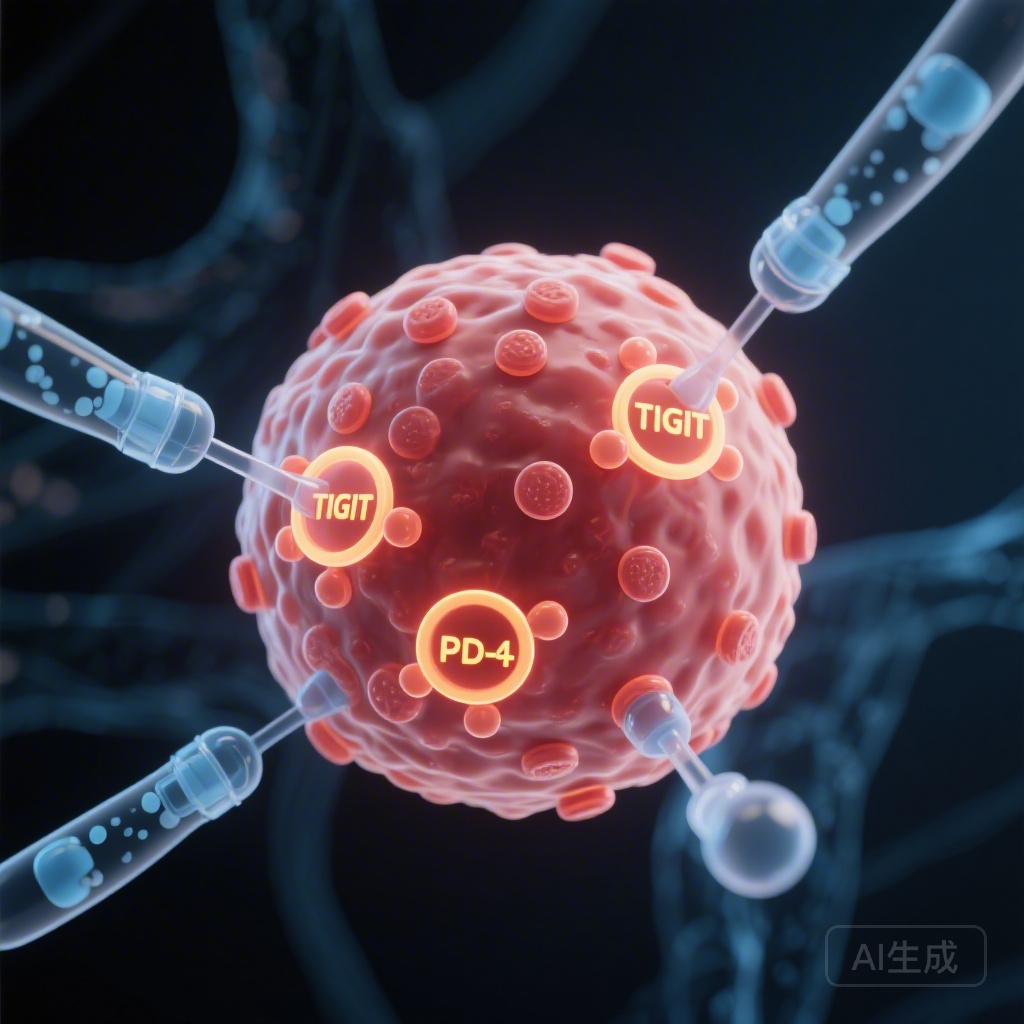
T-cell immunoreceptor with Ig and ITIM domains (TIGIT) is a coinhibitory receptor expressed on T cells and natural killer (NK) cells. It serves as a critical brake on the immune system, often upregulated in the tumor microenvironment alongside PD-1. Preclinical models and early-phase clinical studies suggested that dual blockade of TIGIT and PD-1 could act synergistically to reinvigorate exhausted T cells and improve antitumor activity. Vibostolimab, an investigational anti-TIGIT antibody, was coformulated with pembrolizumab to simplify administration and leverage this potential synergy. The KEYVIBE-010 trial was designed to rigorously test whether this combination could outperform pembrolizumab monotherapy in the high-stakes adjuvant setting.
Study Design and Methodology
KEYVIBE-010 was a global, randomised, double-blind, phase 3 study conducted across 205 sites. The study enrolled 1402 participants aged 12 years or older who had undergone complete surgical resection of stage IIB, IIC, III, or IV cutaneous melanoma (per AJCC 8th edition). Participants were required to have no evidence of metastatic disease following resection.
Randomization was 1:1, assigning patients to receive either a coformulated dose of vibostolimab (200 mg) and pembrolizumab (200 mg) or pembrolizumab (200 mg) alone. Treatments were administered intravenously every three weeks for up to 17 cycles or until recurrence or unacceptable toxicity. The primary endpoint was recurrence-free survival (RFS) in the intention-to-treat population, defined as the time from randomization to the first documented local, regional, or distant recurrence or death from any cause. A critical feature of the trial was a prespecified, nonbinding futility analysis planned for when 111 RFS events had occurred, with a futility bar set at an observed hazard ratio (HR) of 0.95.
Efficacy Results: Disappointing Outcomes
Between January 2023 and March 2024, the trial reached its first interim analysis. At a median follow-up of 4.2 months, the data revealed a striking lack of benefit for the combination therapy. A total of 119 RFS events had occurred. Notably, 67 events (10%) were recorded in the vibostolimab-pembrolizumab group, while only 52 events (7%) occurred in the pembrolizumab monotherapy group.
The calculated hazard ratio for RFS in the combination group versus the monotherapy group was 1.25 (95% CI 0.9–1.8). This numerical trend toward worse outcomes in the combination arm was unexpected, given the promising signals seen in earlier-phase trials. Because the HR failed to meet the 0.95 futility threshold (i.e., it was significantly higher than 1.0), the external data monitoring committee recommended the immediate discontinuation of the study. Median RFS was not reached in either group due to the short follow-up period, but the divergence in event rates was sufficient to determine that the combination was unlikely to provide a meaningful advantage.
Safety and Tolerability Profile
Beyond the lack of efficacy, the safety profile of the coformulated therapy presented significant challenges. Treatment-related adverse events (TRAEs) were more frequent and more severe in the vibostolimab-pembrolizumab arm. Grade 3 or higher TRAEs were noted, with adrenal insufficiency (2%), hepatitis (2%), and various forms of rash (totaling roughly 3%) being the most prominent in the combination group. In contrast, the pembrolizumab alone group saw significantly lower rates of high-grade toxicities, with increased alanine aminotransferase (1%) being the only notable grade 3+ event reported in more than five participants.
Serious TRAEs occurred in 11% of patients receiving the combination therapy compared to only 4% in those receiving monotherapy. Perhaps most concerning were the fatalities: two deaths in the combination group were attributed to immune-related toxicities (myasthenia gravis and myocarditis), while one death occurred in the pembrolizumab group due to myositis. These findings underscore the delicate balance required when intensifying immunotherapy regimens, as the added toxicity did not translate into clinical gain.
Expert Commentary: Analyzing the Failure of TIGIT in the Adjuvant Setting
The failure of KEYVIBE-010 raises important questions about the biological behavior of TIGIT inhibition in different disease states. While TIGIT/PD-1 combinations have shown some activity in metastatic settings, the adjuvant setting—characterized by microscopic residual disease and a different immune landscape—may not be as responsive to this dual blockade.
One possibility is that the immune microenvironment in a patient with no visible tumor burden does not possess the same level of T-cell exhaustion that TIGIT blockade is intended to reverse. Furthermore, the numerical increase in recurrences in the combination arm (HR 1.25) is provocative. While it may be a result of statistical noise in a short follow-up period, it also necessitates a deeper look into whether certain combination strategies could inadvertently interfere with the robust anti-tumor response typically elicited by PD-1 monotherapy.
Clinicians should also note the significant burden of immune-related adverse events (irAEs). Adrenal insufficiency and hepatitis require long-term management and can significantly impact the quality of life for patients who are otherwise theoretically “cancer-free” post-surgery. The increased risk of these toxicities, without any compensatory benefit in RFS, makes the combination untenable for clinical use at this time.
Conclusion
The KEYVIBE-010 study provides a definitive, albeit disappointing, answer regarding the use of coformulated vibostolimab and pembrolizumab in the adjuvant melanoma setting. The study’s early termination for futility serves as a critical reminder of the necessity of large-scale Phase 3 trials to validate early-phase enthusiasm. For now, pembrolizumab monotherapy remains the gold standard for high-risk resected melanoma, offering a favorable balance of efficacy and manageable safety. Future research will need to focus on identifying specific biomarkers that can predict which patient subsets might actually benefit from TIGIT inhibition or other novel combinations.
Funding and ClinicalTrials.gov
This study was funded by Merck Sharp & Dohme, a subsidiary of Merck & Co., Inc. (Rahway, NJ, USA). The trial is registered with ClinicalTrials.gov under the identifier NCT05665595.
References
1. Dummer R, Guo J, Luke JJ, et al. Vibostolimab coformulated with pembrolizumab versus pembrolizumab alone as adjuvant therapy for high-risk stage IIB-IV melanoma (KEYVIBE-010): a randomised, double-blind, phase 3 study. Lancet Oncol. 2026 Feb 13:S1470-2045(25)00709-0.
2. Eggermont AMM, Blank CU, Mandala M, et al. Adjuvant Pembrolizumab versus Placebo in Resected Stage III Melanoma. N Engl J Med. 2018;378(19):1789-1801.
3. Luke JJ, Rutkowski P, Queirolo P, et al. Pembrolizumab versus placebo as adjuvant therapy in completely resected stage IIB or IIC melanoma (KEYNOTE-716): a randomised, double-blind, phase 3 trial. Lancet. 2022;399(10336):1718-1729.