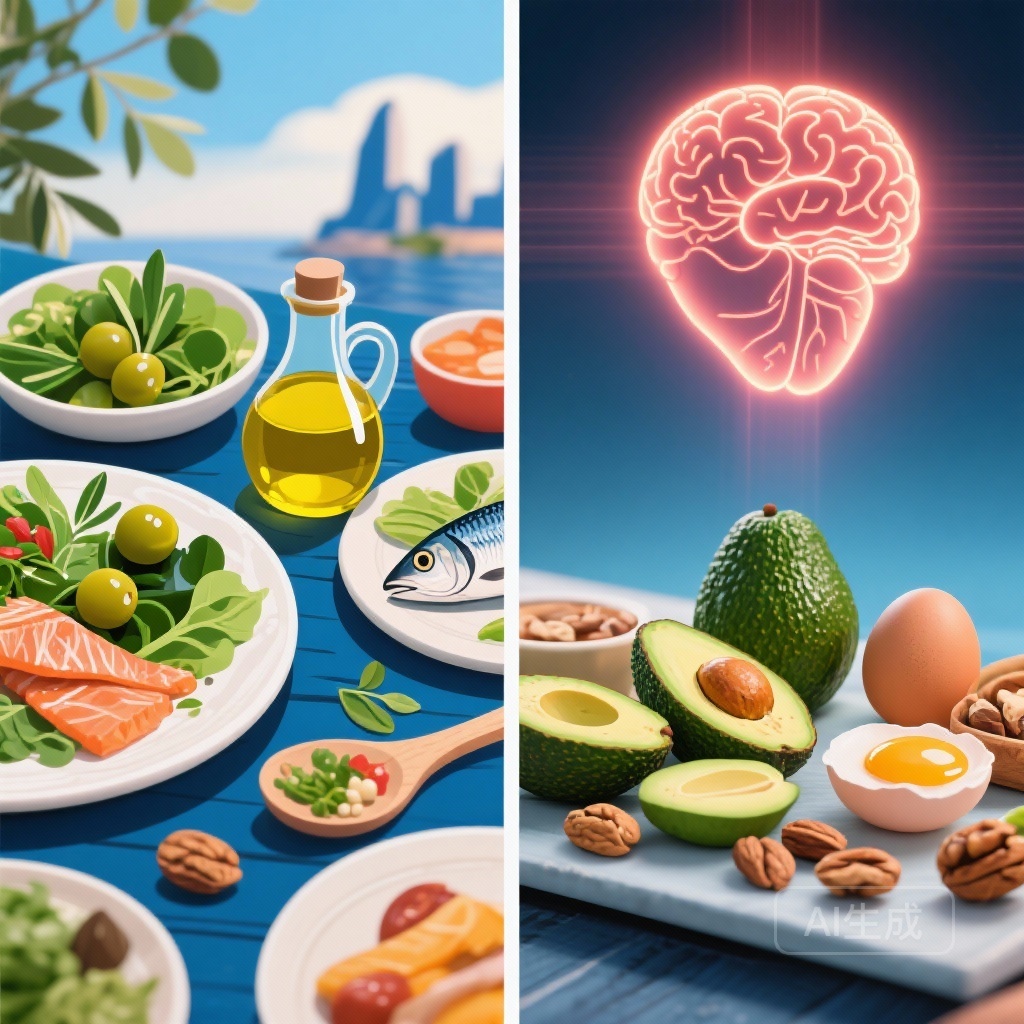
The Great Dietary Debate: Mediterranean vs. Keto
In the ever-evolving world of nutritional science, two dietary giants consistently dominate the conversation: the Mediterranean Diet (MD) and the Ketogenic Diet (KD). While both are praised for their ability to facilitate weight loss, they operate through vastly different physiological mechanisms. The Mediterranean Diet focuses on healthy fats (mostly from olive oil), plant-based nutrients, and moderate protein, while the Ketogenic Diet shifts the body’s metabolism toward fat-burning by drastically limiting carbohydrates and increasing healthy fats and proteins.
For individuals struggling with obesity and its associated complications—such as high blood pressure and mood disorders—choosing between these two can be a daunting task. Two recent pilot studies, the Keto-Salt Study and a multi-center study on the gut-brain axis, offer fresh clinical evidence to help patients and healthcare providers navigate this choice. By looking at blood pressure profiles and mental health outcomes, researchers are uncovering that the best diet might depend entirely on which health outcome a patient prioritizes most.
A Clinical Scenario: Mark’s Health Journey
To understand how this research applies to real life, consider Mark, a 45-year-old account manager. Mark’s body mass index (BMI) is 32, placing him in the category of obesity. Recently, his doctor noted his blood pressure was 138/88 mmHg—high-normal, bordering on Grade I hypertension. Beyond the physical metrics, Mark has been feeling increasingly sluggish, reporting mild depressive symptoms and a lack of focus.
Mark’s situation is typical. Obesity rarely exists in a vacuum; it is often intertwined with cardiovascular risk and mental health challenges. For Mark, the question is not just about losing weight, but about choosing a dietary intervention that will lower his blood pressure while also clearing the mental fog and improving his mood.
Heart Health: The Keto-Salt Pilot Study
One of the most critical concerns for patients like Mark is hypertension. The Keto-Salt Pilot Study, published in Nutrients in 2025, specifically compared a low-calorie, high-protein Ketogenic Diet against a low-calorie, low-sodium, and high-potassium Mediterranean Diet. The researchers focused on overweight and obese individuals who also had high-normal blood pressure or Grade I hypertension.
Over the course of three months, 26 participants were monitored using advanced diagnostic tools, including Ambulatory Blood Pressure Monitoring (ABPM) and Bioelectrical Impedance Analysis (BIA) to track body composition. The results were encouraging for both camps. Both the KD and MD groups showed significant reductions in body weight. Specifically, those on the Ketogenic Diet dropped from an average of 98.6 kg to 87.3 kg, while the Mediterranean group went from 93.8 kg to 86.1 kg.
More importantly, their hearts benefited significantly. The 24-hour mean systolic blood pressure decreased from 125.0 mmHg to 116.1 mmHg across the groups. Researchers found that as fat mass decreased and fat-free mass (muscle) was preserved or improved, blood pressure followed suit. Interestingly, the study concluded that for cardiovascular benefits, both diets were equally effective, provided they achieved weight loss and improved body composition.
Comparing Outcomes: Heart Health and Body Composition
The following table summarizes the metabolic and cardiovascular shifts observed in the Keto-Salt study after a 3-month intervention period:
| Metric Evaluated | Mediterranean Diet (MD) Results | Ketogenic Diet (KD) Results |
|---|---|---|
| Weight Loss | Significant reduction (approx. 7.7 kg) | Significant reduction (approx. 11.3 kg) |
| 24h Systolic Blood Pressure | Significant Improvement | Significant Improvement |
| Fat Mass (FM) | Decrease | Decrease |
| Insulin Levels | Decrease | Decrease |
| Primary Benefit | Sustainable heart health, sodium/potassium balance | Rapid weight loss, preserved fat-free mass |
Beyond the Heart: The Mind and the Gut-Brain Axis
While the Keto-Salt study suggests a tie in terms of heart health, a second study published in Brain, Behavior, and Immunity (2026) looked at a different frontier: the gut-brain axis. This study explored how these diets impact depression, impulsivity, and anxiety.
This research followed 64 participants with obesity and found a clear divergence in mental health outcomes. The Mediterranean Diet showed a significantly greater improvement in depression scores compared to the Ketogenic Diet. While the Keto group did show improvements in certain types of impulsivity (specifically the urgency subscale), it did not fare as well in the realm of anxiety and mood stabilization.
The Microbiome and Mental Health
One of the most fascinating aspects of the Mela et al. study involved fecal transplants. Researchers took stool samples from the human participants and transplanted the microbiota into healthy mice. The results were startling: mice that received the microbiota from the Ketogenic group began to exhibit anxiety-like behaviors. This suggested that the diet-induced changes in the gut bacteria were directly influencing brain function and behavior.
Microbiota analysis revealed that the Ketogenic Diet significantly altered the bacterial landscape, which in turn changed the levels of certain metabolites. These changes in the gut environment were correlated with altered brain chemistry in the animal models, specifically involving threonine and other key markers.
Nutritional Neuroscience: The Role of Metabolites
Why did the Ketogenic Diet impact the brain differently? The study utilized high-resolution magic angle spinning (HR-MAS) to look at brain metabolites. They found that the Keto group had increased levels of taurine, alanine, and betaine in the brain. While some of these changes can be neuroprotective, the specific combination and the resulting shift in the gut-brain signaling pathway appeared to link the KD to a higher potential for anxiety compared to the more balanced Mediterranean approach.
Expert Insights: Precision Nutrition
Dr. Sarah Thompson, a specialist in nutritional medicine (fictional expert), notes that these findings underscore the importance of precision nutrition. When we look at a patient with obesity, we have to ask if they are also struggling with mood disorders. If a patient has a history of major depression, the Mediterranean Diet might be the safer and more effective first-line therapy. However, if the primary goal is rapid weight loss and metabolic reset for a patient with high blood pressure, the Ketogenic Diet remains a very powerful tool.
Dr. Thompson adds, the gut-brain axis research is a wake-up call that what we eat doesn’t just change our waistline; it changes our internal ecosystem, which eventually talks back to our brain.
Practical Considerations for Patients and Clinicians
For patients like Mark, the choice should be guided by a hierarchy of needs:
1. For Blood Pressure and Weight Loss: Both diets are highly effective. The key is adherence. If Mark finds it easier to cut carbs entirely, Keto might work. If he prefers variety and whole grains, the Mediterranean diet is equally capable of lowering his blood pressure.
2. For Mood and Mental Stability: The Mediterranean Diet has a stronger evidence base for reducing depressive symptoms. Its inclusion of complex carbohydrates allows for more stable serotonin production and a gut microbiome profile less likely to induce anxiety.
3. For Behavioral Control: The Ketogenic Diet may offer unique benefits for those struggling with impulsivity. The metabolic shift to ketosis has been noted in some studies to improve cognitive control and reduce impulsive cravings.
Conclusion: Balancing Body and Mind
In conclusion, both the Ketogenic and Mediterranean diets are potent medical interventions for treating obesity and high blood pressure. As shown in the Keto-Salt study, the loss of fat mass—regardless of the specific diet—is the primary driver for improving cardiovascular health. However, when mental health is brought into the equation, the Mediterranean Diet appears to offer a more consistent benefit for depression, while the Ketogenic Diet presents a more complex picture involving changes to the gut-brain axis.
Patients should work closely with their clinicians to monitor not just their weight and blood pressure, but also their psychological well-being when starting any intensive dietary intervention. The future of nutrition is personal, and understanding how these diets affect the heart and the head differently is the first step toward a healthier life.
Funding and clinicaltrials.gov
The Keto-Salt study was supported by institutional research funds and conducted in accordance with the Declaration of Helsinki. The study focusing on the gut-brain axis was supported by grants from national health institutes focusing on obesity and mental health research. Specific trial registration information for the Keto-Salt study can be found under the identifiers mentioned in the primary publication documentation (Nutrients 2025).
References
1. Landolfo M, Stella L, Gezzi A, Spannella F, Turri P, Sabbatini L, Cecchi S, Lucchetti B, Petrelli M, Sarzani R. Low-Calorie, High-Protein Ketogenic Diet Versus Low-Calorie, Low-Sodium, and High-Potassium Mediterranean Diet in Overweight Patients and Patients with Obesity with High-Normal Blood Pressure or Grade I Hypertension: The Keto-Salt Pilot Study. Nutrients. 2025 May 20;17(10):1739.
2. Mela V, Ortiz Samur NS, Vijaya AK, Gálvez VJ, García-Martín ML, Bandera B, Martínez-Montoro JI, Gómez-Pérez AM, Moreno-Indias I, Tinahones FJ. Ketogenic diet is less effective in ameliorating depression and anxiety in obesity than Mediterranean diet: A pilot study for exploring the GUT-brain axis. Brain Behav Immun. 2026 Jan;131:106167.