Patient Information
The study population consisted of 60 biologic-naïve pediatric patients diagnosed with Acute Severe Ulcerative Colitis (ASUC). The median age at the time of enrollment was 13.5 years, with a female predominance (61.7%). These patients were recruited across ten specialized European pediatric gastroenterology centers under the auspices of the Porto IBD Working Group of ESPGHAN. At the time of presentation, all patients were experiencing an acute exacerbation of ulcerative colitis requiring hospitalization and the initiation of intravenous corticosteroid (IVCS) therapy.
Diagnosis
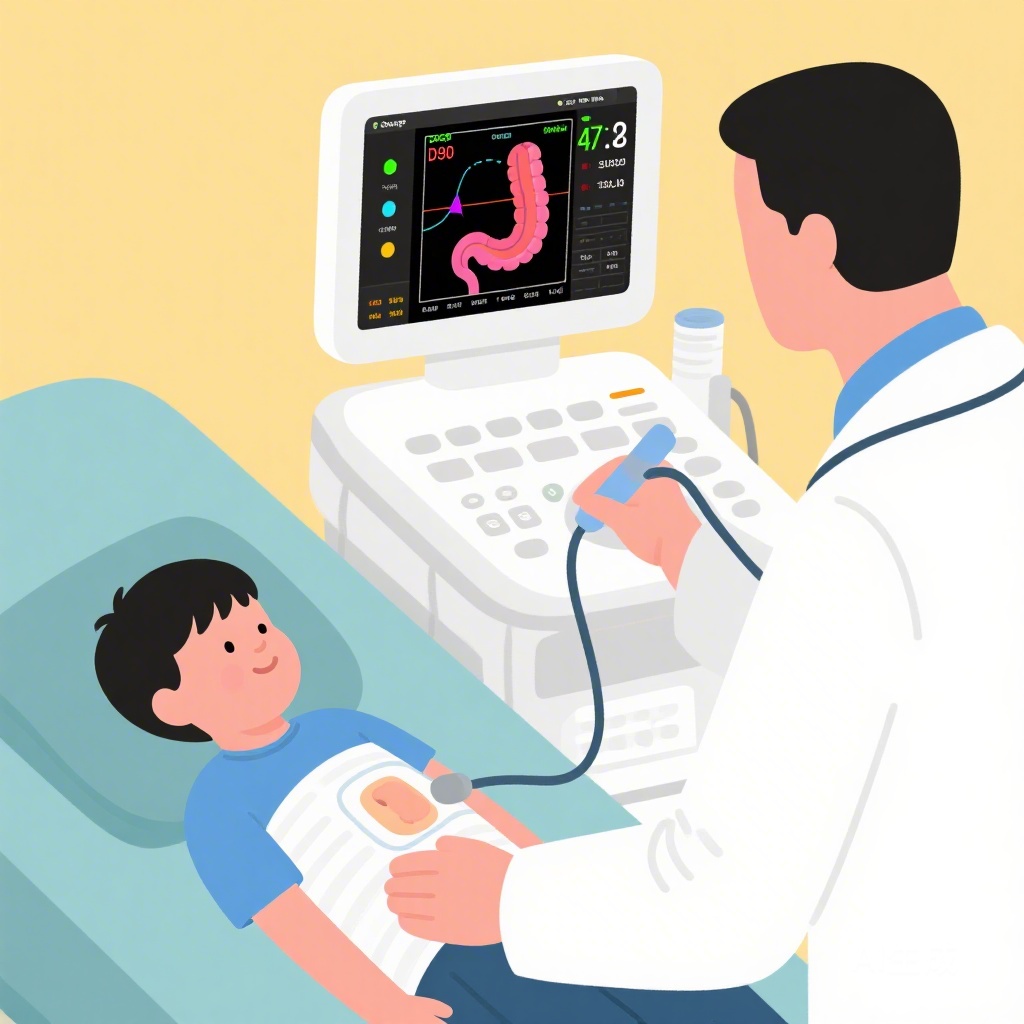
The diagnosis of ASUC was established based on clinical criteria and the Pediatric Ulcerative Colitis Activity Index (PUCAI). For the purpose of this study, Intestinal Ultrasound (IUS) was utilized as the primary investigative tool to monitor disease activity and predict outcomes. Two specific IUS evaluations were performed: the first within 48 hours of starting IVCS, and the second between days 5 and 7 of treatment.
Key diagnostic metrics focused on the colon’s morphological changes, including:
- Colonic Wall Thickness (CWT): Measured in millimeters across different quadrants.
- Colonic Wall Stratification (CWS): Assessment of the preservation or loss of the normal layered appearance of the gut wall.
- Colonic Wall Blood Flow: Evaluated using power Doppler and graded via the Limberg score (where a score of ≥3 indicates significant hypervascularity).
- Milan Ultrasound Score (MUS): A validated scoring system used to quantify the severity of inflammation.
Differential Diagnosis
In cases of pediatric ASUC, clinical practitioners must distinguish the condition from several other possibilities, although the patients in this cohort had a confirmed diagnosis of ulcerative colitis. Consideration was given to:
- Crohn’s Colitis: Differentiated by the lack of small bowel involvement and the continuous nature of colonic inflammation in these subjects.
- Infectious Colitis: Ruled out through stool cultures and PCR testing for pathogens such as Clostridioides difficile, Salmonella, and Shigella.
- Vascular/Ischemic Colitis: While rare in children, it was considered in the context of acute abdominal pain but ruled out based on the clinical history of IBD.
Treatment and Management
Upon admission, all patients were managed according to standardized protocols for ASUC. The primary intervention was the administration of high-dose intravenous corticosteroids (IVCS). Clinical response was closely monitored using the PUCAI score.
For patients who did not show adequate clinical improvement (steroid non-responders), the treatment plan was escalated to second-line medical therapy, specifically Infliximab. Of the 60 patients enrolled, 39 (65%) were identified as steroid non-responders and required this escalation. In cases where medical therapy failed entirely, surgical intervention (colectomy) was considered the definitive treatment path.
Outcome and Prognosis
The clinical outcomes were categorized by response to treatment and the need for surgical intervention within an 8-week follow-up period:
- Steroid Response: Patients who responded to IVCS showed significantly lower CWT and MUS scores. In the Left Lower Quadrant (LLQ), a CWT >5 mm (AUC=0.819) and Milan Ultrasound Criteria (MUC) >7.8 (AUC=0.834) were established as optimal cut-offs for predicting steroid resistance.
- Surgical Outcomes: Ten patients (16.7%) failed to respond to all medical interventions and underwent colectomy within 8 weeks. At the second IUS (Day 5-7), a CWT >4.8 mm and MUC >8.7 in the LLQ were highly associated with medical therapy failure (AUC 0.844 and 0.878, respectively).
- Remission: Patients who achieved steroid-free clinical remission by week 8 demonstrated significantly lower CWT (3.5 mm vs 5 mm, p=0.037) and lower MUC (5.3 vs 8.7, p<0.001) at the second ultrasound assessment.
Discussion
The management of ASUC in children is a clinical challenge that requires timely decision-making to prevent life-threatening complications. Traditionally, clinicians have relied on clinical indices like the PUCAI or invasive procedures like sigmoidoscopy. This study highlights the transformative potential of Intestinal Ultrasound (IUS) as a non-invasive, bedside tool in the acute setting.
The findings demonstrate that IUS can accurately identify patients at high risk for steroid failure as early as 48 hours into treatment. Specifically, measurements in the Left Lower Quadrant (LLQ) proved to be the most reliable predictors. The ability to predict the need for colectomy by day 7 using the MUS and CWT metrics allows for earlier surgical consultation and better-informed discussions with families.
This multicenter prospective study confirms that IUS is not only effective for initial assessment but also for monitoring the trajectory of the disease. By providing objective data on wall thickness and vascularity, IUS serves as a critical adjunct to clinical scoring, potentially reducing the need for repeated endoscopic evaluations in acutely ill children.
References
- Scarallo L, Alvisi P, Bramuzzo M, et al. Intestinal Ultrasound Scan in Acute Severe Ulcerative Colitis in children: a multicenter prospective study on behalf of the Porto IBD Working Group of ESPGHAN. Gastroenterology. 2026. PMID: 41850540.
- Turner D, Travis SP, Griffiths AM, et al. Consensus guidelines for the management of adenoma and colorectal cancer in IBD. European Crohn’s and Colitis Organisation (ECCO).
- Aloi M, D’Arcangelo G, Capponi M, et al. The role of ultrasound in pediatric inflammatory bowel disease. Nature Reviews Gastroenterology & Hepatology.