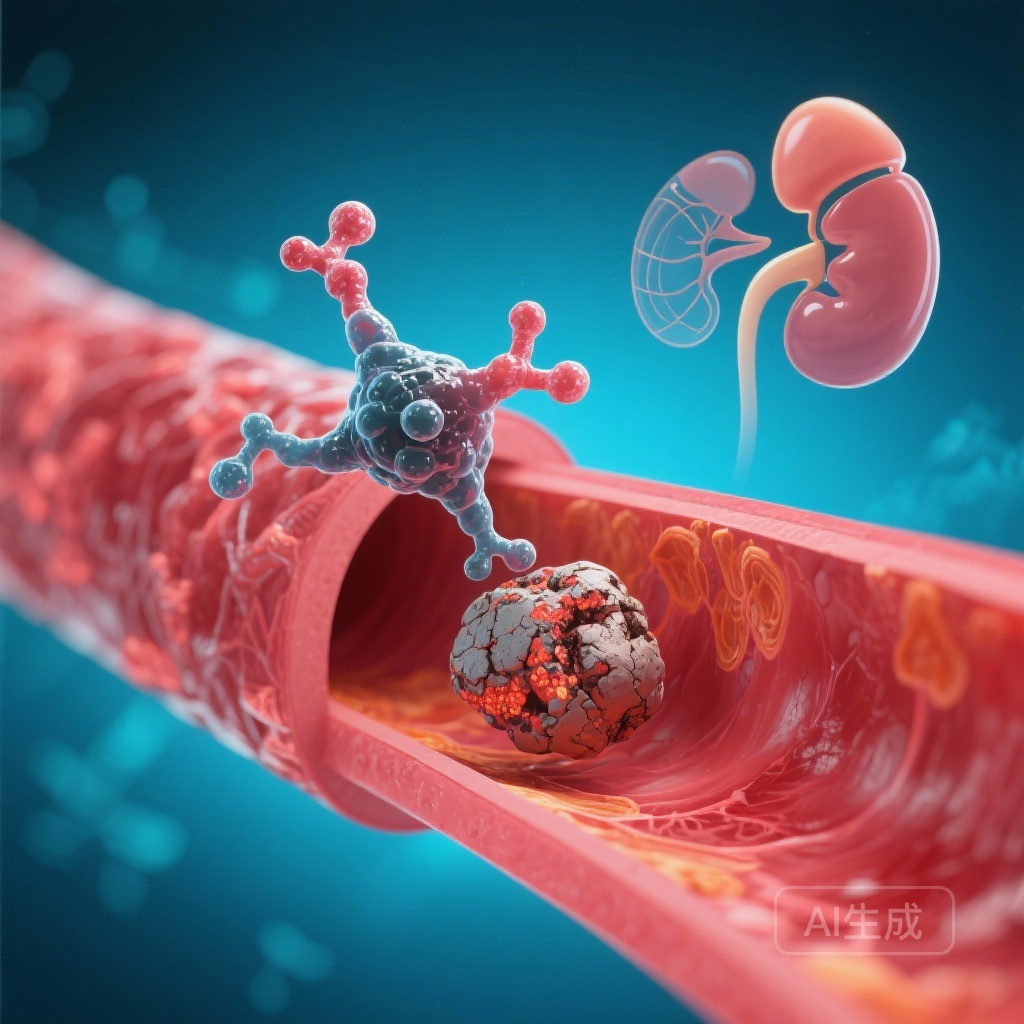
The Inflammatory Axis in Atherosclerosis: Beyond Cholesterol
The management of atherosclerotic cardiovascular disease (ASCVD) has historically focused on the cholesterol hypothesis, emphasizing the reduction of low-density lipoprotein cholesterol (LDL-C). However, even when LDL-C levels are aggressively lowered, a significant residual risk remains. Current evidence increasingly points to systemic inflammation as a central driver of this residual risk. Specifically, the interleukin-1 (IL-1) to interleukin-6 (IL-6) to C-reactive protein (CRP) signaling pathway has emerged as a critical mediator of plaque progression and rupture. While previous trials like CANTOS (targeting IL-1β) provided proof of concept for anti-inflammatory therapy, the medical community is now focusing on IL-6, a more distal and potentially more specific target in the inflammatory cascade.
The ZEUS Trial: Testing the IL-6 Inhibition Hypothesis
The Ziltivekimab Cardiovascular Outcomes Trial (ZEUS) represents a landmark effort to determine if targeted IL-6 inhibition can reduce major adverse cardiovascular events (MACE) in high-risk populations. Ziltivekimab is a large-molecule monoclonal antibody specifically designed to neutralize IL-6. Unlike broader anti-inflammatory agents, ziltivekimab targets a central node in the inflammatory cascade, potentially offering a more potent and specific therapeutic effect for vascular and renal health.
Study Population and Baseline Characteristics
The ZEUS trial (NCT05021835) is a multinational, double-blind, randomized clinical trial that enrolled 6,376 participants. The study specifically targets a cohort at the intersection of cardiovascular and renal risk: patients with established ASCVD, stage 3 or 4 chronic kidney disease (CKD), and persistent systemic inflammation, defined as a high-sensitivity C-reactive protein (hsCRP) level of 2 mg/L or higher.
At the time of randomization, the cohort’s baseline profile underscored the severity of their clinical burden. The mean age was 69.5 years, and the population was characterized by high rates of comorbidities: 92.0% had hypertension, 65.7% had diabetes, and 41.3% had heart failure. The mean estimated glomerular filtration rate (eGFR) was 44.5 mL/min/1.73 m2, reflecting significant renal impairment. Despite relatively well-controlled LDL-C levels (mean 77.7 mg/dL), biomarker levels for inflammation were notably elevated, with a median hsCRP of 4.5 mg/L and median IL-6 of 4.9 pg/mL.
Trial Design and Endpoints
Participants were randomized in a 1:1 ratio to receive either 15 mg of ziltivekimab administered subcutaneously every month or a matching placebo. The primary outcome is the standard 3-point MACE, consisting of cardiovascular death, non-fatal myocardial infarction, and non-fatal stroke.
The secondary endpoints are comprehensive, including an expanded MACE outcome that includes hospitalization for unstable angina requiring urgent revascularization, as well as heart failure-specific outcomes. Crucially, given the CKD population, the trial also evaluates a composite kidney endpoint, assessing for a >40% decline in eGFR, progression to end-stage kidney disease, or death from kidney disease. This makes ZEUS one of the first major trials to test whether an anti-inflammatory agent can simultaneously protect the heart and the kidneys.
IL-6 as a Modifier of Lipoprotein(a) and Oxidized Phospholipid Risk
While the ZEUS trial focuses on the therapeutic potential of IL-6 inhibition, recent secondary analyses from the LoDoCo2 trial provide deeper mechanistic insights into how IL-6 interacts with other traditional and emerging cardiovascular risk factors, specifically Lipoprotein(a) [Lp(a)] and oxidized phospholipids (OxPL).
The Synergy of Inflammation and Lipids
Research published by Mohammadnia et al. explored whether low-grade inflammation modifies the risk associated with elevated Lp(a) and OxPL. In a secondary prevention cohort of patients with chronic coronary syndrome, the investigators found a striking interaction. The cardiovascular risk typically associated with elevated Lp(a), OxPL-apo(a), and OxPL-apoB was only statistically significant in patients who also had elevated IL-6 levels (defined as ≥ 3.2 ng/L).
Among patients with IL-6 levels below the median, Lp(a) did not significantly correlate with increased risk. Interestingly, hsCRP did not show the same modifying effect as IL-6 in this specific analysis. This suggests that IL-6 may act as a biological switch or amplifier that activates the pro-atherogenic and pro-thrombotic potential of Lp(a) particles. This finding has profound implications for risk stratification, suggesting that the pathogenicity of Lp(a) is highly dependent on the inflammatory milieu.
Clinical Implications: A Move Toward Precision Immunotherapy
These findings collectively signal a shift toward a more personalized approach to cardiovascular prevention, moving away from a “one size fits all” strategy to one that targets specific biological pathways.
Refining Patient Selection and Risk Stratification
If the ZEUS trial yields positive results, ziltivekimab could become a cornerstone of therapy for patients with residual inflammatory risk, particularly those with CKD who often have limited treatment options. Furthermore, the insight that IL-6 modifies Lp(a) risk suggests that clinicians could use IL-6 levels to identify which patients with high Lp(a) are at the highest immediate risk. This could help prioritize patients for both anti-inflammatory therapies and emerging Lp(a)-lowering agents.
Mechanistic Insights and Biological Plausibility
The biological rationale for IL-6 inhibition is robust. IL-6 stimulates the production of acute-phase reactants in the liver, promotes leukocyte recruitment to the arterial wall, and contributes to plaque instability. In patients with CKD, IL-6 is often chronically elevated due to decreased renal clearance and increased systemic production, contributing to the accelerated atherosclerosis often seen in this population. By targeting IL-6, ziltivekimab addresses a pathway that is pathophysiology-relevant to both cardiovascular and renal decline.
Expert Commentary
The medical community views the ZEUS trial as a critical step in validating the inflammatory hypothesis. While colchicine has already been approved for cardiovascular risk reduction, its mechanism is broad and its side-effect profile, particularly gastrointestinal, can be limiting for some. Ziltivekimab offers a more targeted approach. Experts emphasize that the inclusion of renal endpoints in ZEUS is a major strength, as heart and kidney diseases are deeply interconnected. However, some caution remains regarding the risk of infection with any potent immunosuppressive or anti-inflammatory therapy, a factor the ZEUS trial is closely monitoring.
Conclusion
The results of the ZEUS trial are poised to potentially redefine the standard of care for secondary prevention in ASCVD and CKD. By demonstrating whether IL-6 inhibition can reduce incident cardiovascular events and slow the progression of kidney disease, the trial will provide a novel framework for treating high-risk patients. Coupled with the understanding that IL-6 modifies the risk of other factors like Lp(a), the era of cardiovascular immunotherapy is rapidly approaching, promising a future where treatment is as much about the immune system as it is about lipids.
Funding and Registration
The ZEUS trial is registered at ClinicalTrials.gov (NCT05021835). Funding and support for the trial and associated analyses are provided by Novo Nordisk and institutional grants to the primary investigators.
References
1. Ridker PM, Baeres FMM, Hveplund A, et al. Rationale, Design, and Baseline Clinical Characteristics of the Ziltivekimab Cardiovascular Outcomes Trial: Interleukin-6 Inhibition and Atherosclerotic Event Rate Reduction. JAMA Cardiol. 2026;11(1):89-97. doi:10.1001/jamacardio.2025.4491.
2. Mohammadnia N, van Broekhoven A, Bax WA, et al. Interleukin-6 modifies Lipoprotein(a) and oxidized phospholipids associated cardiovascular disease risk in a secondary prevention cohort. Atherosclerosis. 2025;405:119211. doi:10.1016/j.atherosclerosis.2025.119211.