The Paradigm Shift in Hypertension Management
For decades, the optimal systolic blood pressure (SBP) target for patients at high cardiovascular risk has been a subject of intense clinical debate. While the landmark SPRINT trial provided robust evidence for a target below 120 mmHg, questions remained regarding the generalizability of these findings to broader populations, particularly those with diabetes, prior stroke, or significant frailty. The ESPRIT (Effects of Intensive Systolic Blood Pressure Lowering Treatment in Reducing Risk of Vascular Events) trial, a large-scale randomized controlled trial conducted across 116 sites in China, provides definitive evidence that intensive BP control is not only effective at preventing major adverse cardiovascular events (MACE) but also safe and beneficial across a wide spectrum of patient phenotypes.
The ESPRIT Trial: Core Methodology and Primary Outcomes
The ESPRIT trial enrolled 11,255 participants aged 50 years or older with an SBP between 130–180 mmHg and high cardiovascular risk. Participants were randomized to either intensive treatment (targeting SBP <120 mmHg) or standard treatment (targeting SBP <140 mmHg). Notably, the cohort included significant subgroups: 4,359 patients with diabetes and 3,022 with a history of stroke—populations often excluded or underrepresented in previous intensive-target trials.
Over a median follow-up of 3.4 years, the intensive group achieved a mean SBP of 119.1 mmHg, compared to 134.8 mmHg in the standard group. The primary outcome—a composite of myocardial infarction, revascularization, hospitalization for heart failure, stroke, or cardiovascular death—occurred in 9.7% of the intensive group versus 11.1% in the standard group (Hazard Ratio [HR] 0.88; 95% CI: 0.78-0.99; p=0.028). Crucially, the benefits were consistent regardless of diabetes status or prior stroke history, reinforcing the broad applicability of the <120 mmHg target.
Intensive Control in the Frail: Debunking the Fragility Myth
One of the most significant clinical concerns regarding intensive BP lowering is the potential for harm in frail, older adults. A post hoc analysis of ESPRIT categorized 11,255 participants into nonfrail, moderately frail, and severely frail groups using the Rockwood cumulative deficit approach (Frailty Index).
The results were striking: the relative risk reduction for MACE did not vary significantly by frailty status (P-interaction = 0.67). Even in the severely frail group (FI ≥0.311), the intensive strategy proved beneficial without an increased risk of serious adverse events compared to the nonfrail group. While frailty was naturally associated with a higher baseline risk of adverse events, the intensive treatment itself did not exacerbate this risk. This finding challenges the conventional clinical wisdom that suggests ‘loosening’ BP targets as patients become more frail, suggesting instead that these high-risk individuals may have the most to gain from rigorous SBP management.
Quality of Life: Does Lower Pressure Mean Lower Satisfaction?
There is a common perception that aggressive polypharmacy to reach low BP targets might impair a patient’s health-related quality of life (HRQoL) due to side effects or treatment burden. ESPRIT addressed this using the EQ-5D-5L questionnaire in a subset of 10,804 participants.
Contrary to fears of diminished well-being, the intensive treatment group showed a modest but statistically significant improvement in HRQoL. The EQ-5D visual analog scale (VAS) scores increased by 0.56 points in the intensive group while decreasing by 0.50 points in the standard group (mean difference 1.26; 95% CI: 0.55-1.98; P < 0.001). Patients in the intensive arm were 16% more likely to experience meaningful improvement in their overall health perception. This suggests that the prevention of cardiovascular complications and the systematic medical engagement required for intensive control may actually enhance patient-reported outcomes.
Retinal Microvasculature: A Window into Systemic Health
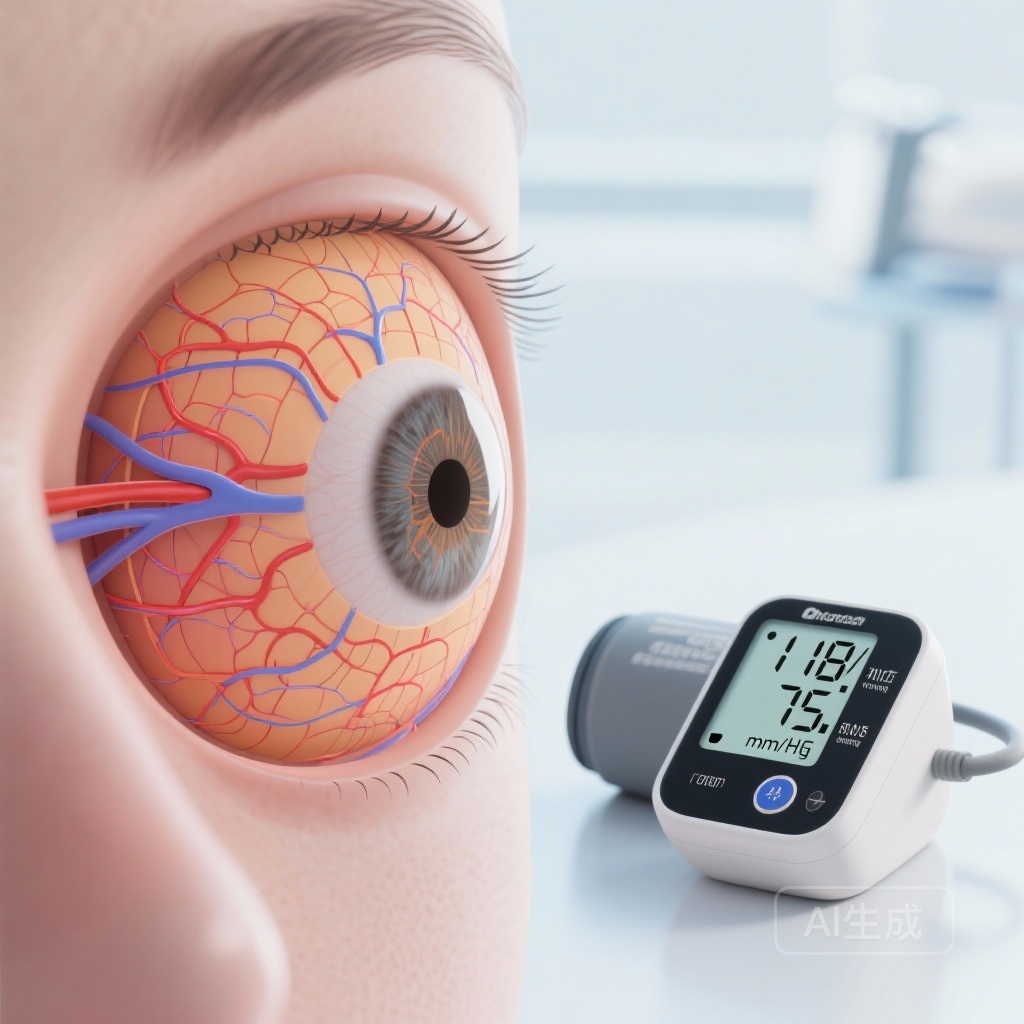
A secondary analysis of 1,081 participants investigated the impact of intensive BP control on the retinal microvasculature, which serves as a surrogate for systemic microcirculation. Using color fundus photography, researchers found that the intensive group had a significantly higher arteriole-venule ratio (AVR) (β = 0.16; 95% CI: 0.05-0.28; P = 0.005) and increased arteriolar caliber compared to the standard group.
Furthermore, intensive treatment was associated with increased arteriolar complexity and density, alongside reduced vessel tortuosity. These microvascular improvements provide a biological basis for the observed reduction in organ damage. By preserving the integrity and function of the microcirculation, intensive BP control likely mitigates the long-term progression of hypertensive-mediated organ damage (HMOD) in the brain, heart, and kidneys.
Clinical Considerations and Safety Profile
No intervention is without risk. In the ESPRIT trial, serious adverse events of syncope were more frequent in the intensive treatment group (0.4% vs. 0.1%; HR 3.00). However, it is essential to note that there were no significant differences between groups regarding other serious concerns, such as hypotension, electrolyte abnormalities, injurious falls, or acute kidney injury (AKI).
For clinicians, this necessitates a balanced approach: while the <120 mmHg target should be the goal for high-risk patients, it must be implemented with careful monitoring for prodromal symptoms of syncope. The absolute number of syncope events remained low, and the cardiovascular benefits—including the reduction in all-cause mortality—largely outweighed these risks.
Conclusion: Redefining the Standard of Care
The ESPRIT trial and its associated analyses provide a comprehensive validation of intensive blood pressure control. By demonstrating consistent CV protection across frailty levels, showing modest improvements in quality of life, and documenting favorable microvascular remodeling, ESPRIT moves the clinical community closer to a new standard of care. For hypertensive patients at high cardiovascular risk, targeting an SBP of <120 mmHg is a potent strategy to extend life, protect the microvasculature, and maintain functional well-being.