Highlights
- Mechanical unloading via Left Ventricular Assist Devices (LVADs) activates myocardial insulin signaling and enhances glucose uptake.
- In recovered hearts, glucose is preferentially diverted into the pentose phosphate pathway (PPP) to bolster antioxidant defenses.
- Obesity and systemic insulin resistance compromise this metabolic shift, leading to persistent oxidative stress and poor recovery.
- Pharmacological intervention with insulin sensitizers (e.g., thiazolidinediones) can rescue the recovery phenotype in obese heart failure models.
The Clinical Challenge of Myocardial Recovery
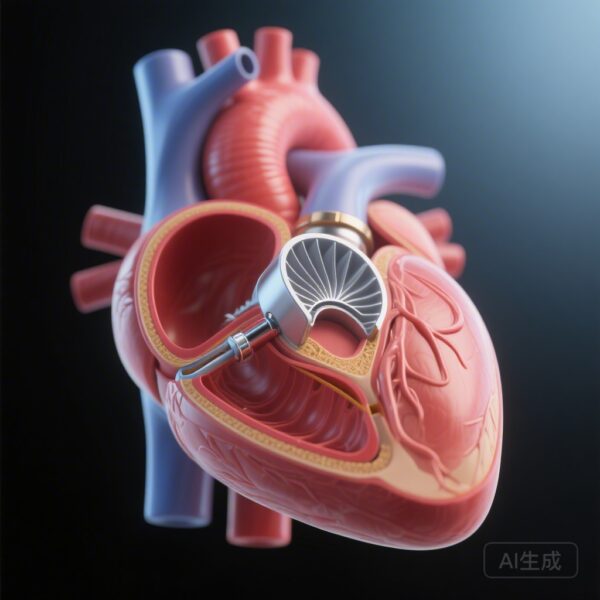
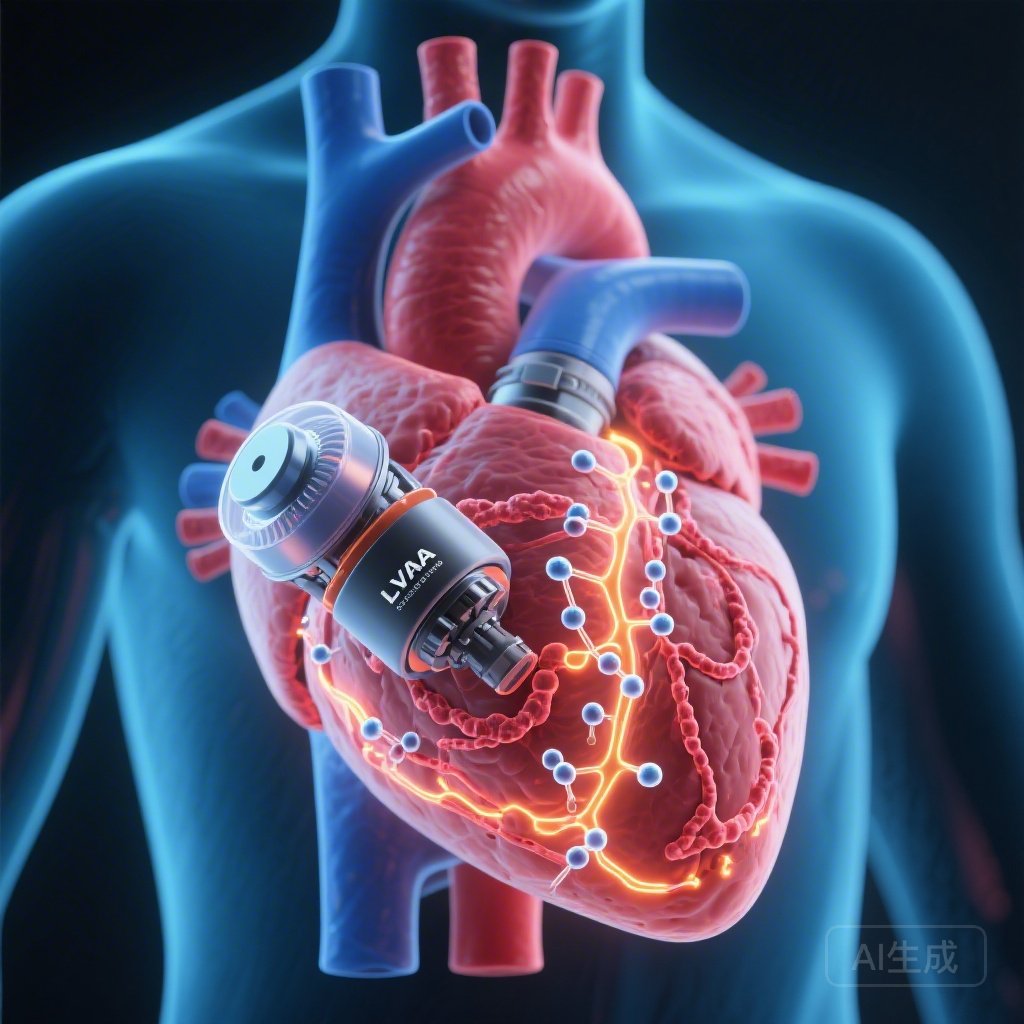
End-stage heart failure (HF) represents one of the most significant burdens on global healthcare systems. For many patients, a Left Ventricular Assist Device (LVAD) serves as a life-saving bridge to transplantation or, in some cases, a bridge to recovery. Mechanical unloading provided by these devices can induce reverse remodeling, allowing the native heart to regain enough function to permit device explantation. However, the phenomenon of myocardial recovery remains frustratingly inconsistent. Clinical observations have long noted that patients with obesity and metabolic syndrome often exhibit poorer outcomes and lower rates of recovery following LVAD implantation. Until recently, the molecular mechanisms linking systemic metabolic dysfunction to impaired cardiac reverse remodeling remained largely elusive.
Study Design: From Clinical Observation to Molecular Mechanism
A multi-institutional study published in Circulation investigated this phenomenon through a rigorous translational approach. The researchers recruited a cohort of HF patients undergoing LVAD implantation, categorizing them based on Body Mass Index (BMI) and insulin resistance markers. They specifically looked for correlations between these metabolic profiles and the patients’ eventual response to LVAD therapy in terms of myocardial recovery.
To identify the underlying biology, the team utilized a mouse model of heterotopic cervical heart transplantation, which effectively simulates the mechanical unloading of the heart. This was paired with state-of-the-art single-nucleus RNA sequencing (snRNA-seq) to map the transcriptional landscape of unloaded hearts. Furthermore, stable-isotope tracing metabolomics (using 13C-labeled glucose) was employed to track exactly how cardiomyocytes utilize fuel once the mechanical load is removed. To validate the influence of mechanical forces, in vitro cyclic stretch assays were used to observe how reduced physical stress directly influences metabolic signaling pathways.
Key Findings: The Metabolic Shift of the Unloaded Heart
Activation of Myocardial Insulin Signaling
The study’s snRNA-seq data revealed a striking finding: mechanical unloading significantly upregulates genes involved in the insulin signaling pathway within cardiomyocytes. Specifically, the reduction in mechanical wall stress appears to sensitize the myocardium to insulin, leading to increased expression of glucose transporters and enhanced glucose uptake. This suggests that the heart naturally attempts to shift its metabolic state toward glucose utilization as it recovers from the high-stress environment of failing heart failure.
The Pentose Phosphate Pathway as a Cardioprotective Hub
While increased glucose uptake is often associated with glycolysis, the stable-isotope tracing metabolomics provided a more nuanced picture. In successfully unloaded hearts, a significant portion of the glucose was diverted away from traditional energy-producing glycolysis and into the Pentose Phosphate Pathway (PPP). The PPP is critical for producing NADPH, a key cofactor for maintaining the pool of reduced glutathione—the heart’s primary defense against oxidative stress. By increasing PPP flux, the unloaded heart reduces reactive oxygen species (ROS) levels, creating a cellular environment conducive to structural and functional repair.
The Role of the Hippo Pathway
Mechanistically, the researchers identified the Hippo signaling pathway as the primary sensor of mechanical unloading. Under the high-stress conditions of heart failure, the Hippo pathway is highly active, which normally suppresses growth and metabolic signaling. Mechanical unloading attenuates Hippo pathway activation (specifically reducing the activity of Mst1/2 and Lats1/2 kinases). This inhibition facilitates the activation of insulin signaling, thereby driving the glucose flux into the PPP. This provides a direct molecular link between the physical state of the heart (unloading) and its metabolic capacity for recovery.
Obesity: The Metabolic Barrier to Recovery
The clinical portion of the study confirmed that patients with a BMI ≥ 28.0 and higher levels of insulin resistance had significantly poorer recovery outcomes. In obese HF mice, the expected increase in PPP flux following unloading was markedly blunted. Despite the mechanical relief provided by the unloading model, insulin resistance prevented the cardiomyocytes from effectively utilizing glucose to bolster their antioxidant defenses. Consequently, these hearts remained under high oxidative stress, and the benefits of unloading were lost.
Crucially, the researchers demonstrated that this deficit is reversible. When obese HF mice were treated with insulin sensitizers, systemic and myocardial insulin sensitivity improved. This restored the ability of the unloaded heart to activate the PPP, reduced oxidative damage, and significantly improved the recovery of cardiac function. This suggests that the “obesity paradox” seen in some HF contexts does not apply to LVAD recovery; rather, obesity creates a metabolic blockade that must be addressed to maximize the benefits of mechanical unloading.
Expert Commentary and Clinical Implications
This research provides a paradigm shift in how we view the management of LVAD patients. For years, the focus has been largely on hemodynamic optimization and pump management. However, these findings suggest that the metabolic milieu of the patient is equally important. If the heart cannot shift its metabolism to the PPP due to systemic insulin resistance, mechanical unloading alone may be insufficient to trigger recovery.
Clinical leaders in advanced heart failure suggest that we should consider aggressive metabolic management as a standard adjunct to LVAD therapy. The use of insulin-sensitizing agents, such as thiazolidinediones or potentially SGLT2 inhibitors and GLP-1 receptor agonists, warrants further investigation in clinical trials specifically aimed at improving “bridge-to-recovery” rates. Furthermore, this study underscores the importance of BMI and metabolic health as predictive biomarkers for recovery potential, which could help in patient selection and the tailoring of post-operative rehabilitation protocols.
Conclusion
The study by Pan et al. elucidates a critical metabolic axis—the Hippo-Insulin-PPP pathway—that governs myocardial recovery during mechanical unloading. While LVADs provide the necessary physical environment for the heart to heal, obesity-induced insulin resistance acts as a metabolic handbrake on this process. By identifying that insulin sensitizers can unlock this pathway, this research opens new therapeutic avenues to increase the rates of myocardial recovery, potentially allowing more patients to live free from mechanical circulatory support.
References
1. Pan T, Liu T, Jiang C, et al. Insulin Resistance Compromises the Pentose Phosphate Pathway and Impairs Left Ventricular Assist Device-Mediated Myocardial Recovery in Obese Patients with Heart Failure. Circulation. 2026 Feb 6. doi: 10.1161/CIRCULATIONAHA.124.072850.
2. Jakovljevic DG, et al. Left Ventricular Assist Device as a Bridge to Recovery for Patients With Advanced Heart Failure. Journal of the American College of Cardiology. 2017;70(11):1342-1353.
3. Diakos NA, et al. Myocardial Reverse Remodeling With Mechanical Support in Human Heart Failure. JACC: Heart Failure. 2014;2(3):212-219.