Highlights
- The INHALE-1 trial compared inhaled technosphere insulin (TI) to traditional subcutaneous rapid-acting analogs (RAA) in children and adolescents with type 1 diabetes.
- The study narrowly missed its primary endpoint for HbA1c noninferiority, with an adjusted difference of 0.18% against a 0.4% margin.
- TI was associated with significantly higher patient treatment satisfaction and less weight gain compared to RAA.
- Pulmonary function tests showed no significant difference between groups over 26 weeks, addressing a primary safety concern for inhaled therapies in youth.
Background: The Pediatric Insulin Burden
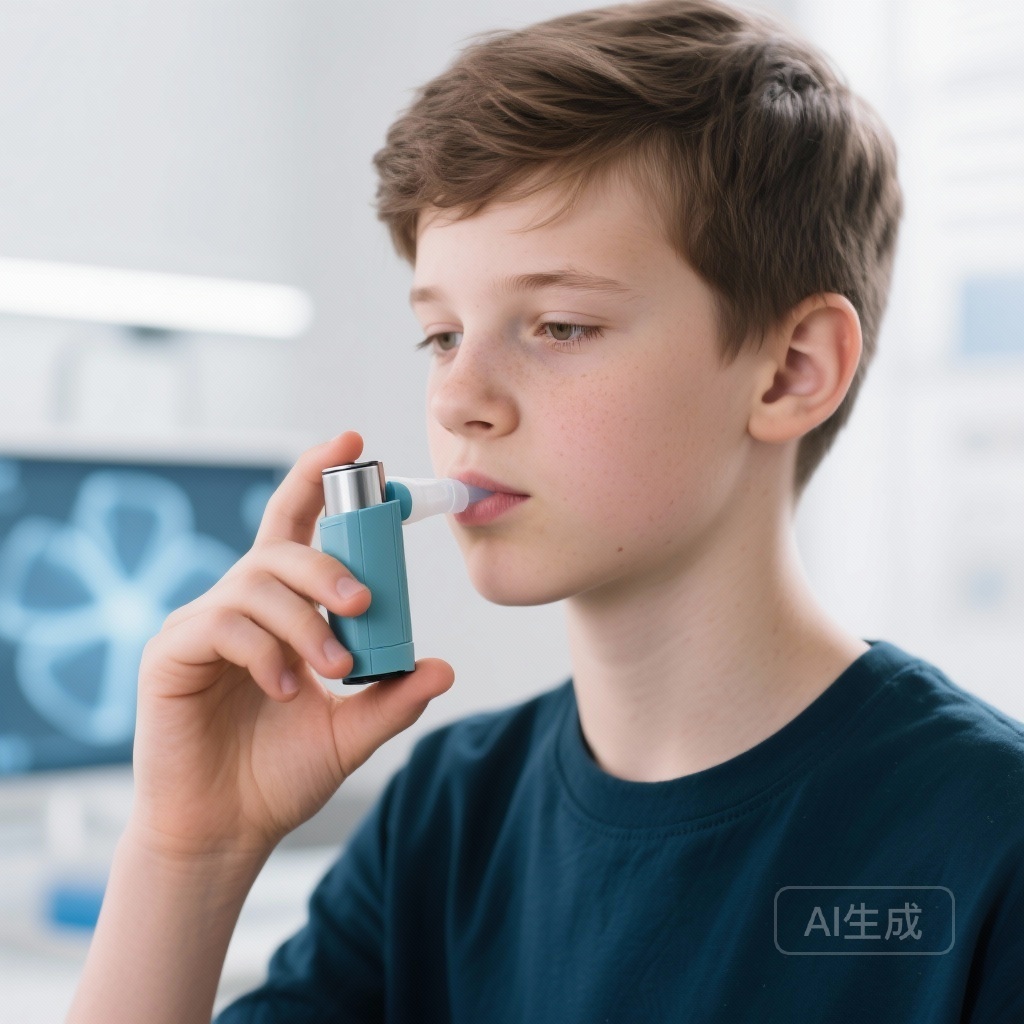
Managing type 1 diabetes (T1D) in pediatric populations remains one of the most significant challenges in clinical endocrinology. Despite the proliferation of continuous glucose monitors (CGM) and advanced insulin pump therapy, many children and adolescents struggle with the psychological and physical burden of multiple daily injections (MDI). This burden often leads to sub-optimal adherence, particularly during the school day or in social settings, contributing to the persistent gap between clinical targets and real-world glycemic outcomes. Inhaled technosphere insulin (TI) represents a novel delivery mechanism that utilizes a dry-powder inhaler to deliver insulin via the pulmonary vasculature. While approved for adults, its utility and safety in the pediatric population—where lung development and growth are ongoing—have remained under-investigated until the INHALE-1 trial.
Study Design: The INHALE-1 Protocol
The INHALE-1 trial was a multicenter, randomized controlled trial designed to evaluate the efficacy and safety of TI in children and adolescents aged 4 to 17 years. The study population consisted of 230 participants, the vast majority of whom (98%) had T1D, while 2% had type 2 diabetes. All participants were previously treated with MDI. Participants were randomized in a 1:1 ratio to either transition their mealtime insulin to TI or continue with a subcutaneous rapid-acting analog (RAA). Both groups continued their baseline long-acting basal insulin and utilized CGM throughout the 26-week study period.
The primary efficacy endpoint was the change in HbA1c from baseline to week 26. The trial utilized a noninferiority design with a pre-specified margin of 0.4%. Secondary endpoints included CGM-derived metrics such as Time in Range (TIR, 70-180 mg/dL), changes in body mass index (BMI) percentile, patient-reported treatment satisfaction, and safety parameters, specifically pulmonary function as measured by forced expiratory volume in 1 second (FEV1).
Key Findings: The Noninferiority Challenge
In the intent-to-treat analysis, the mean HbA1c in the TI group rose from 8.22% at baseline to 8.41% at 26 weeks. In contrast, the RAA group remained stable, moving from 8.21% to 8.21%. The adjusted difference between the two groups was 0.18% (95% CI -0.07, 0.43). Because the upper bound of the 95% confidence interval (0.43%) exceeded the pre-specified noninferiority margin of 0.40%, the trial formally failed to meet its primary efficacy endpoint (P = 0.091 for noninferiority).
However, from a clinical perspective, a difference of 0.18% in HbA1c is often considered marginal, especially when balanced against other metabolic and quality-of-life factors. When examining CGM data, the Time in Range (TIR) showed no statistically significant difference between the groups. The adjusted difference in TIR was -2.2% (95% CI -7.0, 2.7; P = 0.38), suggesting that the day-to-day glucose profiles were largely comparable between those using inhaled insulin and those using traditional injections.
Secondary Outcomes: Weight and Satisfaction
One of the most striking findings of the INHALE-1 trial was the difference in weight gain. Pediatric patients frequently experience significant weight gain following the initiation or intensification of insulin therapy. In this study, the TI group demonstrated significantly less gain in weight and BMI percentile compared to the RAA group (P = 0.009). This benefit is potentially linked to the unique pharmacokinetics of TI, which has a faster onset and shorter duration of action than subcutaneous analogs, potentially reducing the ‘stacking’ effect and the subsequent need for defensive snacking to prevent late postprandial hypoglycemia.
Furthermore, treatment satisfaction was significantly higher in the TI group (P = 0.004). For pediatric patients, the ability to replace multiple mealtime injections with a discreet, painless inhalation is a transformative shift in the treatment experience. This increased satisfaction is a critical metric, as it often correlates with long-term adherence and psychological well-being in adolescents who are prone to diabetes distress and burnout.
Safety Profile: Pulmonary and Hypoglycemic Risk
Safety is the paramount concern when introducing inhaled therapies to children. The trial monitored pulmonary function closely. At the end of the 26-week period, the change in FEV1 from baseline did not differ significantly between the TI and RAA groups (P = 0.53). This provides reassuring evidence that, at least in the short-to-medium term, TI does not adversely affect pulmonary mechanics in youth. However, long-term surveillance remains necessary to assess the impact over years of use.
Regarding hypoglycemia, the risks were comparable. There were two severe hypoglycemic events in the TI group and one in the RAA group. This indicates that the rapid-acting nature of TI does not necessarily translate to an increased risk of severe low-glucose episodes, provided that appropriate dosing and monitoring are in place.
Expert Commentary: Contextualizing the Results
The failure to meet the formal noninferiority margin of 0.4% requires careful interpretation. In clinical trial design, noninferiority margins are often narrow to ensure safety, but in practice, a 0.18% difference in HbA1c is unlikely to change the long-term microvascular risk profile significantly for an individual patient. Experts in the field suggest that the INHALE-1 trial demonstrates TI is ‘clinically effective’ even if it did not meet the ‘statistical’ threshold for noninferiority in this specific cohort.
The biological plausibility of the weight benefit and the clear signal of patient preference suggest that TI could fill a significant unmet need. For a teenager who avoids bolusing at school due to the stigma of injections, TI might actually lead to better real-world glycemic control than a more ‘efficacious’ injection that is never administered. Clinicians should view TI not as a universal replacement for RAA, but as a valuable tool for specific phenotypes: patients with needle phobia, those struggling with weight management, or those experiencing significant treatment fatigue.
Conclusion: A New Tool in the Pediatric Toolkit
The INHALE-1 trial provides the most robust evidence to date for the use of inhaled insulin in the pediatric population. While the primary HbA1c endpoint was not met by a slim margin, the totality of the data—including CGM stability, reduced weight gain, and superior patient satisfaction—supports the clinical utility of TI. It offers a safe, injection-free alternative for mealtime insulin delivery that could significantly improve the quality of life for children and adolescents living with diabetes. Future research should focus on longer-term pulmonary safety and the integration of TI into automated insulin delivery systems.
Funding and Trial Registration
The INHALE-1 trial was funded by MannKind Corporation. The trial is registered at ClinicalTrials.gov (NCT04974528).
References
- Haller MJ, Kanapka L, Monzavi R, et al. INHALE-1: A Multicenter Randomized Trial of Inhaled Technosphere Insulin in Children With Type 1 Diabetes. Diabetes Care. 2026;49(1):179-187. doi:10.2337/dc25-1994.
- Battelino T, Danne T, Berthold T, et al. Clinical targets for continuous glucose monitoring data interpretation: recommendations from the international consensus on time in range. Diabetes Care. 2019;42(8):1593-1603.
- Kendall DM, et al. Technosphere insulin: an inhaled prandial insulin product. Expert Opin Biol Ther. 2015;15 Suppl 1:S71-8.