Introduction to Sleep Apnea Diagnosis
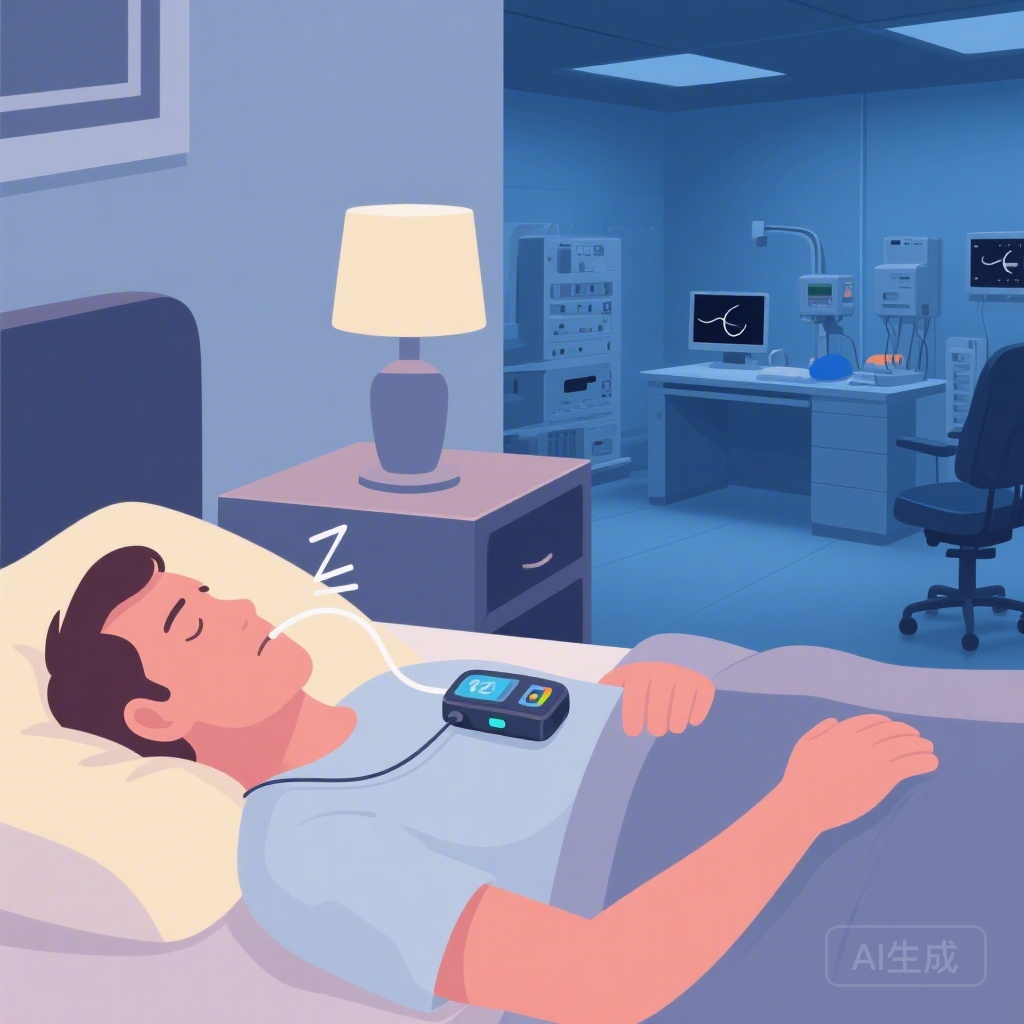
Obstructive Sleep Apnea (OSA) is a prevalent respiratory disorder characterized by repetitive episodes of partial or complete upper airway obstruction during sleep. These episodes lead to oxygen desaturation and sleep fragmentation, which can significantly increase the risk of cardiovascular disease, metabolic disorders, and daytime cognitive impairment. Traditionally, the gold standard for diagnosing OSA has been Type 1 Polysomnography (PSG1), which is conducted in a controlled laboratory environment under the supervision of a technician. However, the rise of telemedicine and the need for more accessible diagnostic tools have led to the widespread adoption of Home Sleep Apnea Tests (HSAT), specifically Type 3 portable monitoring. One of the critical questions facing sleep specialists is the minimum required recording time (RRT) needed for these tests to provide a reliable Apnea-Hypopnea Index (AHI) that reflects a full night of sleep.
Understanding the AHI and Diagnostic Accuracy
The Apnea-Hypopnea Index (AHI) is the primary metric used to determine the severity of sleep apnea. It is calculated by dividing the total number of apnea and hypopnea events by the total sleep time. In a clinical setting, an accurate AHI is essential for determining whether a patient requires continuous positive airway pressure (CPAP) therapy, surgery, or oral appliances. If a recording is too short, the AHI may be artificially inflated or deflated, leading to a misdiagnosis. This is particularly problematic in patients with positional obstructive sleep apnea, where the severity of the obstruction changes depending on whether the patient is sleeping on their back or their side.
The Study Design: PSG1 vs. HSAT
A recent prospective randomized crossover trial conducted by Teixeira and Cahali sought to address the uncertainty surrounding recording times. The study involved 54 consecutive patients suspected of having OSA. Each participant underwent both an in-lab PSG1 and a home-based HSAT within a seven-day window. This crossover design is significant because it allows for a direct comparison of diagnostic methods in the same individual, minimizing variables related to individual anatomy or baseline health. The researchers analyzed each test in 60-minute intervals to determine the point at which the calculated AHI stabilized and remained within 5 events per hour of the final, full-night AHI.
Impact of Positional Disease on Sleep Data
One of the most compelling findings of the study was the influence of positional OSA. Positional OSA is defined as a condition where the AHI is significantly higher when the patient is in the supine position (lying on the back) compared to non-supine positions. In the in-lab setting (PSG1), patients often find it difficult to reach their natural variety of sleep positions due to the abundance of sensors, wires, and the unfamiliar environment. The study found that for the entire cohort, the minimum recording time required for PSG1 was 4 hours, whereas for HSAT, it was only 2 hours. However, when looking specifically at patients with positional disease, the requirement for PSG1 jumped to 6 hours. Interestingly, for these same positional patients, the HSAT still only required 2 hours to reach a stable AHI.
Severity Subgroups and Recording Thresholds
The study also segmented patients by the severity of their condition. For patients with a low AHI (less than 15 events per hour), both the lab and home tests reached stability relatively quickly, requiring only about 2 hours of recording. Furthermore, the difference in AHI between the two types of tests became clinically irrelevant (less than 5 events difference) after 4 hours of recording. However, for those with moderate to severe OSA (AHI of 15 or higher), the requirements were more stringent. In this group, the minimum RRT was 6 hours for PSG1 and 4 hours for HSAT. If clinicians were willing to accept a slightly wider margin of error (an AHI difference threshold of less than 10 events per hour), the recording times could be reduced to 4 hours for PSG1 and 2 hours for HSAT.
Why In-Lab Tests Require More Time
The disparity between in-lab and at-home recording requirements can be attributed to several factors. In a laboratory, the First Night Effect is a well-documented phenomenon where patients experience altered sleep architecture—such as reduced REM sleep and frequent awakenings—due to the unfamiliar surroundings. Because sleep apnea events often cluster during specific sleep stages like REM, a shorter lab recording might miss these periods entirely. Furthermore, the presence of a technician and the constraints of lab equipment can inhibit a patient from moving into the positions where their apnea is most severe. At home, patients sleep in their own beds, typically achieving a more natural distribution of sleep stages and positions, allowing the HSAT to capture representative data much earlier in the night.
Clinical Recommendations for Sleep Practitioners
Based on the conclusion of this research, it is recommended that for a diagnosis to safely reflect the end-test AHI, an in-lab PSG1 should consist of at least 6 hours of recording time. In contrast, an HSAT can be considered reliable with as little as 3 hours of recording. This is a vital takeaway for sleep clinics that may be tempted to use shorter windows of data for scoring. Specifically, the study highlights that positional OSA creates a significant lag in the accuracy of PSG1. Unlike the home test, the lab test’s ability to anticipate the final AHI is hindered until the exam is nearly complete. This suggests that for patients known to have positional issues, home testing might not only be more convenient but potentially more efficient at reaching a diagnostic plateau.
Conclusion
Choosing between in-lab and home sleep testing involves balancing diagnostic depth with patient comfort and accessibility. While PSG1 offers more comprehensive data including EEG for sleep staging, the work of Teixeira and Cahali suggests that HSAT is remarkably resilient and efficient, requiring less recording time to reach a stable diagnosis across various patient phenotypes. For the most accurate results, especially when positional disease is suspected, clinicians must ensure that in-lab studies are sufficiently long, or consider the home environment as a primary diagnostic theater to capture the most representative view of a patient’s nocturnal breathing patterns.