Highlights
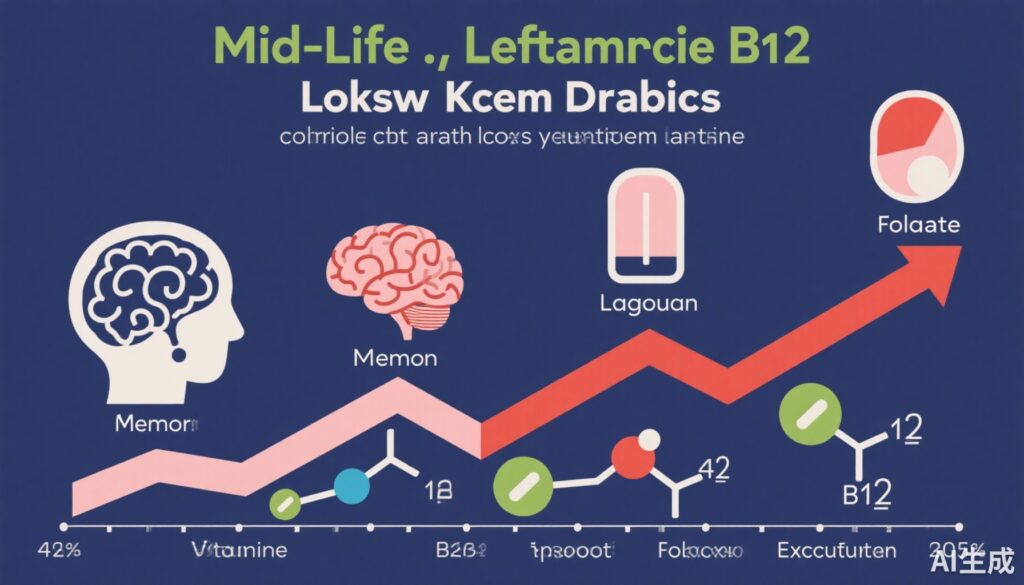
- Higher mid- to late-life vitamin B12 status is linked to slower rates of cognitive decline, including memory, language, and executive function.
- This association remains robust across individuals with both elevated and non-elevated folate levels.
- Dietary patterns rich in vitamin B12 and related nutrients correlate with better cognitive performance and favorable brain biomarkers.
- Interventional trials show mixed results, indicating the need for further research into supplementation impact on cognitive decline prevention.
Background
Cognitive decline and dementia pose significant public health challenges with profound individual and societal consequences. Identifying modifiable risk factors to slow or prevent cognitive deterioration has become a priority. Vitamin B12 (cobalamin), a water-soluble vitamin essential for DNA synthesis, neuronal function, and homocysteine metabolism, has been implicated in neurodegenerative processes and cognitive health. Deficiency in vitamin B12 can lead to neurological symptoms and cognitive impairments, including in older adults and those at risk for dementia. However, evidence has been mixed regarding the longitudinal relationship between vitamin B12 levels and rates of cognitive decline, particularly considering interactions with folate status and other B vitamins.
Key Content
Findings from the Framingham Heart Study
Marino et al. (2025) analyzed 1,994 dementia-free participants from the Framingham Heart Study cohort, with a mean age of 60 years, each having multiple measurements of a three-component B12 indicator (3cB12) and serial neuropsychological assessments. Participants in the highest quartile of 3cB12 exhibited significantly slower cognitive decline over approximately a decade in language (β=0.0090 SD/year), memory (β=0.0071 SD/year), and executive function (β=0.0056 SD/year) compared to those in the lowest quartile. These associations remained statistically significant across all cognitive domains, suggesting a linear protective effect. Stratification by folate status revealed that the benefits of higher B12 levels were consistent regardless of whether folate was elevated (≥20 ng/mL) or non-elevated (6–19 ng/mL), although some estimates lacked statistical significance for memory in the non-elevated group.
Importantly, participants with higher 3cB12 status also had favorable demographic and clinical profiles, including younger age, higher education, lower BMI, and reduced prevalence of vascular comorbidities, which were adjusted for in the analyses.
Supporting Epidemiological Evidence
Large cross-sectional data from the U.S. NHANES (National Health and Nutrition Examination Survey) cohort (2025) involving 2,716 elders demonstrated inverse associations between higher dietary intakes of B vitamins (B1, B2, B6, B12, niacin, and folate) and the prevalence of cognitive impairment. Odds ratios ranged from 0.32 to 0.54, indicating approximately 46–68% lower odds of cognitive impairment in the highest intake quartiles.
Similarly, the Korean Frailty and Aging Cohort Study (2020) involving nearly 3,000 elderly participants observed that individuals with sufficient serum B12 levels performed better on various cognitive tests, though associations attenuated after multivariable adjustment. These findings highlight the influence of confounders such as demographics and comorbidities but support a contributory role of B12 in cognition.
Mechanistic Insights and Neurobiological Correlates
Studies have explored brain structural and functional correlates linking vitamin B12 status to cognition. For instance, neuroimaging analyses in cognitively normal adults identified positive correlations between a nutrient pattern rich in vitamin B12 and vitamin D with better glucose metabolism and greater gray matter volume in Alzheimer’s disease-vulnerable regions, alongside reduced amyloid-β burden.
Other mechanistic studies suggest vitamin B12 influences DNA methylation of oxidative stress-related genes, potentially modulating neurodegeneration pathways. Functional MRI investigations found increased hemodynamic activity in salience network regions among elders with higher B12, linking biochemical status to enhanced attention and visual search abilities.
Interventional Trials and Clinical Implications
Randomized controlled trials examining vitamin B12 supplementation in at-risk older adults have reported mixed outcomes. A 27-month trial in older diabetic patients with borderline B12 deficiency showed biochemical improvements without significant cognitive benefit, underscoring complexities such as baseline nutritional status, comorbidities, and cognitive stage.
Conversely, a 14-week intervention in hyperhomocysteinemic middle-aged and elderly patients demonstrated cognitive improvement alongside decreases in serum homocysteine after supplementation with folate, vitamin B6, and B12.
Moreover, folic acid supplementation in Alzheimer’s disease patients attenuated inflammatory markers and preserved cognitive function over six months, highlighting the interconnected roles of B vitamins and inflammation.
Considerations of Comorbidity and Nutritional Status
Malnutrition and B vitamin deficiencies are prevalent among older adults, especially those with dementia or psychiatric disorders. A meta-analysis estimated that approximately one-third of older adults with dementia have malnutrition, with vitamin B12 consumption among reported moderators of nutritional status. Screening for and management of B12 deficiency in older patients is increasingly recognized as clinically relevant.
Expert Commentary
Collectively, current evidence suggests that higher vitamin B12 status from midlife onward is associated with slower cognitive decline across multiple domains, providing a plausible target for preventative strategies in healthy aging populations. The biological basis likely involves homocysteine metabolism, methylation capacity, oxidative stress modulation, and neuroinflammatory pathways.
However, the heterogeneity in supplementation trials warrants cautious interpretation. Factors such as dosing, baseline B12 and folate levels, duration of intervention, and presence of concomitant cognitive impairment influence outcomes. While supplementation may benefit individuals with demonstrable deficiencies or elevated homocysteine, universal supplementation lacks definitive support.
Clinicians should consider comprehensive nutritional assessments, particularly in populations at risk for B12 deficiency (e.g., older adults, patients on metformin or proton pump inhibitors) and incorporate lifestyle counseling promoting adequate dietary intake—including animal-derived products, fortified foods, or supplements as appropriate.
Emerging research integrating neuroimaging and epigenetic analyses provides deeper insight into vitamin B12’s role as a modifiable factor in cognitive aging and dementia risk.
Conclusion
Elevated vitamin B12 status from mid- to late life correlates with modest but consistent reductions in cognitive decline rates. This relationship persists across language, memory, and executive functions and is largely independent of folate status. Epidemiological data support the benefits of adequate B-vitamin consumption in maintaining cognitive health, while mechanistic studies elucidate potential neuroprotective pathways.
Future research should focus on well-designed, long-term randomized trials assessing vitamin B12 supplementation efficacy in diverse populations, optimal dosing strategies, and implementation of screening protocols to identify at-risk individuals. Nutritional interventions remain a promising, low-risk avenue for mitigating cognitive decline and improving quality of life in aging populations.
References
- Marino FR et al. Higher vitamin B12 from mid- to late life is related to slower rates of cognitive decline. Alzheimers Dement. 2025;21(10):e70864. doi:10.1002/alz.70864. PMID: 41152187.
- Chen Z et al. Associations between dietary B vitamin intakes and cognitive function among elderly individuals: An observational study. Nutr. 2025 Jun;134:112716. doi: 10.1016/j.nut.2025.112716. PMID: 40056822.
- Lee J et al. Association between Vitamin B12 levels and cognitive function in the elderly Korean population. Medicine (Baltimore). 2020 Jul 24;99(30):e21371. doi: 10.1097/MD.0000000000021371. PMID: 32791746.
- Chan T et al. B vitamin supplementation improves cognitive function in the middle aged and elderly with hyperhomocysteinemia. Nutr Neurosci. 2016 Dec;19(10):461-466. doi: 10.1179/1476830514Y.0000000136. PMID: 24938711.
- Yu X et al. Nutrient patterns and brain biomarkers of Alzheimer’s disease in cognitively normal individuals. J Nutr Health Aging. 2015 Apr;19(4):413-23. doi: 10.1007/s12603-014-0534-0. PMID: 25809805.
- Smith AD et al. Dietary intakes and biomarker patterns of folate, vitamin B6, and vitamin B12 are associated with cognitive impairment by hypermethylation of redox-related genes NUDT15 and TXNRD1. Clin Epigenetics. 2019 Oct 11;11(1):139. doi: 10.1186/s13148-019-0741-y. PMID: 31601260.
- de Jager CA et al. A randomized placebo controlled trial of vitamin B supplementation to prevent cognitive decline in older diabetic people with borderline low serum vitamin B12. Clin Nutr. 2017 Dec;36(6):1509-1515. doi: 10.1016/j.clnu.2016.10.018. PMID: 27823800.
- Yu Y et al. Folic Acid Supplementation Mitigates Alzheimer’s Disease by Reducing Inflammation: A Randomized Controlled Trial. Mediators Inflamm. 2016;2016:5912146. doi: 10.1155/2016/5912146. PMID: 27340344.