Highlighting the Shift in Carotid Risk Assessment
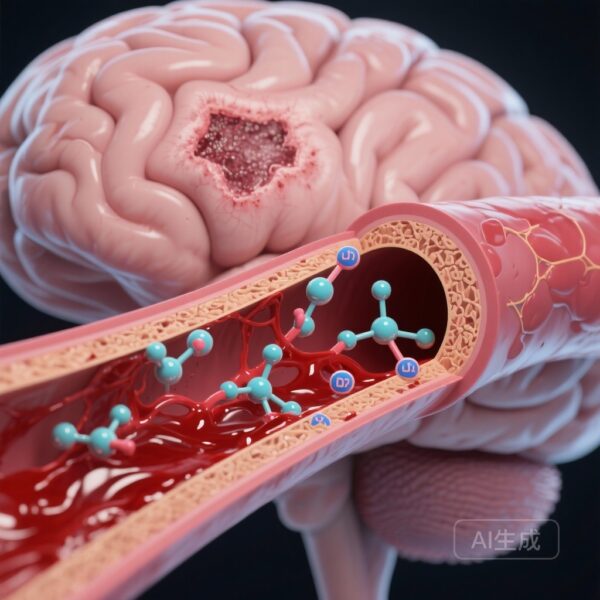
For decades, the degree of luminal narrowing has been the primary metric for determining the risk of stroke in patients with carotid artery disease. However, clinicians have long recognized that stenosis percentage alone is an imperfect predictor. Many ‘low-grade’ plaques lead to devastating ischemic events, while high-grade stenoses may remain stable for years. A landmark study by Andrae et al., published in the European Heart Journal – Cardiovascular Imaging (2025), provides compelling evidence that we must look deeper—into the local hemodynamics and biological composition of the plaque itself. The research demonstrates that elevated systolic wall shear stress (WSS) and a low oscillatory shear index (OSI) are independently associated with complicated carotid artery plaques (cCAP), offering a potentially more accurate method for identifying patients at high risk of stroke.
Background: The Limits of Luminal Stenosis
Complicated carotid artery plaques (cCAP) are defined by specific high-risk features: intraplaque hemorrhage (IPH), a thin or ruptured fibrous cap, and the presence of superimposed thrombi. These features are much stronger indicators of imminent cerebrovascular events than simple vessel diameter reduction. Despite this, the North American Symptomatic Carotid Endarterectomy Trial (NASCET) criteria, which focus on percentage stenosis, remain the clinical standard. The unmet medical need lies in the identification of non-invasive biomarkers that can detect these complicated features before they lead to clinical symptoms. Biomechanical forces, particularly the interaction between blood flow and the vessel wall, have been hypothesized to play a role in plaque destabilization, but until now, the data linking specific hemodynamic parameters like WSS and OSI to cCAP have been insufficient.
Study Design: Integrating 4D Flow MRI and High-Resolution Plaque Imaging
This prospective study conducted at a tertiary stroke center recruited 141 consecutive patients presenting with 20% to 80% internal carotid artery (ICA) stenosis. To gain a comprehensive understanding of the plaque environment, the researchers utilized a sophisticated dual-imaging approach:
3D High-Resolution Multi-Contrast MR Plaque Imaging
This was used to assess the internal composition of the plaque, specifically looking for IPH, lipid-rich necrotic cores, and fibrous cap integrity.
4D Flow MRI
This advanced technique allowed for the quantification of local hemodynamics, including systolic wall shear stress (the tangential force exerted by flowing blood on the endothelial surface) and the oscillatory shear index (a measure of the fluctuation of shear stress direction throughout the cardiac cycle).
In total, 220 carotid arteries were analyzed. The researchers also performed blood biomarker profiling and assessed vascular geometry, such as the ratio between the diameters of the internal carotid artery and the common carotid artery (ICA-CCA ratio).
Key Results: Hemodynamics and Gender as Decisive Factors
The study identified complicated carotid artery plaques (cCAP) in 29.1% of the included arteries (64 out of 220). Several critical findings emerged from the multivariable logistic regression analysis:
Hemodynamic Predictors
Increased systolic wall shear stress was found to be a significant independent predictor of cCAP (Odds Ratio [OR] 1.54, p = 0.020). Conversely, a low oscillatory shear index was also independently correlated with the presence of cCAP (OR 0.67, p = 0.044). This suggests that high-velocity, unidirectional flow forces may be more characteristic of unstable plaques than the turbulent, multi-directional flow typically associated with early plaque development.
The Gender Paradox
One of the most striking findings was the inverse association of female gender with cCAP. Even after adjusting for age, wall thickness, and traditional cardiovascular risk factors, women were significantly less likely to harbor complicated plaques (OR 0.32, p = 0.02). This highlights the need for gender-specific risk assessment models in vascular medicine.
Vascular Geometry
Patients with cCAP exhibited a lower ICA-CCA ratio (p = 0.018), suggesting that the underlying geometry of the carotid bifurcation may predispose certain individuals to high-risk plaque configurations.
The Absence of Blood Biomarkers
Interestingly, the study found no significant correlation between common blood-based biomarkers and the presence of cCAP. This underscores the limitations of systemic inflammatory markers in predicting localized vascular events and reinforces the necessity of advanced imaging.
Expert Commentary: Mechanistic Insights and Biological Plausibility
The correlation between high systolic WSS and complicated plaques may seem counterintuitive at first, as low WSS is traditionally associated with the *initiation* of atherosclerosis. However, in the context of established plaques, high WSS may act as a mechanical trigger for fibrous cap rupture. When a plaque narrows the lumen, the blood velocity increases, thereby increasing the shear stress on the plaque surface. If the plaque is already vulnerable due to a thin cap or intraplaque hemorrhage, this increased mechanical load may be the final push toward rupture.
The finding regarding low OSI is equally important. While high OSI (disturbed flow) promotes early plaque formation, the study suggests that once a plaque becomes complicated, the flow profile may become more streamlined but intensely stressful on the wall.
Limitations of the study include its cross-sectional nature, which prevents the establishment of a direct causal link between hemodynamic changes and plaque progression over time. Furthermore, while 4D flow MRI is a powerful tool, its availability in non-academic settings remains limited, which may hinder the immediate widespread clinical application of these findings.
Conclusion: Moving Toward Precision Stroke Prevention
The research by Andrae et al. represents a significant step toward personalized stroke risk stratification. By demonstrating that systolic WSS and OSI are independent markers for cCAP in patients with moderate stenosis, the study provides a rationale for incorporating hemodynamic assessment into clinical workflows.
For clinicians, the takeaway is clear: the degree of stenosis is only one piece of the puzzle. Male gender, high WSS, and low OSI should be viewed as ‘red flags’ that may necessitate more aggressive medical management or surgical intervention, even if the NASCET-defined stenosis percentage is below traditional thresholds for surgery. Future longitudinal studies will be essential to confirm whether these hemodynamic biomarkers can accurately predict future stroke events, potentially reshaping the guidelines for carotid artery disease management.
References
1. Andrae J, Schindler A, Strecker C, et al. Wall shear stress and oscillatory shear index are independently associated with complicated carotid artery plaques. Eur Heart J Cardiovasc Imaging. 2025; doi: 10.1093/ehjci/jeaf366.
2. Saba L, et al. Carotid Artery Wall Imaging: Perspective and Guidelines from the ASNR and ASHNR. AJNR Am J Neuroradiol. 2018;39(2):E9-E31.
3. Gijsen F, et al. Expert recommendations on soft-tissue-blood-flow interaction in the cardiovascular system. Eur Heart J. 2019;40(41):3430-3433.