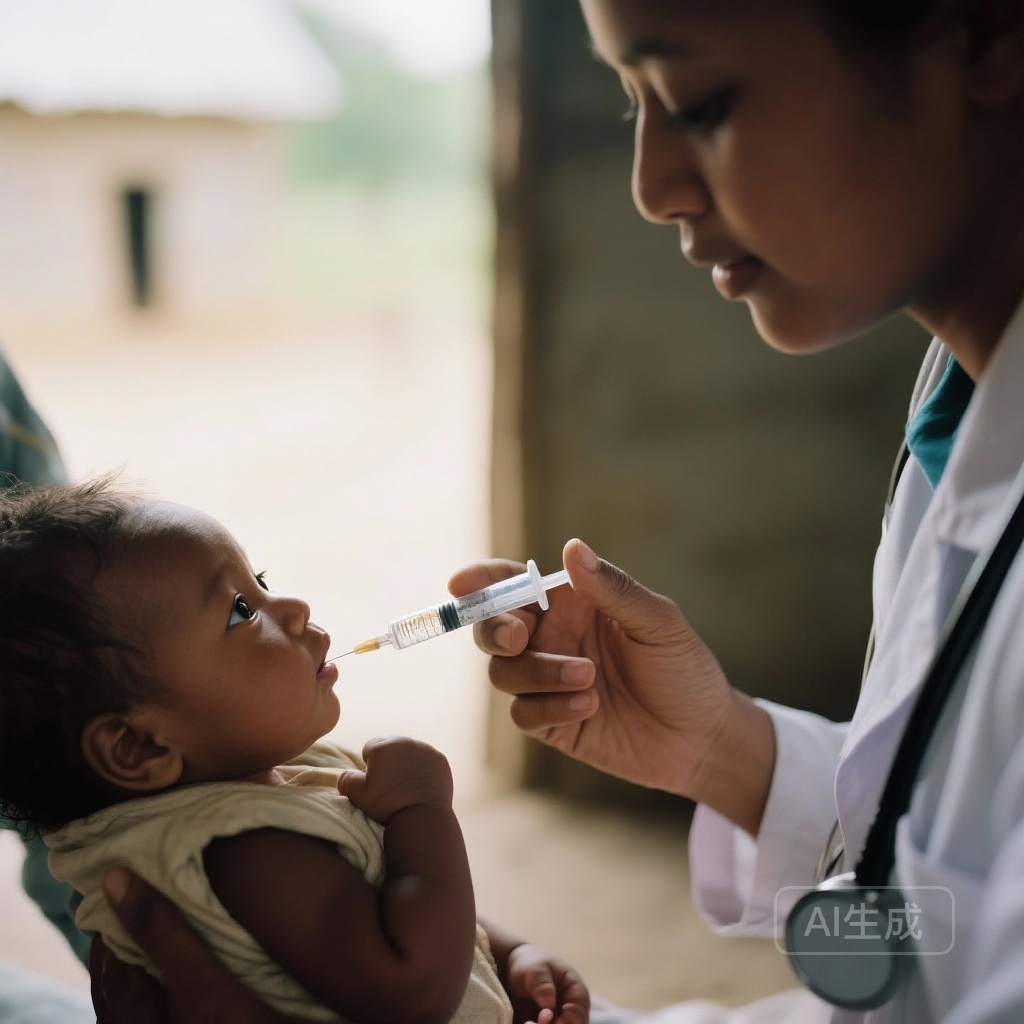
Introduction: The Critical 24-Hour Window
The prevention of mother-to-child transmission (PMTCT) of the hepatitis B virus (HBV) is a cornerstone of global efforts to eliminate viral hepatitis as a public health threat by 2030. The World Health Organization (WHO) and UNICEF emphasize that the most effective intervention for preventing perinatal HBV infection is the administration of the hepatitis B birth dose (HepB-BD) vaccine within the first 24 hours of life. Despite this clear clinical mandate, Africa continues to report the lowest timely HepB-BD coverage globally, estimated at a mere 18%.
In the context of sub-Saharan Africa, The Gambia holds a unique historical position, having been the first country in the region to adopt the HepB-BD into its Expanded Program on Immunization (EPI) as early as 1990. However, achieving the 90% coverage target required for elimination remains a formidable challenge. A recent 7-year retrospective, population-based analysis published in Lancet Global Health provides a critical look at the trends, successes, and persistent barriers to timely vaccination in this pioneering nation.
Study Methodology and Population Metrics
This retrospective analysis utilized data collected between January 1, 2015, and December 31, 2021, from three rural Health and Demographic Surveillance Systems (HDSS) in The Gambia: Basse, Bansang, and Farafenni. The study population comprised 71,088 livebirths recorded during this period. Researchers defined ‘timely’ vaccination as the administration of HepB-BD within days 0 and 1 of birth (the first 48 hours, though focusing on the 24-hour WHO recommendation).
To analyze the data, the investigators employed fluctuation tests and Bayesian analysis using Markov chain Monte Carlo (MCMC) methods. This sophisticated statistical approach allowed for the identification of ‘change points’—abrupt variations between stable periods of coverage—and provided odds ratios (OR) for factors associated with delayed vaccination. The primary endpoints were the rates of timely versus delayed administration and the impact of external variables such as seasonality, geography, and the COVID-19 pandemic.
Key Findings: A Seven-Year Trajectory of Coverage
The cumulative findings of the study underscore a significant gap between policy and practice. Out of the 71,088 livebirths analyzed, only 4,560 infants (6.4%, 95% CI 6.2–6.6) received a timely HepB-BD vaccination. While this overall percentage is low, the longitudinal data revealed a positive upward trend. Timely coverage increased significantly from 1.7% in the first half of 2015 to 22.4% by the second half of 2021 (p<0.0001).
However, this progress was not linear. The analysis identified critical fluctuations and periods of stagnation, suggesting that while the healthcare system was gradually scaling up its delivery, it remained highly vulnerable to systemic and external shocks.
The Significant Impact of the COVID-19 Pandemic
One of the most striking findings of the research was the detrimental effect of the COVID-19 pandemic on routine immunization services. Before the pandemic, the average timely HepB-BD coverage stood at approximately 10.1%. During the first wave of COVID-19, this figure plummeted to 5.4% (p<0.0001). Even after adjusting for other confounding factors, infants born during the first pandemic wave were significantly more likely to experience vaccination delays (OR 1.41, 95% CI 1.22–1.64). This highlights the fragility of essential neonatal services during global health crises and the need for more resilient immunization infrastructures.
Structural and Temporal Barriers to Timely Vaccination
The study identified several key factors that consistently hindered the timely administration of the HepB-BD vaccine. These factors reflect deep-seated structural and logistical challenges within the Gambian healthcare system.
The ‘Weekend Effect’ and Human Resource Constraints
Perhaps the most actionable finding for policy makers is the ‘weekend effect.’ The data showed that infants born on Fridays or Saturdays faced significantly higher risks of delayed vaccination compared to those born on Tuesdays. Specifically, the odds ratio for delay was 3.51 for Friday births and 5.93 for Saturday births. This disparity points directly to staffing shortages and the limited availability of immunization services during weekends. In many rural health centers, EPI staff may not be on-site 24/7, and delivery room staff may not be empowered or trained to administer the vaccine immediately upon birth.
Geographic and Environmental Factors
Geography also played a significant role. Infants born in the Basse (OR 2.03) and Farafenni (OR 1.84) regions were more likely to experience delays compared to those in Bansang. These variations may reflect differences in local health facility density, vaccine supply chain efficiency, or regional management practices. Furthermore, the study noted a seasonal component: births occurring during the rainy season were associated with an increased likelihood of delay (OR 1.16). In rural Gambia, the rainy season often leads to deteriorated road conditions and limited transport options, making it harder for both staff to reach facilities and for families to access care if the birth occurs outside a major center.
Clinical and Public Health Implications
The persistence of low timely coverage 30 years after the adoption of the HepB-BD is a sobering reminder of the complexities involved in neonatal care. From a clinical perspective, every hour of delay increases the risk of vertical transmission, particularly for infants born to HBeAg-positive mothers, where the risk of chronic infection can reach 90% without intervention.
To address these gaps, the study suggests that The Gambia—and other African nations—must move beyond simply including the vaccine in the EPI schedule. Strategic interventions should include:
1. Task Shifting and Integration
Empowering midwives and delivery room nurses to administer the HepB-BD immediately after birth, rather than waiting for dedicated EPI personnel, could eliminate the weekend and holiday delays.
2. Supply Chain Strengthening
Ensuring that the vaccine is available in the labor and delivery wards rather than just in the central pharmacy or immunization clinic.
3. Resilience Planning
Developing protocols to protect routine neonatal immunizations during future pandemics or environmental crises to avoid the sharp declines seen during the COVID-19 waves.
Conclusion: Bridging the Gap to 2030
While the increase in coverage to 22.4% by late 2021 is a sign of progress, it remains far below the 90% target. The Gambia’s experience serves as a vital case study for the rest of the African continent. It demonstrates that the availability of a vaccine is only the first step; the true challenge lies in the logistics of delivery within the first 24 hours of life. Addressing the socio-temporal barriers, such as the weekend staffing gap, and building a more resilient system capable of withstanding global shocks are essential steps if the goal of hepatitis B elimination is to be realized by the end of the decade.
References
1. Ndow G, Cham I, Bangura R, et al. 7-year trend of timely hepatitis B birth dose vaccination coverage in The Gambia: a retrospective, population-based analysis. Lancet Glob Health. 2026 Feb;14(2):e242-e250.
2. WHO. Global health sector strategy on viral hepatitis 2016-2021. Geneva: World Health Organization; 2016.
3. Shimakawa Y, et al. Efficacy of the hepatitis B vaccine birth dose in The Gambia: a cohort study. Lancet Infect Dis. 2013.