Highlights
1. HbA1c and glycated albumin (GA) demonstrate strong correlations with mean sensor glucose (r = 0.85 and 0.87, respectively) in patients on maintenance dialysis, outperforming fructosamine (r = 0.70).
2. Despite strong correlations, HbA1c is significantly biased by erythropoiesis-stimulating agent (ESA) dosage, hemoglobin levels, and BMI, which can lead to inaccurate assessments of long-term glycemia.
3. Glycated albumin and fructosamine are influenced by dialysis-specific factors, including modality (hemodialysis vs. peritoneal dialysis), dialysis vintage, and residual kidney function.
4. The study suggests that while HbA1c and GA are useful, clinicians must adjust their interpretation based on individual patient characteristics to avoid therapeutic errors.
The Dilemma of Glycemic Assessment in Kidney Failure
For patients with kidney failure (KF) undergoing maintenance dialysis, maintaining optimal glycemic control is a clinical tightrope. Hyperglycemia is a known driver of cardiovascular morbidity, while hypoglycemia—often exacerbated by impaired renal glucose clearance and malnutrition—poses immediate life-threatening risks. Traditionally, glycated hemoglobin (HbA1c) has been the gold standard for monitoring long-term glucose levels. However, in the setting of advanced kidney disease, the reliability of HbA1c is compromised. Factors such as shortened red blood cell lifespan, iron deficiency, and the frequent use of erythropoiesis-stimulating agents (ESAs) create a physiological environment where HbA1c may not accurately reflect true mean glycemia. Consequently, there has been significant interest in alternative biomarkers like glycated albumin (GA) and fructosamine, which reflect shorter-term glycemia and are independent of red cell dynamics.
Study Design and Methodology
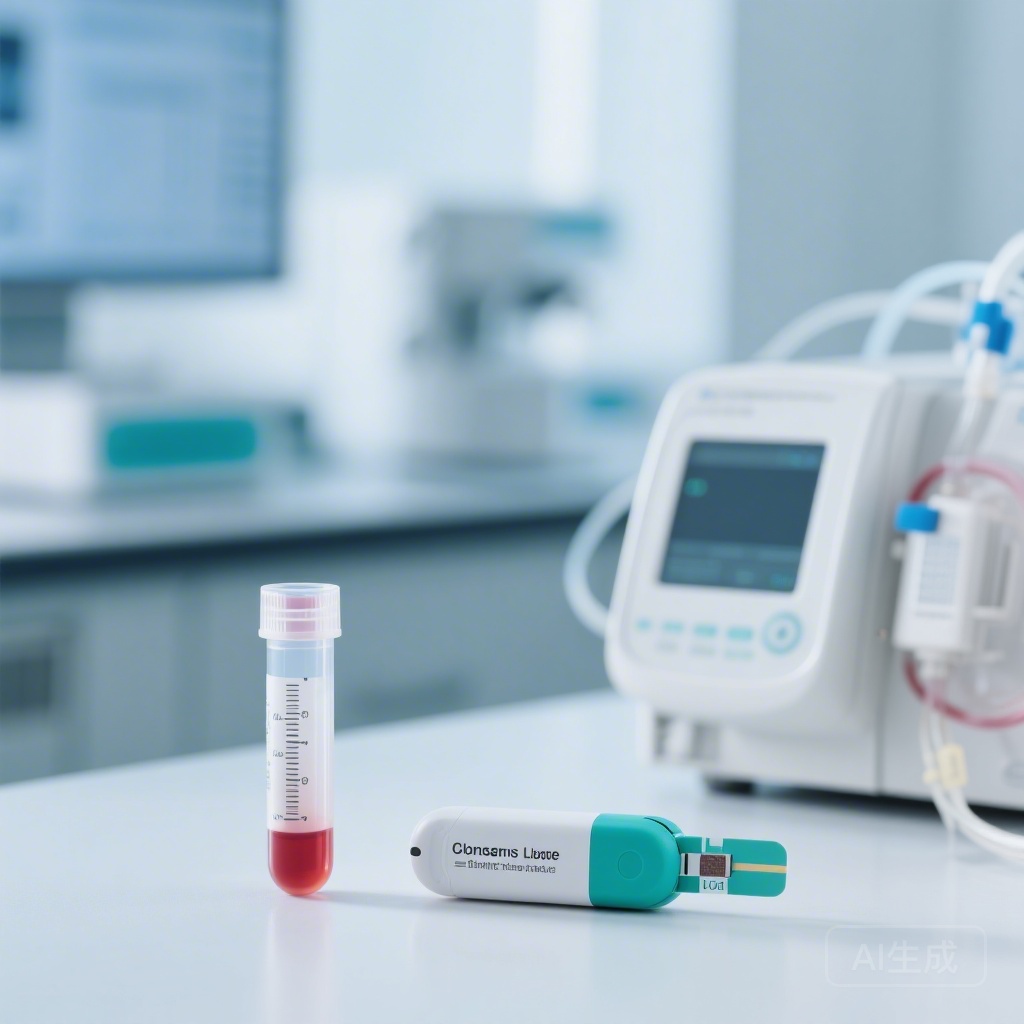
In a prospective community-based cohort study, Zelnick and colleagues sought to rigorously evaluate the accuracy and bias of these biomarkers. The study included 251 participants treated with maintenance dialysis, 63% of whom had a diagnosis of diabetes. The researchers used a Dexcom G6 Pro continuous glucose monitor (CGM) for 10 days as the reference standard for mean glycemia. The primary objective was to compare the correlations of HbA1c, GA, and fructosamine with the CGM-derived mean glucose and to identify clinical covariates that introduce systematic bias into these measurements. The median duration of valid CGM data was 9.3 days, providing a robust dataset for comparison.
Key Findings: A Hierarchy of Accuracy
The study revealed that both HbA1c and GA are relatively strong indicators of average glucose levels in the dialysis population. The overall correlation coefficients (r) were 0.85 for HbA1c and 0.87 for GA. In participants specifically diagnosed with diabetes, these correlations remained high at 0.84 for both markers. Fructosamine, however, showed a significantly weaker correlation (r = 0.70 overall; r = 0.64 in the diabetes subgroup), suggesting it may be less reliable for routine clinical use in this setting.
Mean Values and Distribution
The cohort exhibited a mean CGM glucose of 170 mg/dL. The corresponding biomarker averages were 6.2% for HbA1c, 19.6% for GA, and 351 µmol/L for fructosamine. While the high correlation coefficients are encouraging, they mask the variability and bias present at the individual patient level.
Identifying Sources of Bias
The most critical contribution of this research is the identification of specific clinical factors that skew biomarker readings. Even when a biomarker correlates well across a population, individual patient factors can cause the marker to deviate significantly from the true mean glucose.
Factors Affecting HbA1c
The study found that HbA1c was significantly biased by:
- ESA Dose: Higher doses of ESAs typically stimulate the production of new red blood cells (reticulocytes). These younger cells have had less time to become glycated, which can lead to a falsely low HbA1c reading despite high average blood glucose.
- Hemoglobin and Albumin Levels: Variations in these proteins directly affect the substrate available for glycation or reflect underlying inflammatory states that alter protein kinetics.
- BMI: Body Mass Index appeared to influence the relationship between HbA1c and CGM glucose, possibly through metabolic pathways or chronic inflammation.
Factors Affecting GA and Fructosamine
Because GA and fructosamine rely on serum proteins rather than hemoglobin, they were influenced by a different set of variables:
- Dialysis Modality and Vintage: Whether a patient was on hemodialysis or peritoneal dialysis, and how many years they had been on dialysis, significantly impacted the accuracy of these markers. This is likely due to differences in protein loss and turnover rates between the two modalities.
- Residual Kidney Function: Patients who still produce some urine may have different protein clearance profiles than those who are completely anuric, affecting the steady-state concentration of glycated proteins.
Expert Commentary: Clinical Implications
The findings by Zelnick et al. provide a nuanced roadmap for clinicians. While HbA1c and GA are “strong” markers, they are not “perfect” markers. The significant bias introduced by ESA therapy is particularly noteworthy, as many dialysis patients require high doses of these agents to manage anemia. A patient with a seemingly well-controlled HbA1c of 7.0% might actually be experiencing mean glucose levels much higher if they are on intensive ESA therapy.
Furthermore, the study highlights that glycated albumin, often proposed as the ideal alternative for kidney failure patients, is not immune to bias. The influence of dialysis modality suggests that a GA value in a peritoneal dialysis patient cannot be interpreted the same way as in a hemodialysis patient. This research reinforces the growing consensus that continuous glucose monitoring (CGM) may be the only way to truly individualize care for high-risk dialysis patients, using biomarkers as supplementary tools rather than absolute guides.
Conclusion
In conclusion, HbA1c and glycated albumin remain the most viable laboratory-based biomarkers for assessing average glycemia in maintenance dialysis patients, significantly outperforming fructosamine. However, the presence of substantial bias related to ESA use, BMI, and dialysis characteristics means that these markers should never be interpreted in isolation. Clinicians should use these values as part of a broader clinical picture, ideally supplemented by periodic CGM data to calibrate the biomarkers for each individual patient. Future research should focus on developing adjustment formulas that account for these biases to improve the precision of glycemic management in the dialysis population.
References
1. Zelnick LR, Trikudanathan S, Hall YN, et al. Accuracy, Variability, and Bias of Glycemic Biomarkers in Patients Treated With Maintenance Dialysis. Diabetes Care. 2026. PMID: 41805834.
2. Nathan DM, Kuenen J, Borg R, et al. Translating the A1C assay into estimated average glucose values. Diabetes Care. 2008;31(8):1473-1478.
3. Agarwal R, Light RP. Glycated hemoglobin and glycated albumin for characterizing glycemia in hemodialysis. Clin J Am Soc Nephrol. 2010;5(12):2247-2255.