Highlights
- Traditional lesion-based analysis often fails to fully predict cerebral palsy (CP) outcomes; lesion network mapping (LNM) provides a more comprehensive predictive framework.
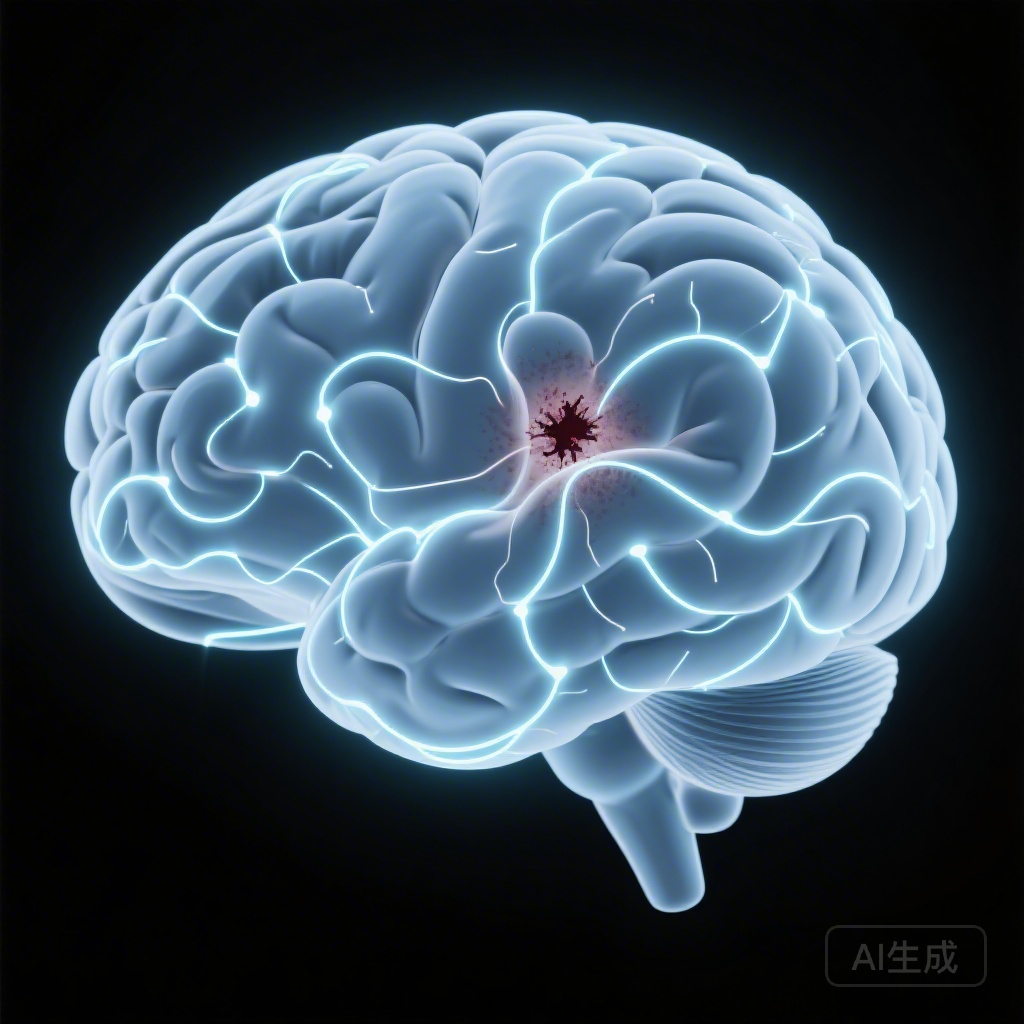
- The development of CP following neonatal arterial ischemic stroke is significantly associated with functional disruptions in regions far beyond the primary motor cortex.
- Key extramotor regions identified in the CP-related network include the thalamus, basal ganglia, cerebellum, and the insula.
- Integrating routine clinical imaging with normative large-scale connectome data from the Developing Human Connectome Project enhances prognostic accuracy.
Introduction: The Clinical Challenge of Neonatal Stroke
Neonatal arterial ischemic stroke (AIS) is a significant cause of lifelong neurological morbidity, occurring in approximately 1 in 2,300 to 4,000 live births. Among the most concerning sequelae is the development of cerebral palsy (CP), a group of permanent disorders of movement and posture. For decades, clinicians have relied on acute neuroimaging—primarily diffusion-weighted magnetic resonance imaging (MRI)—to estimate prognosis. However, the correlation between the anatomical location or size of a stroke lesion and the eventual clinical outcome remains imperfect. Many infants with seemingly small lesions develop significant motor deficits, while others with extensive damage show remarkable resilience. This discrepancy highlights a fundamental gap in our understanding of the neonatal brain’s functional architecture and its response to injury.
The Limitations of Conventional Imaging
Traditional prognostic models focus on “lesion-location” mapping, which assumes that the clinical deficit is a direct result of damage to a specific functional zone, such as the corticospinal tract or the primary motor cortex. While these structures are undoubtedly critical, this localized view ignores the reality of the brain as a highly integrated network. In the mature brain, it is well-recognized that a focal lesion can cause dysfunction in distant, anatomically intact regions through a process known as diaschisis. In the rapidly developing neonatal brain, these network-level disruptions may be even more influential, as the stroke occurs during a period of peak synaptogenesis and pathway refinement. The study by Kelly et al. addresses this limitation by shifting the focus from the lesion itself to the broader functional networks to which the lesioned tissue belongs.
Study Design: Leveraging Large-Scale Connectomics
This multicenter study utilized data from two major pediatric stroke registries: the Swiss Pediatric Stroke Registry (recruited 2000–2013) and the Australian Childhood Stroke Study (recruited 2003–2014). The researchers identified a cohort of 199 term-born neonates with symptomatic AIS, of which 85 met the stringent inclusion criteria for high-quality imaging and longitudinal follow-up.
Methodology: Lesion Network Mapping (LNM)
The core innovation of this research lies in its use of Lesion Network Mapping. Rather than relying on resting-state functional MRI (rs-fMRI) from the stroke patients themselves—which is often difficult to obtain in an acute clinical setting—the researchers leveraged a “normative connectome.” This connectome was derived from 3-Tesla rs-fMRI data of term-born newborns from the Developing Human Connectome Project (dHCP).
By coregistering the stroke lesions from the clinical cohort onto the dHCP template, the team could compute voxel-wise correlations. This allowed them to identify which brain regions are normally functionally connected to the area where each patient’s stroke occurred. This approach essentially asks: “Regardless of where the lesion is, what functional networks has it likely disrupted?”
Key Findings: A Map of Disrupted Connectivity
Of the 85 newborns included in the final analysis (65% male; median age at MRI of 4 days), 33% were diagnosed with cerebral palsy at a median age of 2.1 years. The linear regression analysis revealed a distinct functional network associated with the development of CP.
Extramotor Network Involvement
The study found that participants who developed CP had lesions that were more highly functionally correlated with several specific gray matter regions (1721 voxels; t: 5.4-7.4; P < 0.05, FWER-corrected). These included:
- Subcortical Structures: The basal ganglia and the thalamus, both of which serve as critical relay stations for motor and sensory signals.
- The Cerebellum: Traditionally viewed as a center for coordination, the cerebellum’s involvement in the CP network suggests its vital role in early motor circuit maturation.
- Frontal and Temporal Regions: Including the superior frontal gyrus, temporal pole, and mesial temporal regions (hippocampus and amygdala).
- The Insula: A region involved in sensorimotor integration and affective processing.
These findings suggest that CP is not merely a consequence of damaging the “motor strip,” but rather a result of disrupting a complex, distributed network that supports motor planning, execution, and feedback.
Expert Commentary: A Paradigm Shift in Pediatric Neurology
The implications of this study are profound for both prognosis and therapy. By identifying that extramotor regions like the cerebellum and thalamus are central to the CP network, the research provides a biological basis for why some children with non-motor-cortex strokes still suffer from motor impairments.
Mechanistic Insights
From a mechanistic perspective, this study supports the theory that neonatal stroke interrupts the trophic support and signaling necessary for the development of distant brain regions. If a lesion in the middle cerebral artery territory disrupts a network connected to the cerebellum, the cerebellum may fail to develop its normal functional architecture, even if it was not directly touched by the ischemia. This “network-level vulnerability” is a critical concept for physician-scientists to consider when designing neuroprotective or rehabilitative strategies.
Clinical Generalizability and Limitations
While the study leverages large-scale data, it is important to note that the normative connectome was based on healthy term-born infants. The actual connectivity in a brain that has just suffered an acute stroke may differ. Furthermore, while LNM shows great promise for prediction, its implementation in real-time clinical decision-making requires further validation in prospective cohorts and the development of automated tools for lesion segmentation and network analysis.
Conclusion: Toward Precision Prognosis
The work by Kelly et al. marks a significant step toward precision medicine in neonatal neurology. By demonstrating that the development of cerebral palsy is related to disruptions in broader functional networks involving both motor and extramotor regions, the study provides a more nuanced understanding of post-stroke outcomes. This network-centric view may eventually allow clinicians to identify high-risk infants earlier, enabling the implementation of targeted intensive therapies during the window of maximum neuroplasticity.
References
- Kelly CE, Chen J, Beare R, et al. Predicting Outcome After Newborn Stroke: A Lesion Network Mapping Study Leveraging Large-Scale Data. Stroke. 2026;57(3):e112-e125. PMID: 41859782.
- Boers L, et al. Lesion network mapping: A new tool for understanding brain-behavior relationships. Nature Reviews Neurology. 2020;16(8):443-454.
- Developing Human Connectome Project (dHCP). Data Release 2.0. http://www.developingconnectome.org/